
Your cart is currently empty.

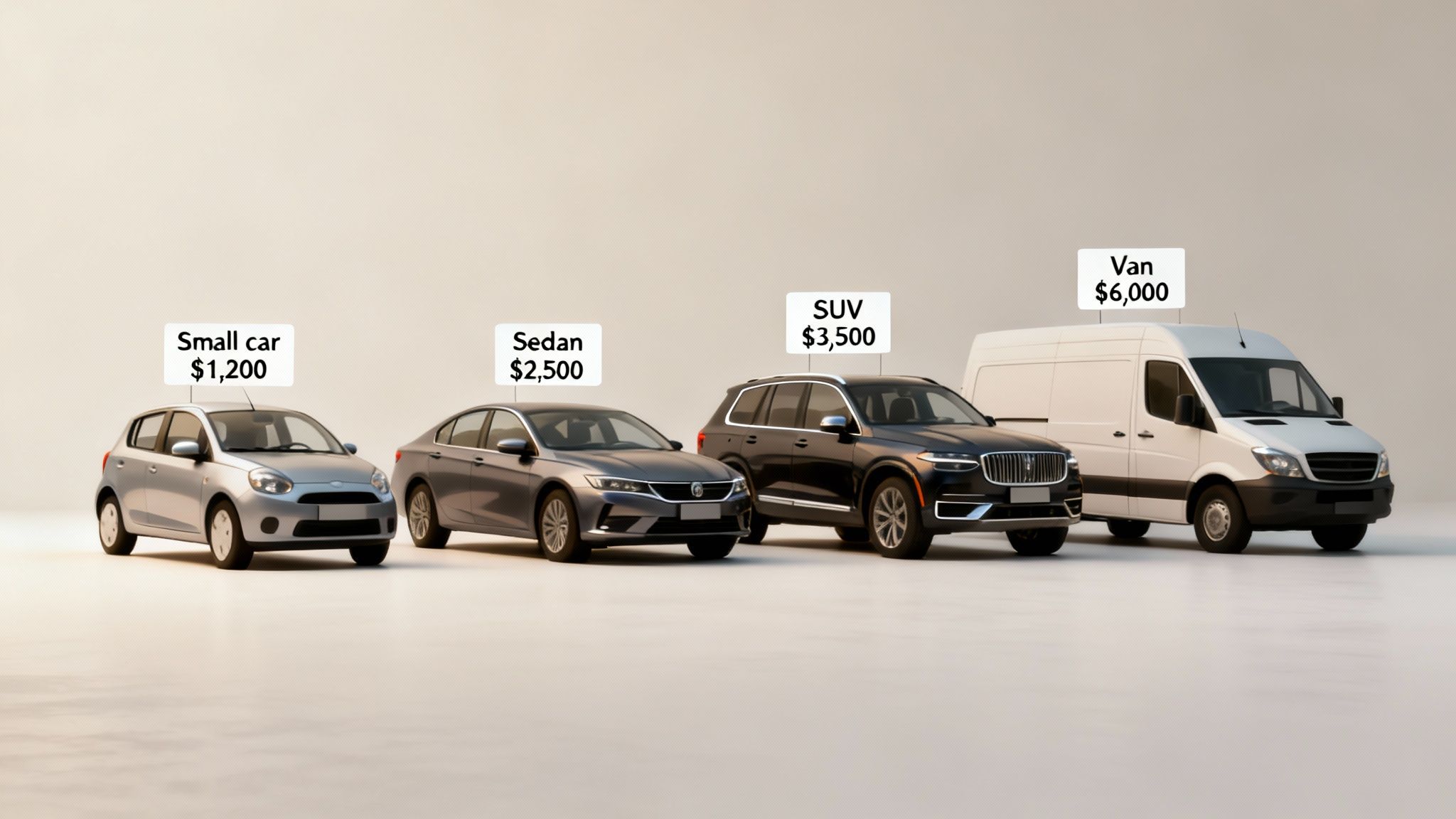
So, what does it actually cost to wrap a vehicle in New Zealand? Prices generally start around $1,800 for a small hatchback and can go upwards of $7,000 for a large commercial van. The final figure really hinges on the size of your vehicle, the quality of the vinyl you choose, and how complex the installation job is.
Your Quick Guide to Vehicle Wrap Prices in NZ
If you're thinking about giving your vehicle a fresh look or turning it into a mobile billboard, a high-quality wrap is one of the smartest ways to do it. But before diving in, the big question is always the same: "How much is this going to set me back?" Getting a handle on the investment is the crucial first step.
The best way to think about a vehicle wrap is like getting a bespoke suit made for your car. The price of a suit depends on the fabric, the quality of the tailoring, and any special details. It's the same for a wrap—the final cost is a mix of the materials, the intricacy of the design, and the skilled hands that apply it. This isn't just slapping on a big sticker; it's applying a precision-engineered second skin that protects your original paint and puts your brand on display.
Typical Price Brackets in NZ
Here in New Zealand, from Auckland to Wellington, you’ll find that prices for a small car like a hatchback usually land somewhere between $1,800 and $3,000. This makes it a really accessible marketing tool for local businesses wanting to get noticed without a massive budget. That price reflects the use of premium vinyls tough enough to handle our harsh Kiwi sun and unpredictable weather, plus the expert labour needed for a perfect, bubble-free finish.
For a mid-size sedan, you’re looking at around $2,500 to $4,500. This is a popular option for professionals like sales reps or consultants who need to maintain a sharp, polished image on the road.
A well-executed vehicle wrap does more than change a colour—it transforms a standard vehicle into a moving billboard, generating thousands of visual impressions every single day.
To give you a clearer picture, let's break down the general costs you can expect based on vehicle type. These numbers are a great starting point for budgeting and show how the investment scales with the size and complexity of the job.
To make things simple, here’s a quick overview of what you can expect to pay for a full wrap on different types of vehicles here in New Zealand.
Estimated Vehicle Wrap Costs in NZ at a Glance
| Vehicle Type | Typical Price Range (NZD) | Ideal For (Business Examples) |
|---|---|---|
| Small Car (Hatchback) | $1,800 – $3,000+ | Cafés, florists, tech startups |
| Medium Car (Sedan) | $2,500 – $4,500+ | Real estate agents, consultants, sales reps |
| SUV / Ute | $3,500 – $5,500+ | Builders, landscapers, photographers |
| Commercial Van / Truck | $4,500 – $7,000+ | Plumbers, electricians, delivery services |
These figures give you a solid baseline, but remember that the final quote will depend on the specifics of your project. The more curves and complex shapes your vehicle has, the more time and skill are required for the installation.
Deconstructing the Price Tag of a Vehicle Wrap
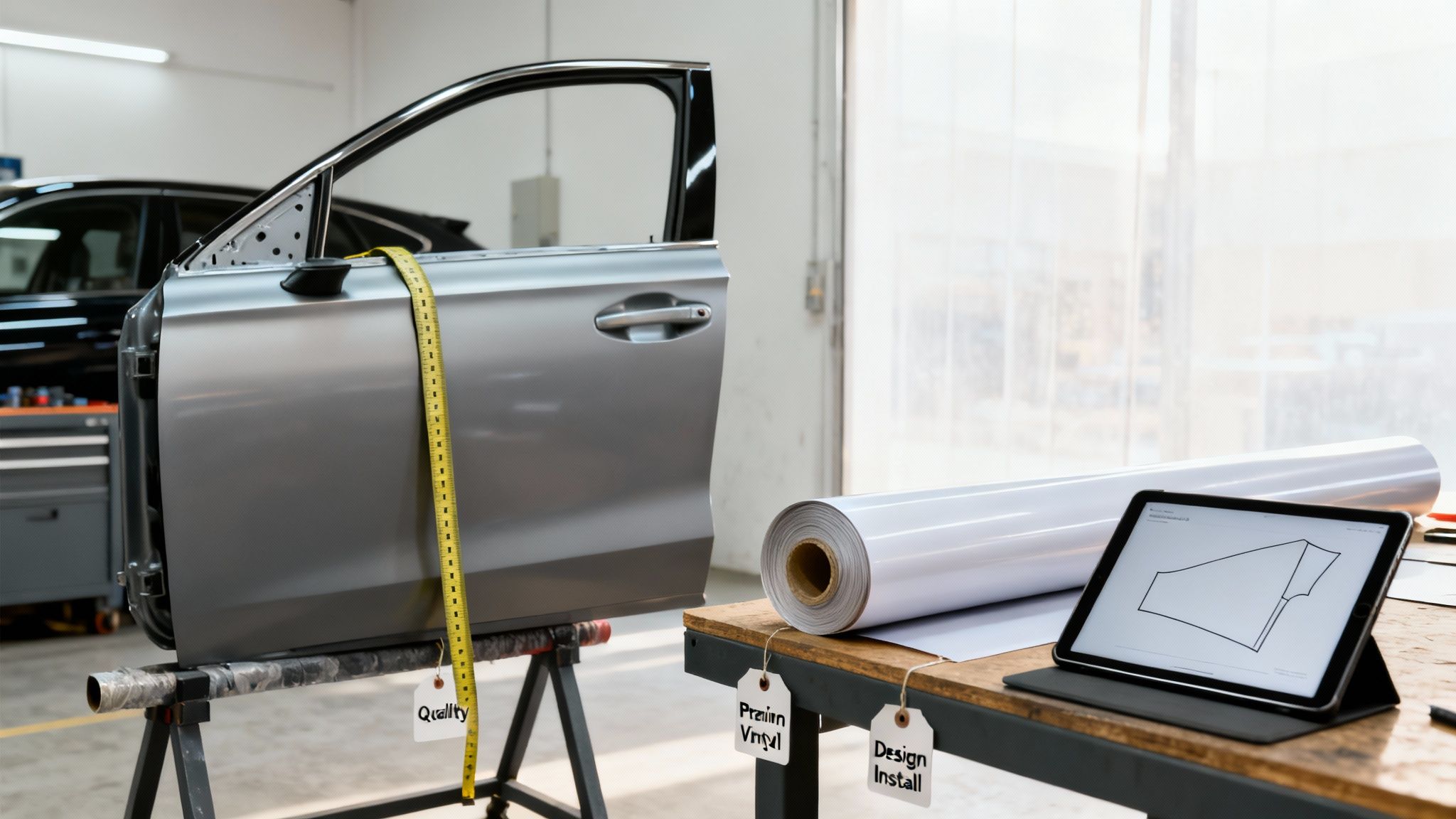
When you get a quote for a vehicle wrap, you’re not just looking at a single number. That final figure is a blend of several key ingredients, all working together. Getting your head around what goes into the cost helps make sense of the investment and really drives home why you should never cut corners on quality.
Think of it like getting a custom suit made. The final look and how long it lasts comes down to three experts: the fabric mill (the vinyl material), the designer (who creates the look), and the tailor (the installer who puts it all together). If you skimp on any one of these, the whole project can fall flat, leaving you with something that just doesn't look or feel right.
Let's pull back the curtain on the four main pillars that hold up your final price.
The Foundation: High-Quality Vinyl Materials
The biggest slice of the cost pie is almost always the vinyl itself. This isn't your average sticker. We're talking about a highly advanced film, engineered to stretch around tricky curves, stick fast, and stand up to New Zealand’s harsh sun and unpredictable weather for years on end.
There's a reason the pros stick to premium brands like 3M and Avery Dennison—they’re the gold standard. Their films offer fantastic durability, keep their colour vibrant, and, crucially, can be removed cleanly down the track. Cheaper, no-name vinyl might seem like a bargain at first, but it’s a recipe for disaster. You’ll often see it fade, peel, or bubble way too soon, and it can even strip your paint when it’s time to come off.
The quality of the vinyl film directly influences the wrap's lifespan. A premium cast vinyl can last 5 to 7 years with proper care, whereas a lower-grade calendared film might start failing in under two.
The Blueprint: Creative and Technical Design
Your wrap’s design is its voice on the road. It’s what grabs attention, tells your brand’s story, and gets your message across without you having to say a word. The cost of the design work reflects the hours of creative thinking and technical skill needed to turn your idea into a perfectly scaled, print-ready file for your specific vehicle.
This part of the process involves a few steps:
- Conceptualisation: Brainstorming and developing a design that hits your marketing goals and looks sharp.
- Layout and Mock-ups: Creating digital proofs so you can see exactly how the wrap will look on your car, van, or truck.
- File Preparation: Making sure every graphic, logo, and letter is in high resolution and formatted correctly for large-scale printing.
Naturally, a simple colour-change wrap needs far less design input than a full-blown custom graphic packed with intricate logos and detailed text.
The Masterstroke: Professional Installation
This is where the magic really happens. Installation is easily the most labour-intensive part of the job, demanding a massive amount of skill, patience, and a steady hand. A great installer is part artist, part surgeon, carefully moulding the vinyl to every single curve and crevice of your vehicle.
The labour cost covers all the critical hands-on work:
- Deep Cleaning and Prep: The vehicle's surface has to be spotlessly clean—we’re talking surgically clean—for the vinyl to bond properly.
- Applying the Panels: Methodically laying down huge sheets of vinyl, using heat and technique to eliminate every last wrinkle, stretch mark, and air bubble.
- Finishing Touches: Trimming edges with precision, tucking seams away, and navigating all the tricky bits like door handles, mirrors, and badges.
A rushed or sloppy installation is the number one reason wraps fail. Paying for a skilled installer is an investment in a flawless, paint-like finish that will last for years.
The Final Step: Wrap Removal
It’s easy to forget, but you should also think about the cost of removing the wrap when it’s time for a change. Professional removal ensures the vinyl comes off cleanly, without leaving a sticky mess or, worse, damaging the paint underneath. This is another area where quality materials pay off—premium films from brands like 3M are designed for clean removal, making the process much faster and cheaper.
What Goes Into the Price of a Vehicle Wrap?
Ever wondered why the quote to wrap a little hatchback is worlds apart from the price for a massive commercial van? It's a fair question. The final number on your invoice isn't just plucked from thin air; it’s a detailed calculation based on a few key ingredients. Think of it like getting a custom suit made—the final cost depends on the amount of fabric, the quality of the material, and the tailor's time and skill.
Getting your head around these factors is the best way to understand where your money is going. It puts you in the driver's seat, allowing you to make smart choices when you're ready to get a quote. Let's peel back the layers and look at what really drives the cost of a professional vehicle wrap.
Vehicle Size and Shape
This one’s the most obvious. A big Ford Transit van has a lot more real estate to cover than a Suzuki Swift. More surface area means we need more vinyl, which is a direct hit on the material costs. To put it in perspective, a small car might need around 15 metres of vinyl, while a large van could easily chew through 25 metres or more.
But it’s not just about the sheer size; the complexity of the vehicle's shape is just as important. A flat, boxy trailer is pretty straightforward to wrap. A modern car, on the other hand, is a different beast altogether. With all its deep curves, sharp body lines, and tricky bumpers, the job becomes much more demanding. Our installers have to meticulously stretch and mould the vinyl into every nook and cranny without distorting the film or leaving imperfections. That extra skill and time naturally add to the labour cost.
The Quality and Type of Vinyl You Choose
Here’s where things get interesting. Not all vinyl is created equal, and your choice here is a huge factor in the final cost. Just like you can choose between basic paint and a premium, long-lasting one for your house, vehicle wrap films come in a huge range of qualities and finishes.
Here’s a quick rundown of how different vinyls affect the budget:
- Standard Gloss or Matte: These are your bread-and-butter finishes. They're the most cost-effective and give your vehicle a clean, paint-like look.
- Satin and Metallic: A step up in price, these films offer a more premium, eye-catching finish. The metallic flakes in the film catch the light beautifully, giving the surface real depth.
- Specialty Finishes: This is where the price can really jump. Finishes like chrome, colour-shift (sometimes called chameleon), and textured vinyls (like carbon fibre or brushed metal) are much more expensive to produce and significantly trickier to install. That complexity is definitely reflected in the price tag.
A specialty chrome or colour-shift vinyl can easily cost two to three times more per metre than a standard gloss vinyl. The manufacturing process behind these dynamic visual effects is incredibly complex, which is why they command a premium price.
Opting for a top-tier brand like 3M or Avery Dennison will also influence the cost. While they might seem more expensive upfront, these professional-grade films deliver far superior durability, colour consistency, and—crucially—clean removability down the track. It's an investment that often saves you headaches and money in the long run.
The Complexity of Your Design
The design itself is another massive piece of the pricing puzzle. A simple, single-colour wrap is one thing, but a fully custom-printed graphic with high-resolution photos, intricate logos, and fine-print text is a completely different ball game.
A custom graphic wrap has a few extra steps that add to the cost:
- Graphic Design Time: This covers everything from the initial creative concept and any revisions to preparing the final, print-ready artwork.
- Printing and Lamination: Your design isn't just printed on any old vinyl. It’s printed on high-quality white film and then protected with a clear, UV-resistant laminate to stop it from fading or getting scratched.
- Intricate Installation: Lining up printed graphics perfectly across multiple panels—so the text on the door flows seamlessly onto the rear quarter panel—is an art form. It demands incredible precision and adds a significant amount of time to the installation.
Simply put, the more detailed and layered your design, the more time and resources it needs.
The Starting Condition of Your Vehicle
You can't build a great house on a shaky foundation, and you can't apply a great wrap over a bad paint job. Before a single piece of vinyl touches your vehicle, the surface has to be absolutely perfect. This means a deep, meticulous clean to get rid of every last bit of dirt, wax, and road grime.
If your vehicle has any paint issues like a peeling clear coat, deep scratches, or rust spots, they have to be sorted out first. Sticking vinyl over damaged paint is just asking for trouble—the wrap won't stick properly and will almost certainly fail, pulling up flakes of paint with it when it’s removed. The extra labour for sanding, filling, and priming these problem areas will be factored into your quote, making your vehicle's condition a surprisingly important part of the final cost.
Choosing Between Full Wraps, Partial Wraps, and Graphics
When you decide to brand your vehicle, it doesn't mean you have to cover every square centimetre in vinyl. While a full wrap makes a massive statement, it’s not always the best or only choice for your specific budget and marketing goals. Getting to grips with the difference between a full wrap, a partial wrap, and spot graphics is the key to getting the most out of your investment.
Think of it like decorating a room. A full wrap is like repainting all four walls for a complete, immersive transformation. A partial wrap is like creating a stunning feature wall that instantly draws the eye. And spot graphics? They're the strategic accessories—like a piece of art or a well-placed mirror—that add personality and deliver key messages without a total overhaul.
This decision-tree flowchart helps visualise how different factors—like the size of your vehicle, the type of vinyl you choose, and the complexity of the design—all play a part in the final cost.
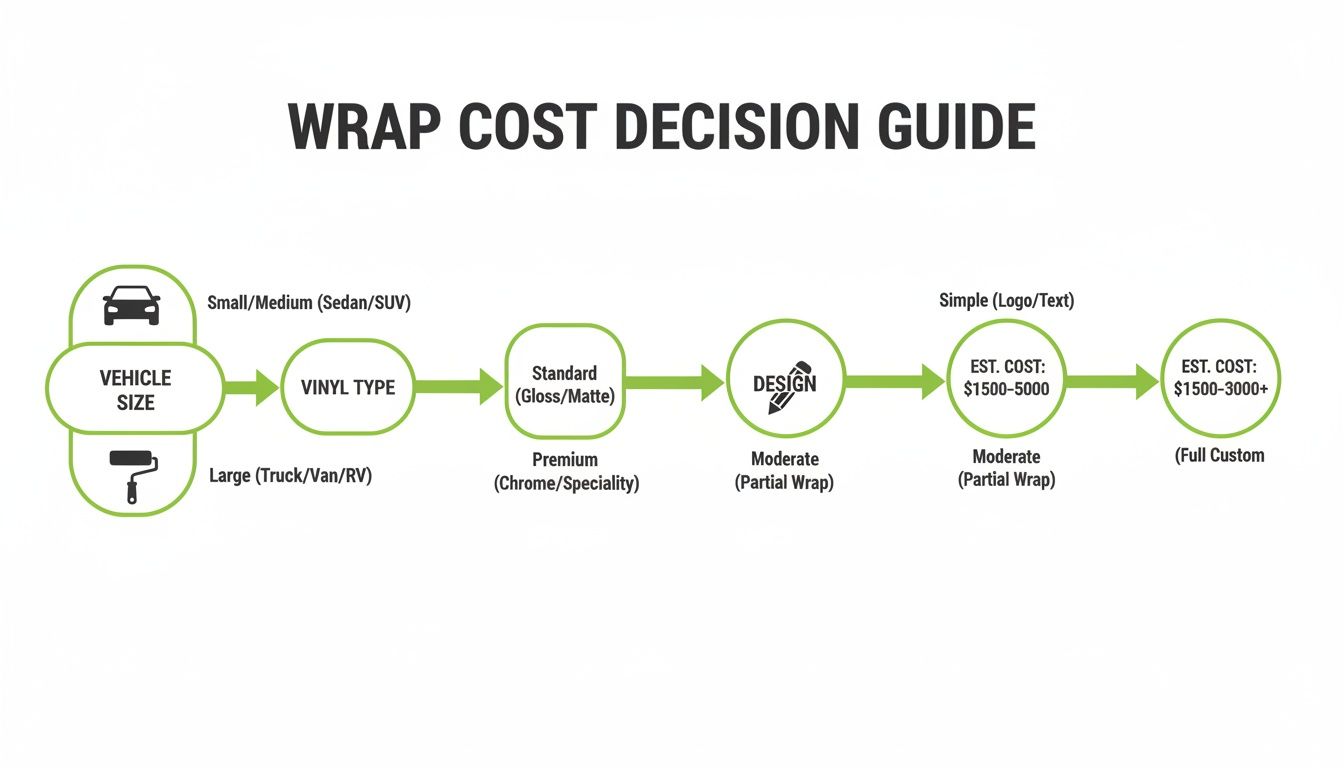
As you can see, every choice leads down a different path. A larger vehicle or a premium specialty vinyl will naturally expand the scope and cost of the project.
The Full Wrap: A Complete Transformation
A full wrap is the ultimate statement piece. It covers the entire painted surface of your vehicle, from bumper to bumper, turning it into a seamless, rolling billboard for your brand. This option delivers the biggest visual punch and gives you total creative freedom.
- Ideal Use Case: It’s perfect for major marketing campaigns, new product launches, or any business that wants to establish a dominant brand presence on the road. A full wrap ensures your vehicle gets noticed from every single angle.
- Cost Insight: This is the most significant investment, reflecting the sheer amount of material used and the intensive, meticulous labour required to get a flawless finish. In NZ, prices for a full wrap on a commercial van typically start around $4,500 and can go up from there.
The Partial Wrap: Strategic Impact on a Budget
A partial wrap is a clever and cost-effective alternative that still packs a powerful punch. Instead of covering everything, it focuses on just a section of your vehicle—maybe the rear doors and side panels, the bonnet, or the back half. The real trick here is that it creatively integrates your vehicle's original paint colour into the design itself.
Imagine a sleek black van. It can look incredibly sharp with a vibrant graphic wrap applied to the rear two-thirds, leaving the front cab in its original factory colour. This creates a high-contrast, professional look while using far less vinyl and taking fewer hours to install.
A well-designed partial wrap can often achieve 70-80% of the visual impact of a full wrap, but at a fraction of the cost. This makes it a fantastic option for startups and small businesses keeping a close eye on their budget.
Spot Graphics and Decals: Targeted and Affordable
Spot graphics are easily the most affordable way to get your brand on the road. These are individual, die-cut vinyl decals, like your company logo, website address, phone number, or a list of your services. We place them strategically on key areas like doors, bonnets, or tailgates for maximum visibility.
This is the perfect solution for businesses that need to brand a large fleet of vehicles efficiently or simply want to add essential contact information without committing to a full-scale wrap design.
- Key Benefits: Quick to design, produce, and apply.
- Cost-Effective: The most budget-friendly option by a wide margin.
- Scalable: Easy to apply consistently across dozens, or even hundreds, of vehicles.
Full Wrap vs. Partial Wrap vs. Graphics: Which Is Right for You?
To help you decide, let's put these three options side-by-side. This table breaks down the key differences in cost, visual impact, and the best scenarios for each type of vehicle branding.
| Feature | Full Wrap | Partial Wrap | Spot Graphics / Decals |
|---|---|---|---|
| Coverage | Covers 100% of the vehicle's painted surface | Covers 25% to 75% of the vehicle | Minimal coverage, targeted placements |
| Visual Impact | Maximum impact and brand immersion | High impact, focused on key areas | Essential branding and information |
| Typical Cost | $$$$ (Highest) | $$ - $$$ (Moderate) | $ (Lowest) |
| Best For | Major campaigns, fleet flagships, total rebranding | Startups, budget-conscious marketing, fleet branding | Large fleets, contact details, minimal branding needs |
| Design | Unlimited creative freedom, seamless look | Integrates vehicle colour into the design | Simple logos, text, and contact information |
Ultimately, the right choice comes down to your specific goals. Are you launching a new brand and need to make the biggest splash possible? A full wrap is your answer. Are you working with a tighter marketing budget but still need to look professional and get noticed? A smartly designed partial wrap offers the perfect balance of impact and affordability.
Calculating the Return on Your Vehicle Wrap Investment
It’s easy to look at vehicle wrap prices and see only the initial bill. But that’s missing the bigger picture. The smart way to think about it is to shift the conversation from a one-time cost to a long-term marketing investment. A vehicle wrap isn't just an expense; it's one of the most powerful and efficient advertising tools you can own.
Think about it: a static billboard or a radio ad that runs for a few weeks is temporary. Your wrapped vehicle, on the other hand, works for you around the clock. Every trip to a job site, every delivery run, and even just sitting in a car park transforms your car or van into a 24/7 mobile billboard, tirelessly building brand awareness. This constant exposure is where the real value kicks in.
The Power of Cost Per Impression
To really get your head around the return on investment (ROI), we need to talk about cost per impression (CPI). This is just a simple way of measuring how much you pay each time a potential customer lays eyes on your ad. And when you stack it up against traditional advertising, the difference is night and day.
Let's look at some other common channels:
- Billboards: Renting a billboard in a high-traffic spot can cost thousands of dollars every month, and you’re just hoping the right people drive past.
- Radio Ads: A short radio spot might cost hundreds or even thousands for a limited run, and that’s assuming listeners aren’t just changing the station.
- Print Advertising: A newspaper or magazine ad has a very short shelf life and is easy for readers to flip right past.
A vehicle wrap completely turns this model on its head. After that one-off investment, it generates thousands of daily impressions for years at no extra cost.
A single wrapped vehicle can generate between 30,000 to 70,000 impressions every single day, depending on how much it's driven. When you calculate the CPI over the wrap's lifespan, it becomes one of the most affordable advertising methods available.
To truly understand the value you're getting, it helps to start mastering marketing ROI measurement. This mindset helps you see beyond the initial price tag and focus on the real, tangible business growth your wrap can drive.
Real-World Examples of ROI in Action
Let’s move from theory to what this looks like on the street. Imagine a local Wellington café that invests $5,000 in a vibrant, full wrap for its delivery van. That van is now a moving advertisement crisscrossing the city, reinforcing the brand with every coffee bean delivery and catering run. This constant visibility builds local recognition and trust far more effectively than a temporary ad campaign ever could.
It's the same for a real estate agent. Their branded car becomes a rolling symbol of professionalism and local expertise. As they drive through neighbourhoods, their wrap constantly puts their name in front of potential buyers and sellers. It generates leads passively and builds a reputation that directly translates into new business.
For larger vehicles like big vans and trucks in NZ, the investment is naturally higher, with full wraps often priced between $5,000 and $10,000 or more. This is perfect for businesses like healthcare providers or logistics firms that need maximum exposure. That price range covers the huge surface area and the intricate labour involved, which can sometimes take a full week. But what you get is a rolling ad campaign that far outpaces traditional methods. You can learn more about how these vehicle wrapping prices create exceptional value in our full guide.
Got Questions About Vehicle Wrap Prices? We’ve Got Answers
Even with all the numbers laid out, it's completely normal to have a few more questions rattling around before you decide to go ahead. Wrapping your vehicle is a big decision, and feeling confident about the entire process is just as important as knowing the cost.
We've put together this FAQ to tackle the most common queries we hear from our clients, with clear, no-nonsense answers. Our aim is to give you all the info you need so you can move forward with your project feeling fully informed.
How Long Does a Vehicle Wrap Last in New Zealand?
This is easily one of the most important questions we get asked. The honest answer? It really comes down to the quality of the materials and how you look after it. A professionally installed wrap using top-tier cast vinyl from brands like 3M or Avery Dennison will typically last you a solid five to seven years.
Let's face it, New Zealand's climate and its intense UV rays are tough on any vehicle surface. That's precisely why premium wraps include a protective UV laminate layer. Think of it as a powerful sunscreen for your wrap, stopping those vibrant colours from fading and keeping the finish looking sharp.
A high-quality wrap is an investment in durability. You might save a bit upfront with cheaper, unlaminated vinyl, but under the Kiwi sun, it could start to fade, crack, or peel in as little as a year or two. That initial saving disappears pretty quickly when you have to replace it.
Good maintenance is your best friend here. Regular hand washing with a gentle, pH-neutral soap and steering clear of harsh automated car washes will make a huge difference in its lifespan.
Will a Wrap Damage My Car’s Original Paint?
This is a very common concern, but we have good news. When a high-quality wrap is installed and, just as importantly, removed by a professional, it absolutely will not damage your car's original factory paint. In fact, it does the exact opposite—it protects it.
The vinyl film acts like a shield, guarding the paint underneath from all sorts of daily hazards like minor scratches, stone chips, road grime, and those harsh UV rays. It essentially preserves your paint in the same condition it was in the day the wrap went on.
There is one crucial exception, though. If your vehicle has a poor-quality respray, or if there's existing damage like rust, chips, or a peeling clear coat, the wrap's adhesive can lift loose paint during removal. This is exactly why a thorough inspection of your vehicle is the non-negotiable first step in our process.
How Long Does the Installation Process Take?
Getting that flawless, paint-like finish is a meticulous process that just can't be rushed. The time it takes really depends on the size and complexity of the vehicle.
Here’s a general idea of what to expect:
- Small Car (e.g., Suzuki Swift): Usually takes about 2-3 days. This covers the deep cleaning, surface prep, and the wrapping itself.
- Medium Sedan or SUV: You're typically looking at 3-4 days. These vehicles have more surface area and more complex curves to work with.
- Large Commercial Van or Truck: This is the most involved, often taking 4-5 days or even longer. The sheer size, plus features like rivets or complex panelling, adds a lot of time to the job.
Remember, a big chunk of that first day is dedicated purely to deep cleaning and preparing the surface. This prep work is the foundation for a perfect, long-lasting finish.
What Information Do I Need to Get an Accurate Quote?
To give you the most accurate vehicle wrap price possible, we need a few key details about your project. Having this information ready when you get in touch helps us understand exactly what's involved and ensures there are no surprises down the line.
Before you reach out, try to have this info on hand:
- Vehicle Details: The make, model, and year are essential. A 2023 Ford Ranger has very different body lines and dimensions to a 2015 model.
- Current Paint Condition: Be honest about any scratches, dents, or imperfections in the paint. Sending us a few photos is incredibly helpful.
- Type of Coverage: Are you thinking of a full wrap, a partial wrap, or maybe just some spot graphics?
- Vinyl Finish: Do you have a particular colour or finish in mind? A standard gloss colour is priced differently from a specialty finish like chrome or matte metallic.
- Design Ideas: If you need custom graphics, tell us as much as you can. Do you already have a logo or design files, or will our team be creating something for you from scratch?
Having these details ready makes the quoting process much faster and helps us give you a price that truly reflects the work required.
Ready to turn your vehicle into a powerful marketing tool? The team at SONI DESIGN is here to bring your vision to life with stunning, high-quality wraps that get noticed. Contact us today for a personalised quote!
Leave a Comment
Stay home & get your daily
needs from our shop
Start You'r Daily Shopping with Nest Mart