
Your cart is currently empty.

When you start looking into getting your vehicle wrapped, the first question on everyone's mind is always, "How much is this going to cost me?" For a standard car here in New Zealand, you're generally looking at a vehicle wrap cost of between $3,000 and $6,000 for a full, professional job.
That price gets you a complete transformation using top-shelf materials, giving your car a stunning new look while also protecting the paint underneath for years to come.
A Snapshot of New Zealand Vehicle Wrap Costs
Before diving into the nitty-gritty, it helps to have a general idea of what to expect. Think of it like getting a quote for a house painting job – the final price depends on the size of the house and the quality of the paint, but you can get a ballpark figure to start with. Vehicle wrapping is much the same; the cost hinges on your vehicle's size and how much of it you want to cover.
This section will give you a straightforward look at typical costs across New Zealand. Whether you’ve got a little hatchback, a family SUV, or a fleet of commercial vans, these numbers will give you a solid foundation for your budget.
Typical Price Ranges
The investment can vary wildly. A full wrap, which changes the entire colour of your car, is a very different job from just adding a few stylish accents. For example, a partial wrap might just cover the bonnet and roof, giving you a custom look for a fraction of the price.
For businesses, a commercial wrap is one of the smartest marketing moves you can make, turning your van or ute into a moving billboard. The cost is naturally higher, reflecting the larger surface area and the custom graphic design needed to make your brand pop on the road.
Remember, a professional wrap is more than just a cosmetic change – it's an investment in protection. Quality vinyl acts like a shield for your original paint, defending it from stone chips, minor scuffs, and the harsh Kiwi sun. This can make a real difference to your vehicle's resale value down the track.
In New Zealand, that $3,000 to $6,000 NZD price point for a full car wrap makes it a really popular alternative to a decent respray. That cost covers a professional installation with premium vinyl designed to last 5-7 years in our conditions, fending off UV damage and road grime. We recently wrapped a Tesla Model Y for an Auckland client in a stunning metallic green, which landed around the $4,000 mark. If you want to explore pricing for a professional job, you can find more details at Soni Design.
To make things easier, here’s a quick guide to help you estimate the potential vehicle wrap cost for your project.
Estimated Vehicle Wrap Costs in NZ
This table provides estimated price ranges for different types of vehicle wraps available in New Zealand, helping you quickly identify the potential budget for your project.
| Wrap Type | Vehicle Example | Estimated Cost Range (NZD) |
|---|---|---|
| Full Wrap | Standard Car (e.g., Toyota Corolla) | $3,000 - $6,000 |
| Partial Wrap | Bonnet or Roof on an SUV | $400 - $800 |
| Commercial Wrap | Large Work Van (e.g., Ford Transit) | $5,000 - $10,000+ |
Keep in mind these are estimates. The final price tag will depend on the specific vinyl you choose, the complexity of your vehicle's shape, and any custom design work involved.
Decoding Your Quote: What Really Shapes the Price
Getting a quote for a vehicle wrap can be a bit like looking at a builder's estimate. You see the final number, but what makes up that cost? It’s not just one thing. The total vehicle wrap cost is a combination of several key elements, and understanding them helps you see the real value you're getting.
Think of it like commissioning a piece of custom furniture. The price isn't just for the wood. It depends on the quality of that timber, the complexity of the design, the skill of the craftsperson, and all the finishing touches. A vehicle wrap is exactly the same. The materials, the design work, and the installer's expertise are the three main pillars that build your final quote.
The Foundation: Your Choice of Vinyl
The biggest chunk of the cost almost always comes down to the vinyl itself. This isn't just a giant sticker. It’s a highly engineered film built to stretch around tight corners, hug every curve of your car, and stand up to New Zealand’s tough sun and rain.
There's a whole spectrum of options out there, and what you choose makes a big difference.
- Standard Finishes: For a clean, classic paint-like look, you’ve got gloss and matte finishes. These are generally the most wallet-friendly choices and come in a massive range of colours.
- Premium Finishes: Want something that turns heads? Materials like satin, metallic flake, colour-shift (the ones that change colour depending on the light), and textured films like carbon fibre carry a higher price tag. They're simply more complicated and expensive to make.
- Specialty Films: At the very top end, you'll find chrome and other highly reflective films. These are the most expensive materials by a long shot and demand an incredible level of skill to install without flaws, which bumps up the labour cost too.
The brand matters, too. We stick to top-tier brands like 3M and Avery Dennison because they’ve poured millions into R&D. Their films not only look amazing but last for years and, crucially, can be removed without wrecking your paint. A cheaper, unbranded vinyl might seem like a bargain upfront, but it can quickly lead to fading, peeling, and a costly headache when it’s time for removal.
This chart gives you a good idea of how the costs stack up for different types of wraps here in New Zealand.
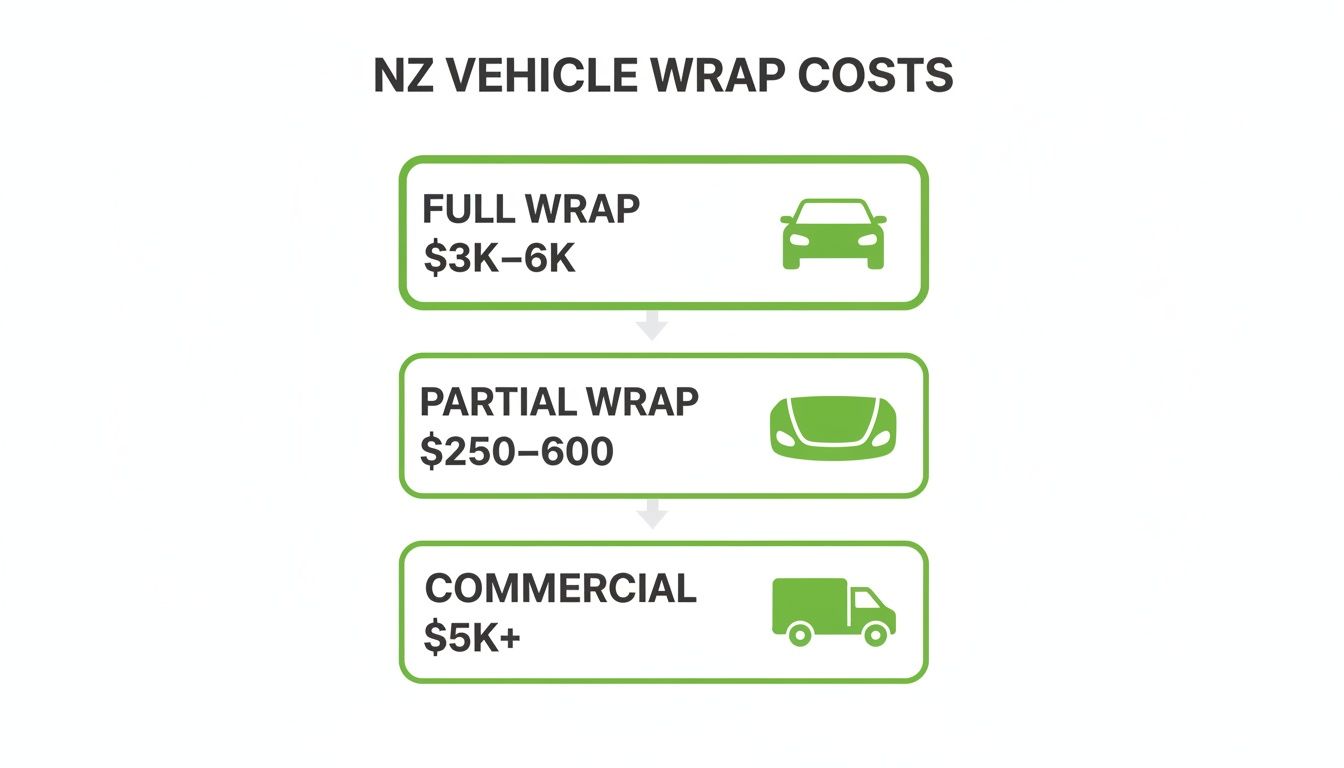
As you can see, jumping from a partial wrap to a full or commercial wrap is a significant step up, mainly because of the sheer increase in materials and time needed.
The Art and Skill: Design and Labour
After the raw material, the next big cost driver is the human touch: the design and the installation. A simple, single-colour change wrap needs a lot less design and prep time than a full-blown commercial graphic with logos, text, and images splashed across every panel.
If you’re getting a printed commercial wrap, the design stage is vital. It takes a skilled graphic designer to create high-resolution artwork that stays sharp when blown up to the size of a van, cleverly align all the branding elements across awkward panels, and get the files perfectly print-ready. That design time is a crucial part of your quote.
Installation is where craftsmanship truly shines. A flawless finish is not accidental; it’s the result of hours of meticulous preparation, precise application, and post-heating to ensure the vinyl adheres perfectly. This skill prevents bubbles, wrinkles, and premature lifting.
Finally, the state of your vehicle's paintwork plays a part. If you have any peeling clear coat, rust spots, or deep scratches, they absolutely must be sorted out before the wrap goes on. Slapping vinyl over a damaged surface won’t just look bad; it will likely pull more paint off when the wrap is eventually removed. Any paint correction we need to do first will be added to the overall project cost.
Comparing Costs: Full, Partial, and Commercial Wraps
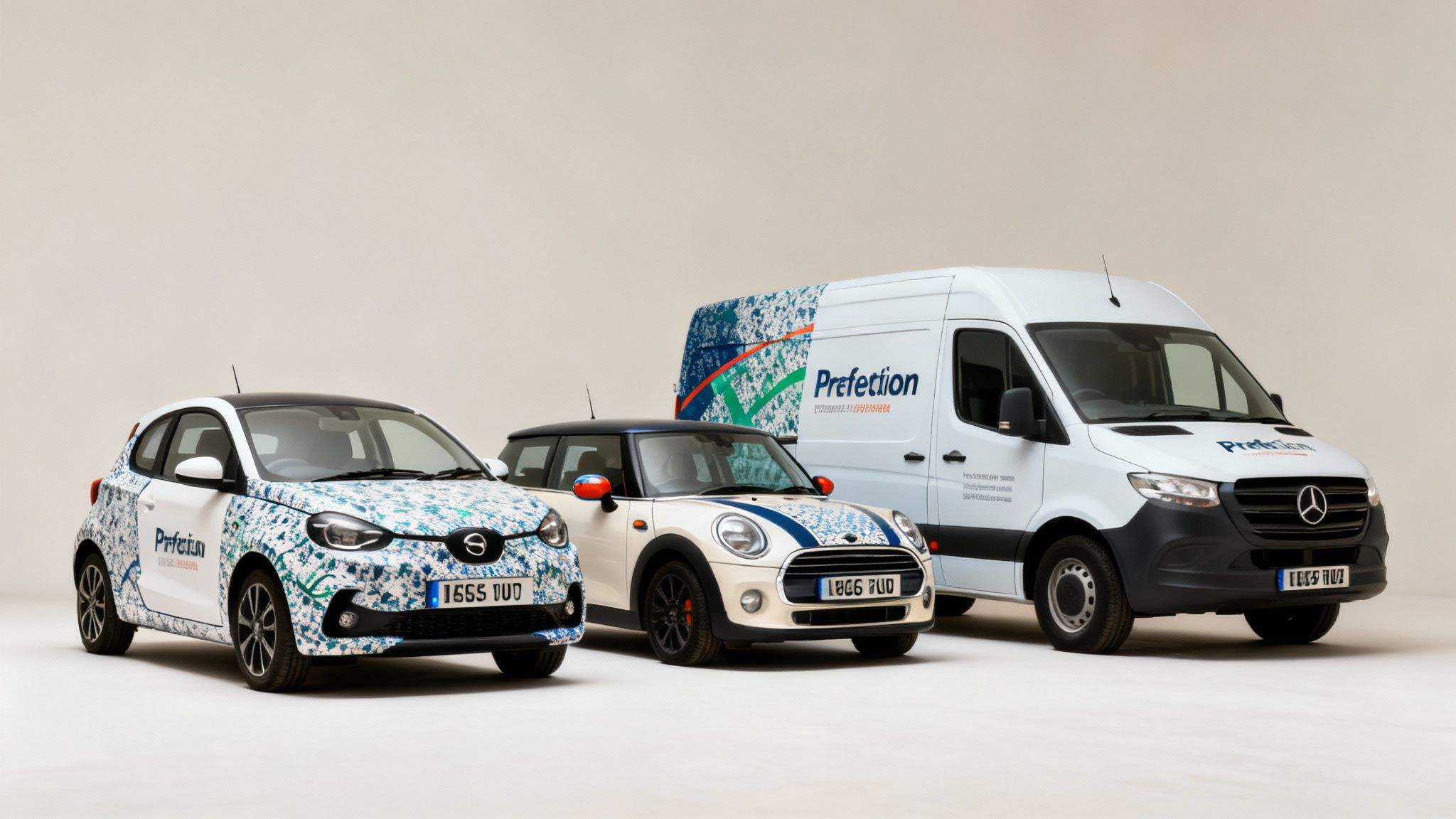
Not all vehicle wraps are created equal, and neither are their price tags. Deciding to wrap your vehicle isn't just about picking a colour; it's about figuring out your end goal. Are you after a total aesthetic overhaul, a subtle touch of personality, or a hard-working marketing tool? Your answer will point you toward a full, partial, or commercial wrap, each with its own cost structure and set of benefits.
Getting your head around these differences is the key to matching your vision with your budget. Think of it like a home renovation. A full repaint is a complete transformation, adding a feature wall is a stylish accent, and fitting out a commercial kitchen is a serious functional investment. Each serves a different purpose and, naturally, comes with a different price.
Full Wraps: The Ultimate Transformation
A full wrap is the top-tier option, covering every last visible painted panel of your vehicle. It’s the go-to choice if you want a complete colour change or need to apply a detailed, seamless graphic across the entire car.
This is for the enthusiast who wants a finish that paint just can't replicate, or for the business owner who needs a perfectly uniform, branded look across their entire fleet. The vehicle wrap cost for a full wrap reflects the huge amount of premium material used and the many hours of skilled labour needed to get that flawless, paint-like finish.
Partial Wraps: Strategic Style on a Budget
If a full wrap is a bit of a stretch, or you’re just looking for a tasteful modification, a partial wrap is a fantastic alternative. This approach zeros in on specific areas of the vehicle, delivering a high-impact look for a fraction of the cost.
Some popular partial wrap options include:
- Roof and Mirror Wraps: A contrasting gloss black roof can instantly give a car a sportier, more premium feel.
- Bonnet Wraps: Often done in matte black or carbon fibre finishes to add an aggressive, performance-oriented vibe.
- Accent Pieces: Wrapping spoilers, door handles, or even interior trim can add those subtle, custom touches that really elevate the overall look.
Because they use much less material and take far less time to install, partial wraps are a great entry point into the world of vehicle customisation. They also double as protection, shielding high-impact areas like the bonnet from stone chips and road debris.
Key Takeaway: A partial wrap is the perfect middle ground. It delivers a custom look and targeted protection without the investment of a full wrap, letting you express your style strategically by focusing your budget where it makes the biggest visual difference.
Commercial Wraps: A Marketing Powerhouse
When we start talking about commercial wraps, the conversation shifts from pure looks to return on investment. A commercial wrap turns a company van, ute, or truck into a mobile billboard that works for you 24/7. The cost here isn't just an expense; it’s a marketing investment that gets to work every time the engine is running.
These wraps are typically printed with custom graphics—logos, contact info, and brand messaging. The complexity of the design, the sheer size of the vehicle, and the type of printed vinyl all factor into the final price. For large vans and trucks in New Zealand, full commercial wraps can command $5,000 to $10,000+ NZD. This reflects the massive amount of material and labour needed for commercial vehicles.
While the installation cost is significant, the visibility these moving ads generate on major routes like SH1—potentially reaching up to 70,000 impressions daily—delivers incredible marketing value.
Choosing the right wrap comes down to balancing cost, coverage, and your ultimate goal. To make it clearer, let's break down the key differences between a full and partial wrap.
Full vs Partial Wraps: A Cost-Benefit Breakdown
| Feature | Full Vehicle Wrap | Partial Vehicle Wrap |
|---|---|---|
| Typical Cost | Higher initial investment ($3,500 - $8,000+ NZD) | More budget-friendly ($500 - $2,500+ NZD) |
| Coverage | Covers all painted surfaces for a complete transformation. | Covers specific panels like the roof, bonnet, or mirrors. |
| Best For | Complete colour changes, full-body graphics, maximum paint protection. | Accents, two-tone looks, branding highlights, targeted protection. |
| Benefits | Ultimate customisation, seamless look, comprehensive paint shield. | High-impact style for less, faster installation, easier to change. |
| Installation Time | 3-5 days typically | A few hours to 1-2 days |
Ultimately, a partial wrap offers a fantastic, budget-conscious way to make a statement, while a full wrap provides the ultimate canvas for a complete transformation.
While wraps provide excellent protection, they're one of several ways to preserve your vehicle's appearance. For those exploring other paint protection options, understanding how much ceramic coating costs can be a useful comparison when you're budgeting for your vehicle's long-term care.
How Your Vehicle's Specifics Shape the Final Price
It’s easy to think about a vehicle wrap in terms of just its size, but the real story is in the details. The specific shape, condition, and features of your car, van, or ute have a massive impact on the final quote. Think of it less like buying paint by the litre and more like getting a custom suit made; the final price isn't just about the fabric, but how much time and skill it takes to get the fit just right.
Every curve, bumper, and mirror is a unique challenge that requires a different level of expertise. This is why a quote for a small, boxy hatchback can be worlds apart from one for a large ute with complex body lines – it all comes down to the time and precision needed to get a perfect finish.
Size and Shape: The Two Biggest Players
Let's start with the obvious: the size of your vehicle. A big Ford Transit van is naturally going to need more vinyl and more hours of labour than a little Suzuki Swift. This is the baseline for any quote, covering the raw materials and the fundamental time on the tools.
But size is only half the equation. The complexity of the vehicle's shape is just as crucial. A van with big, flat, billboard-like sides is a relatively straightforward job. A sleek sports car, on the other hand, with its deep curves, aggressive vents, and sharp body lines, is a different beast altogether.
These complex surfaces demand a huge amount of skill from our installers. They have to carefully heat and stretch the vinyl to mould it into every recess without creating a single wrinkle, bubble, or weak point. Bumpers with intricate grilles or heavily sculpted door panels can easily add hours to the job, pushing up the labour component of your vehicle wrap cost.
A vehicle loaded with complex curves and deep recesses can demand 20-30% more installation time than a flat-surfaced vehicle of the same size. That extra time is what it takes to deliver a flawless, durable finish that looks like paint.
The Vinyl Itself: Finish and Design Choices
The type of vinyl you choose plays a massive role in the cost. As we’ve mentioned, standard gloss and matte colours are your most budget-friendly options. But once you venture into the world of premium and specialty films, the price per metre starts to climb.
- Premium Finishes: Materials like metallic, satin, and dazzling colour-shift films cost more to produce, and that’s reflected in the price.
- Specialty Films: At the top end, you have films like chrome, brushed metal, and textured carbon fibre. These are not only the most expensive materials on the market but are also notoriously tricky to install, requiring a master technician's touch. The job takes longer, and the material costs more, creating a double impact on the price.
A simple, single-colour wrap is also a very different project from a fully custom-printed commercial design. If your branding calls for detailed logos, high-resolution photos, or intricate patterns, you'll need to factor in the costs of graphic design, the printing process itself, and the all-important protective overlaminate that shields the ink from UV fading and scratches.
Don't Forget the Starting Point: Your Vehicle's Condition
Finally, we have to look at the canvas we're working with – your vehicle's current paintwork. For a wrap to look great and last for years, the vinyl needs a perfectly smooth, clean, and stable surface to stick to. If your paint has issues, they absolutely must be sorted out before we even think about applying the first piece of vinyl.
Here are the most common deal-breakers we see:
- Peeling Clear Coat: Wrapping over a failing clear coat is a guaranteed recipe for disaster. When the time comes to remove the wrap, it will take the flaking clear coat and paint right off with it.
- Rust or Deep Scratches: These imperfections will show through the vinyl, completely ruining that smooth, sleek finish you're after. The area needs to be professionally repaired and sanded flush first.
- Poor Quality Resprays: A cheap, aftermarket paint job often lacks the strong bond of factory paint. This means it can be damaged during the installation or, more likely, when the wrap is removed.
Any paint correction or surface prep adds to the project's timeline and cost. But trust us, it’s a non-negotiable step. Skipping it will only lead to a poor result and bigger problems down the road.
The True Value of a Professional Installation
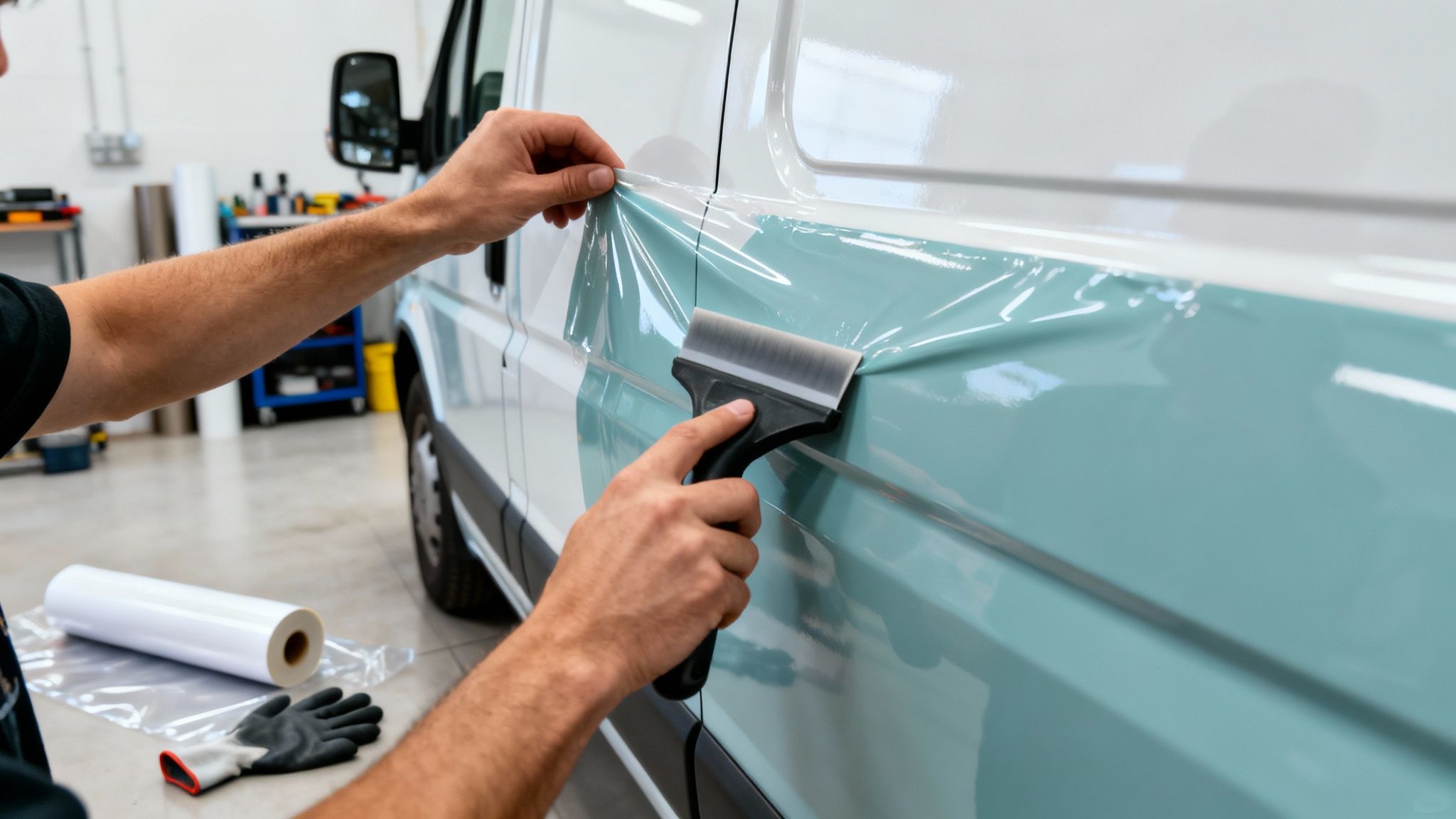
It’s easy to get sucked into watching a few "how-to" videos on YouTube and think, "I could do that." The idea of saving a good chunk of your vehicle wrap cost by tackling it yourself is definitely appealing. But honestly, the gap between watching a pro make it look easy and actually getting a smooth, durable finish yourself is massive.
This isn't just about saving a bit of cash upfront. It’s a classic trade-off between quality, how long the wrap will last, and what you’re really getting for your money. A professional job is all about precision—it's where years of experience and the right tools create a finish so good it looks like it came from the factory. A DIY job, on the other hand, is usually a masterclass in frustration, with mistakes that can quickly add up to more than you were trying to save.
The Hidden Costs of a DIY Wrap
Going the DIY route involves a lot more than just ordering a roll of vinyl online. The real costs start to sneak up on you, and that initial "bargain" can evaporate pretty quickly.
First off, you need the right gear. To get anywhere close to a professional result, you need a specific toolkit that isn't standard for most home garages.
- Heat Gun: This is non-negotiable for stretching vinyl around curves without burning or overstretching it.
- Squeegees and Applicators: You can't just use any old plastic scraper. You'll need proper felt-edged tools to apply pressure without leaving a trail of scratches.
- Knifeless Tape: This is the pro's secret for getting crisp, clean lines without taking a razor blade to your car's paintwork.
- Cleaning Solutions: The surface has to be perfectly clean for the vinyl to stick properly. We're talking isopropyl alcohol and specialised prep sprays.
Beyond the tools, the biggest budget-killer is material waste. Vinyl isn't cheap, and one bad cut, a stubborn wrinkle, or a trapped air bubble can mean an entire panel is ruined. You just have to throw it away and start again. It’s pretty normal for a first-timer to waste 15-25% of their material, which could easily add hundreds of dollars to the final bill.
The most overlooked cost of a DIY wrap? Your time. A professional might wrap a whole car in 3-5 days. A beginner could easily spend weeks of their spare time on it, only to end up with a result they're not happy with.
Why a Professional Finish Is Worth It
When you bring your vehicle to a team like Soni Design, you're not just paying for someone's time. You're paying for expertise, top-quality materials, and a result that's guaranteed. You can see the difference in the fine details.
Professional installers have spent years learning how vinyl behaves. They know exactly how much heat to apply, the precise amount of tension to use, and how to work the film into tricky areas like mirrors and bumpers without creating stress points that will cause it to lift later. It's this practiced skill that gets you that seamless finish, free from the classic DIY tells like bubbles, creases, and wonky edges.
Better yet, a professional shop will stand by their work. You get warranties covering both the vinyl itself and the installation. If the wrap starts peeling or lifting because of a fault in the workmanship, it gets fixed. That kind of peace of mind is something you just don't get when you're on your own in the garage. At the end of the day, a professionally installed wrap protects your car, looks incredible, and lasts for years—a much smarter investment all around.
Protecting Your Investment: Maintenance and Lifespan
Getting a high-quality vehicle wrap is a serious investment in your car’s style and protection. To make sure you get every bit of value from it, a little TLC is all it takes. Following a few simple care guidelines can make a huge difference in its lifespan, keeping your wrap looking sharp for years to come.
It helps to think of your new wrap like a custom paint job. It needs regular, gentle cleaning to keep dirt, road grime, and other contaminants from baking into the vinyl. Things like bird droppings, bug splatter, or tree sap can cause permanent damage if left for too long, so it's best to clean them off as soon as you spot them.
Best Practices for Washing Your Wrapped Vehicle
When it comes to wrap care, the golden rule is simple: be gentle. Aggressive washing is the fastest way to cause peeling, lifting, or scratching.
- Hand Wash Often: The best and safest approach is a classic two-bucket hand wash. Grab a soft microfibre wash mitt and a pH-neutral car shampoo. This helps you avoid the harsh chemicals and abrasive brushes common in automatic car washes.
- Avoid High-Pressure Jets: If you're using a pressure washer, be careful. Keep the nozzle at least one metre away from the surface and never aim the stream directly at the edges or seams of the wrap. A direct blast can easily force water underneath and cause the vinyl to lift.
- Pat Dry, Don't Rub: After a wash, gently pat the vehicle dry with a clean, soft microfibre towel. This simple step prevents you from accidentally scratching the finish.
A well-maintained, high-quality vinyl wrap should last between 5 and 7 years in New Zealand conditions. Regular cleaning and avoiding harsh chemicals are the two most important factors in getting the most out of your investment.
Knowing When It's Time for a Change
Even with perfect care, every vehicle wrap eventually reaches the end of the road. Over time, constant exposure to those harsh Kiwi UV rays and the elements will cause the vinyl to break down. Knowing the signs of an ageing wrap is key to protecting the original paintwork underneath.
Keep an eye out for these tell-tale signs:
- Fading or Discolouration: If the colours look dull, washed out, or have a chalky finish, the UV protective layer has probably worn out.
- Cracking or Brittleness: You might notice small cracks appearing, especially on horizontal surfaces like the bonnet and roof. This means the vinyl has become brittle and lost its flexibility.
- Lifting or Peeling Edges: When the edges start to lift and just won't stay down, it's a clear signal that the adhesive is failing.
Trying to remove a failed wrap yourself can be a nightmare and might even damage your paint. It’s always best to have it professionally removed to get a clean, damage-free result.
While a vehicle wrap offers fantastic protection, if your main goal is purely to preserve the factory paint, it's worth looking into Paint Protection Film. You can learn more in this Ultimate Guide to Paint Protection Film (PPF) Benefits and Costs to see how the two solutions compare.
Got Questions About Vehicle Wrap Costs? We've Got Answers
Right about now, you're probably weighing up the options and have a few final questions buzzing around. That’s completely normal. Investing in a vehicle wrap is a big decision, so let's clear up some of the most common queries we get from customers.
Think of this as your final sanity check. We'll tackle the big ones – wrap vs. paint, timing, and whether it’ll affect your car’s original finish. Our aim is to give you straight, honest answers so you can feel 100% confident in your choice.
Is It Cheaper to Wrap or Paint a Car in New Zealand?
Nine times out of ten, wrapping your car is significantly lighter on the wallet than a high-quality paint job. A professional respray in New Zealand that matches the original factory finish can easily set you back over $10,000 NZD. For comparison, a full premium wrap on a standard-sized car usually falls somewhere between $3,000 and $6,000.
But it's not just about the upfront cost. Wrapping is faster, which means your car spends less time off the road and more time turning heads. The real kicker, though, is that a wrap is completely reversible. It acts as a protective shield for your original paint, which is a massive bonus when it comes to preserving your car's resale value.
A wrap gives you the creative freedom to completely change your car’s look for a fraction of what a comparable paint job would cost. Plus, you’re protecting the asset underneath. It’s a win-win for both your style and your investment.
How Long Does the Car Wrapping Process Take?
The timeline really comes down to three things: the size of your vehicle, the complexity of its design (think sharp angles and deep recesses), and how much of it we're covering.
- Full Wraps: For a complete, bumper-to-bumper wrap on a typical car, you should plan for it to be with us for 2 to 5 days. This timeframe allows for our multi-step process: deep cleaning and surface prep, the meticulous application itself, and a final quality check to ensure everything is perfect.
- Partial Wraps: If you're just looking to wrap a roof, bonnet, or wing mirrors, the job is much quicker. We can often get these smaller projects turned around in just 1 to 2 days.
Will a Vinyl Wrap Damage My Car's Paint?
Here’s the straight answer: when applied and removed by a seasoned professional, a quality vinyl wrap will not damage your car's factory paint. In fact, it does the exact opposite. For years, that vinyl will be a barrier, taking the hit from minor scratches, stone chips, and the harsh Kiwi sun.
The only time you run into trouble is if the wrap is applied over a dodgy paint job. If your car has rust, flaking clear coat, or a cheap aftermarket respray, the paint can lift when the vinyl is eventually removed. This is precisely why the first thing we do is a thorough inspection of your vehicle's surface – it’s a non-negotiable step for a flawless, long-lasting finish.
Ready to see what a professional wrap can do for your vehicle? The team at SONI DESIGN lives and breathes this stuff, and we’re here to bring your vision to life. Get a personalised quote today and experience the difference true craftsmanship makes.
Leave a Comment
Stay home & get your daily
needs from our shop
Start You'r Daily Shopping with Nest Mart