
Your cart is currently empty.

So, you're thinking about wrapping your van? It's one of the best moves a business can make. You’re not just getting a new look; you're turning a work vehicle into a round-the-clock marketing machine that works for you everywhere it goes.
But the big question is always the first one: "How much is this actually going to set me back?" Let's get straight into it.
Your Guide to Van Wrap Pricing in New Zealand
Getting a handle on van wrap pricing isn't about finding one magic number. Instead, it’s about understanding the different ingredients that make up the final cost. Knowing what influences the price will help you set a realistic budget and make a smart investment for your company.
This guide will break it all down for you, plain and simple. We’ll look at the key factors so you know exactly what you’re paying for.
Here’s what we'll cover:
- Van Size: How the price changes between a small van and a massive high-roof model.
- Wrap Coverage: The cost difference between wrapping the entire vehicle (a full wrap) versus covering just key areas (a partial wrap).
- Vinyl Quality: Why it often pays to invest in premium vinyl for a better finish and longer lifespan.
- Design & Installation: How complex graphics and the van's shape can affect the final quote.
Estimated Van Wrap Pricing in NZ at a Glance
Before we get into the nitty-gritty, it helps to have a rough idea of what to expect. In New Zealand, turning a vehicle into a mobile ad is a go-to strategy for businesses in trades, retail, and hospitality. For a full wrap on a standard van, you're generally looking at a price somewhere between $4,000 and $7,000.
Of course, for larger vans and trucks, prices often start from $5,000 and can easily climb to $10,000 or more. This isn't just for the vinyl itself; this investment covers top-quality materials from brands like 3M or Avery Dennison, plus the expert labour required to get a flawless finish over every curve and corner. You can often find great insights on vehicle wrapping prices from local experts.
This table gives you a quick snapshot of typical costs based on van size. Use these as a starting point.
| Van Size | Typical Price Range (NZD) |
|---|---|
| Small Van (e.g., Ford Transit Connect) | $4,000 – $5,500 |
| Medium Van (e.g., Toyota HiAce) | $5,000 – $6,500 |
| Large Van (e.g., Mercedes Sprinter) | $6,000 – $7,500+ |
Think of these numbers as a solid baseline. Now, let’s look at the specific details that can move the price up or down.
Breaking Down the Key Factors in Van Wrap Pricing
Ever wonder why one quote for a van wrap can be hundreds, or even thousands, of dollars different from another? The final price tag isn't just a number pulled out of a hat; it’s a calculated sum of several moving parts. Getting your head around these components is the first step to setting a realistic budget and truly appreciating the craftsmanship that goes into a great wrap.
Think of it like getting a custom suit made. The quality of the fabric, the complexity of the cut, the size of the person, and the tailor's skill all feed into the final cost. A van wrap is exactly the same. Let's peel back the layers and see what really drives the price.
Van Size and Shape: The Starting Point
This one’s the most obvious. A small Ford Transit Connect just doesn't have the same amount of real estate as a high-roof Mercedes Sprinter. More surface area means more vinyl and more hours on the tools for the installation team, which directly bumps up the cost. Simple as that.
But it’s not just about square metres. The complexity of your van’s bodywork is a massive factor. A simple, flat-sided cargo van is a wrapper’s dream—a blank canvas that’s relatively straightforward. On the other hand, a van with deep recesses, sharp curves, flared wheel arches, or a tricky bumper design demands a whole different level of skill and time to get right.
This is where a seasoned installer earns their keep. They have to carefully heat, stretch, and mould the vinyl into every single contour, all without overstretching the material or distorting your printed design. This painstaking work is why a vehicle's shape can easily add 15-25% to the installation bill. So, while a standard van might sit at a certain price point, a more curvaceous model will always cost more to wrap properly.
Full vs Partial Wraps: Choosing Your Coverage
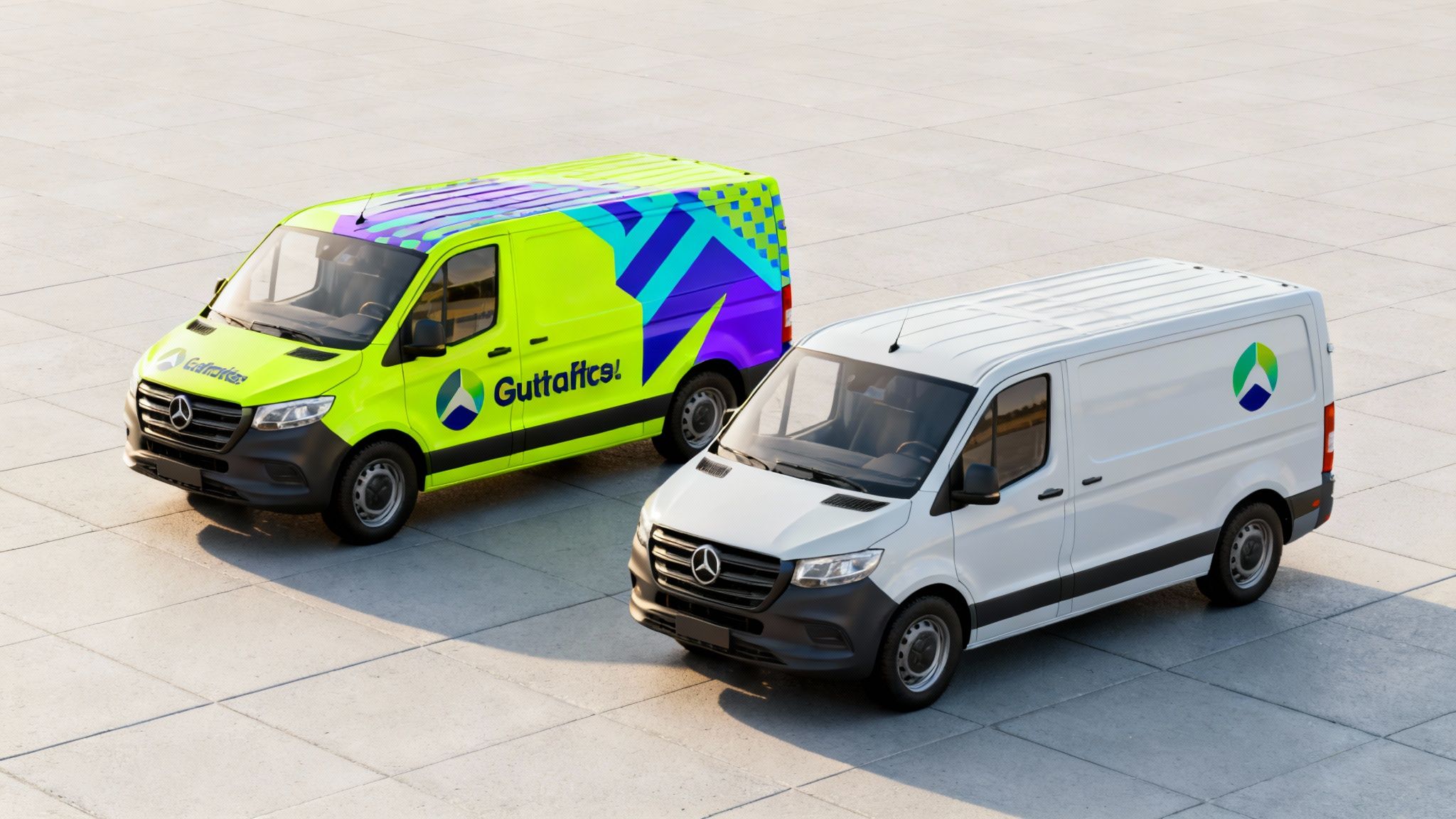
Deciding between a full or partial wrap is a big fork in the road for your budget and branding. A full wrap is the ultimate mobile billboard, covering every painted surface for maximum impact. A partial wrap, however, is a smart, cost-effective alternative that uses your van's base colour as part of the design, focusing the graphics on key areas like the sides, back, or bonnet.
Let's break down the differences.
Cost Influencer Breakdown: Full vs Partial Wraps
| Feature | Full Van Wrap | Partial Van Wrap |
|---|---|---|
| Coverage | Covers the entire painted surface of the van. | Covers a specific portion (e.g., 25%, 50%, or 75%) of the van. |
| Cost | Higher initial investment due to more material and labour. | Significantly more budget-friendly. A great entry-level option. |
| Visual Impact | Maximum "wow" factor. Complete brand transformation. | High impact when designed well. Cleverly integrates the van's original colour. |
| Ideal Use | Businesses wanting to dominate the road and make a bold statement. | Start-ups, budget-conscious businesses, or for a more subtle branding look. |
Ultimately, a partial wrap can deliver incredible results for a fraction of the cost if the design is smart and well-executed. Don't feel like you have to go all-in with a full wrap to get noticed.
The Great Vinyl Debate: Cast vs Calendered
Not all vinyl is created equal. This is one of the most critical decisions, affecting both the price and how long your wrap will last. The two main players in the game are cast vinyl and calendered vinyl.
-
Cast Vinyl: This is the good stuff, the premium choice for vehicle wrapping. It starts as a liquid that’s cast into a thin sheet, resulting in a durable, flexible film that’s a dream to work with. It conforms beautifully to complex curves and deep channels without shrinking or pulling back over time. For a full wrap on anything but a perfectly flat box, cast vinyl is the professional standard for a reason.
-
Calendered Vinyl: This material is made by rolling and stretching a thicker paste, which makes it more rigid. While it’s easier on the wallet, it's really only suited for flat surfaces or very gentle curves. Try to force it into complex shapes, and you’ll be dealing with lifting, shrinking, and a wrap that fails way too soon.
Think of it this way: Cast vinyl is like a high-quality stretch denim that moves with you, while calendered vinyl is more like a stiff, non-stretch fabric. You wouldn't try to tailor a sharp suit from a material that can't handle curves—the same logic applies here.
The diagram below gives you a clear idea of how a van's size sets the baseline for the overall cost.
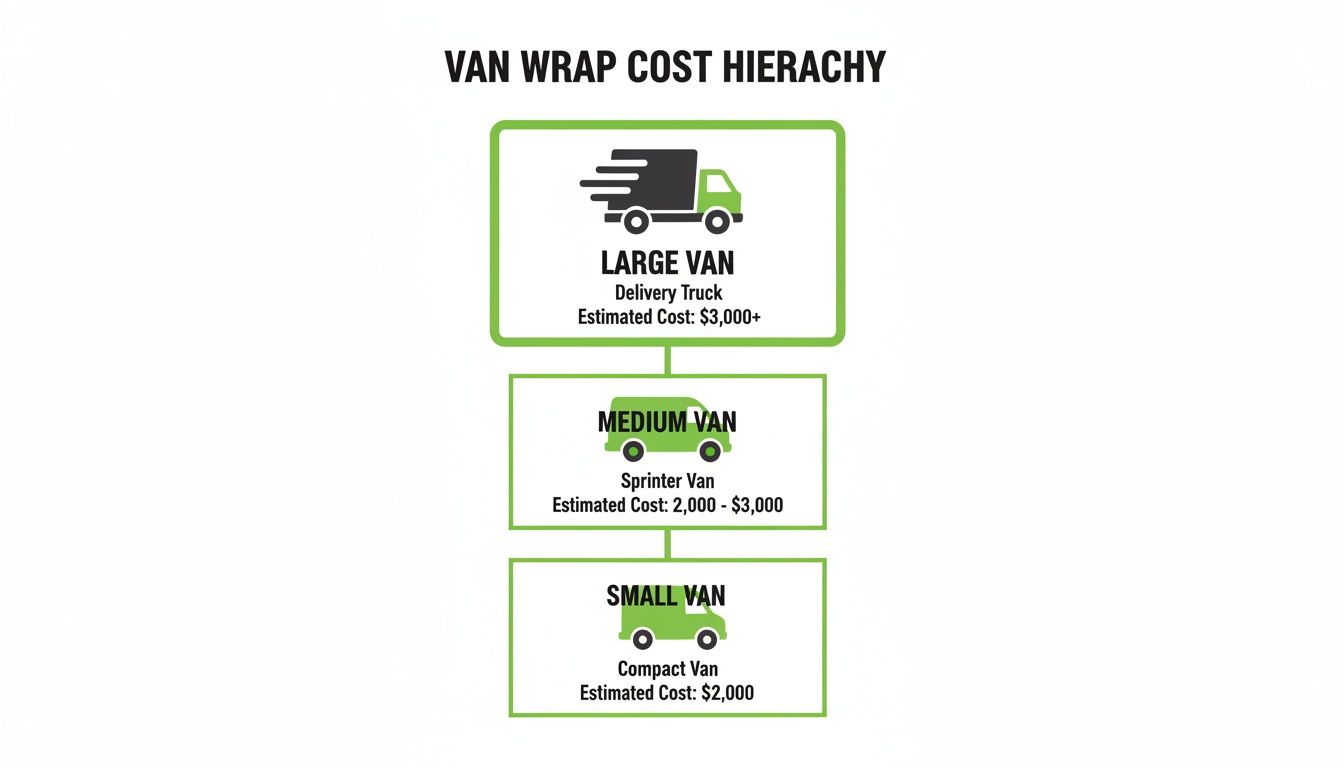
As you can see, the bigger the van, the higher the starting cost for materials and labour, and that's before we even get to the other details.
Design and Print Quality
Your design vision has a direct line to your final quote. A simple, single-colour wrap with a clean logo is far less expensive to set up and print than a full-colour, photo-realistic mural with intricate patterns and layered graphics.
Here’s what goes into the design and print side of the cost:
-
Design Time: If you’re starting from scratch, you’re paying for a graphic designer’s expertise. A complex, eye-catching design for a food truck, for instance, will take a lot more creative horsepower than placing a simple logo on a corporate van.
-
Printing & Inks: High-resolution printing uses more ink and takes more time on the machine. If you want to add some flair with specialty finishes like metallic, chrome, or reflective elements, that will also add to the bill.
-
Lamination: This is a crucial, non-negotiable step. A protective laminate is applied over the printed vinyl, acting as a shield against UV rays (which cause fading), minor scratches, and road grime. Skipping lamination to save a few bucks is a huge mistake—it’s like buying a new phone and refusing to put a screen protector on it. You're just asking for trouble and dramatically shortening the life of your investment.
When it's all said and done, every choice—from the size of your van to the vinyl you pick and the complexity of your design—builds on the last to create your final price. Understanding these core factors helps you make smarter decisions and find a wrap that perfectly balances your budget with your brand's ambition.
Choosing Between a Full or Partial Van Wrap
Deciding how much of your van to cover is one of the biggest calls you'll make, and it directly shapes the final cost. This isn't just a cosmetic choice; it's a strategic one. Are you going for a full-blown mobile billboard, or a more targeted, punchy statement?
Think of it like this: a full wrap is the blockbuster movie poster, while a partial wrap is the clever, eye-catching ad that makes you look twice. Both work brilliantly, but they serve different goals and budgets. Let's break down which approach might be the right one for your business.
The Case for a Full Van Wrap
A full wrap is the gold standard for making a statement. We're talking about a complete vehicle transformation, covering every last bit of painted metal from bonnet to boot. It gives you a seamless, uninterrupted canvas to bring your brand to life, creating a moving masterpiece that’s impossible to ignore.
A full wrap really shines for:
- Established Brands: If you have a strong visual identity, a full wrap projects a premium, confident image that says you're a leader in your field.
- Maximum Impact: For businesses in a crowded space, like hospitality or trades, a full wrap helps you cut through the noise and stand out.
- Complex Designs: When your branding involves detailed graphics, intricate patterns, or a story that needs the whole vehicle to be told, nothing else comes close.
In short, if your goal is to make the biggest, boldest impression possible and you’ve got the budget for it, a full wrap delivers unmatched visual authority. It tells everyone you’re serious, professional, and invested in your brand.
The Strategic Power of a Partial Wrap
Don't write off the partial wrap as a compromise. It’s a smart, budget-savvy move that can pack a serious punch. By strategically covering key areas—the side panels, back doors, or maybe the bonnet—you can create a dynamic design that cleverly uses your van's original paint colour as part of the look.
A partial wrap is a brilliant tactic when you need big results on a tighter budget. It’s not about doing less; it’s about being more deliberate with your design and your dollars.
A new startup, for instance, can get a professional, high-impact ad on the road with a partial wrap. It saves crucial cash for other parts of the business while still looking sharp. It’s all about working smarter.
Comparing Your Options Side-by-Side
To make the right call, you need to see the pros and cons laid out clearly. This decision is about more than just the upfront cost; it’s about long-term value and what feels right for your brand.
Here’s a look at how they stack up:
| Aspect | Full Van Wrap | Partial Van Wrap |
|---|---|---|
| Visual Impact | A complete transformation. It's a seamless mobile billboard designed for maximum 'wow' factor. | Strategic and focused. The contrast with the paint can really draw the eye to your logo and contact info. |
| Cost | A significant investment. Expect it to be 30-50% more than a partial wrap due to more material and labour. | Very cost-effective. It delivers a professional look on a more manageable budget. |
| Design Flexibility | Endless creative freedom. Your designer can use every curve and angle to tell your brand's story. | Requires a clever designer who can integrate the van's existing colour and lines into the final look. |
| Best For | Established businesses aiming for market dominance or those with complex, immersive designs. | Startups, budget-conscious companies, or businesses that prefer a clean, minimalist aesthetic. |
Ultimately, there’s no single right answer. A local sparkie might find that a clean partial wrap with their logo and phone number is all they need to look professional and attract calls. On the other hand, a new coffee truck needs that vibrant full wrap to create an instant identity and draw a crowd from across the park. Both are powerful strategies when they align with the right business goals.
The Long-Term Value of a Quality Van Wrap
It’s easy to look at the price of a van wrap and see it as just another business expense. But that's missing the bigger picture. Think of it less like a one-off cost and more like a long-term investment in your brand’s visibility and your vehicle’s protection.
Traditional ads, like a radio spot or a Google ad, disappear the moment you stop paying. A van wrap is different. Once it's on, it works for you around the clock, day in and day out, from a single upfront investment.
Your van is instantly transformed into a 24/7 mobile billboard. It’s turning heads on the motorway, grabbing attention while you’re parked at a job site, and building name recognition all over your local community. Every kilometre driven is another marketing opportunity.
An Advertising Powerhouse
When you crunch the numbers, the return on a vehicle wrap can be massive. Unlike a static billboard or a fleeting digital ad, your van generates impressions wherever it goes, building the kind of brand familiarity and trust that wins new customers.
Let's talk cost per impression. A single van can rack up thousands of views every single day, making it one of the most cost-effective advertising tools you can buy. Spread that initial cost over its five to seven-year lifespan, and the cost per thousand impressions often blows other advertising methods out of the water.
A high-quality van wrap isn’t just about looking good; it's a strategic tool designed to drive business growth. It silently works to keep your brand top-of-mind, ensuring that when a customer needs your service, your name is the first one they remember.
At the end of the day, a quality wrap is a core part of your marketing machine, playing a key role in strategies for increasing sales for NZ businesses. It’s a physical, tangible piece of your brand that’s out there every day, working to bring in new leads and cement your professional image.
More Than Just a Pretty Face
Beyond the powerful advertising benefits, a quality vinyl wrap provides a serious layer of protection that adds huge long-term value. It acts as a durable shield for your van’s original paintwork, preserving its condition against the harsh New Zealand elements.
Think of it as armour for your paint. This protective layer defends against:
- UV Ray Damage: The strong NZ sun is brutal on paint, causing it to fade and degrade. A wrap blocks these harmful rays, keeping the paint underneath looking as good as the day it was covered.
- Minor Scratches and Scuffs: Daily driving means dealing with road debris, stray branches, and car park bumps. The vinyl wrap takes the hit, not your expensive factory paint.
- Chemicals and Contaminants: Nasty stuff like bird droppings and tree sap can be corrosive and permanently etch into your paint. A wrap creates an easy-to-clean barrier against them.
This protection has a direct impact on your vehicle’s resale value. When it’s time to upgrade the fleet, you can simply remove the wrap to reveal pristine, well-preserved paint. A van with a flawless factory finish is always going to attract more buyers and fetch a higher price than one showing years of wear and tear.
Right, you’re ready to get your van wrapped and turn it into a rolling advertisement for your business. The next step is getting a quote, but if you go in unprepared, you'll likely get vague estimates that are hard to compare.
To get a truly accurate price, you need to arm your potential wrap shop with the right information from the get-go. Think of it like asking a builder for a quote without giving them the blueprints—they can only guess. The more detail you provide, the tighter the quote, which lets you compare different suppliers on a true like-for-like basis. This is the best way to avoid nasty surprises down the road.
Your Pre-Quote Checklist
Before you even think about picking up the phone or firing off an email, take a few minutes to pull these details together. Having this info ready not only makes the process smoother but also shows the wrap shop you’re organised and serious about the project.
-
Vehicle Information: This is non-negotiable. You’ll need the exact make, model, year, and current colour of your van. A 2023 Toyota HiAce has totally different dimensions and body lines than a 2018 Ford Transit, and those details matter.
-
Vehicle Photos: Snap some clear photos of your van from all four sides—front, back, and both full sides. It’s also crucial to get close-ups of any dings, rust spots, or patches of peeling paint. Any surface imperfections have to be sorted before a wrap can be applied, and the shop needs to know about them.
-
Your Design Vision: Are you coming to the table with a print-ready design, or are you starting from a blank slate? Let them know if you have brand guidelines, a logo, and specific colours you need to use, or if you'll need their help with the creative side of things.
-
Desired Coverage: Be specific about what you’re after. Are you looking for a full wrap, a partial wrap, or just some vinyl lettering? If you’re thinking partial, spell out exactly which bits you want covered (e.g., "just the side panels and back doors").
Putting this information together first doesn't just get you a faster, more accurate quote. It sets the stage for a professional and efficient project from day one.
Questions You Should Ask Every Provider
Getting a quote is a two-way street. This is your opportunity to vet potential suppliers and get a feel for their experience and professionalism. Any reputable shop will be happy to answer your questions and should do so with confidence.
Make sure you ask them these questions:
- What vinyl brands and types do you use? You want to hear names like 3M, Avery Dennison, or Oracal.
- Is a protective laminate included in the price? The answer to this should be a firm "yes." No exceptions.
- What is your installation warranty? A pro will always stand by their work. Look for a warranty of at least one year on the installation itself.
- Can you show me examples of similar vans you’ve wrapped?
- How long will the installation take, and how long do you need my van for?
Be wary of a quote that seems too good to be true. A suspiciously low price is often a massive red flag. It could mean they’re using cheap, low-grade materials (like calendered vinyl on curves, which is a big no-no), relying on inexperienced installers, or operating without proper insurance. Your van wrap is a major investment in your brand’s image, and cutting corners here will almost certainly cost you more in the long run.
Protecting Your Investment with Proper Wrap Care
Your newly wrapped van isn't just a vehicle anymore; it's a mobile billboard and a serious business asset. To make sure it keeps turning heads for all the right reasons, a little routine care is all it takes. Think of it this way: proper maintenance protects your investment, ensuring your wrap looks sharp and professional for its entire lifespan.
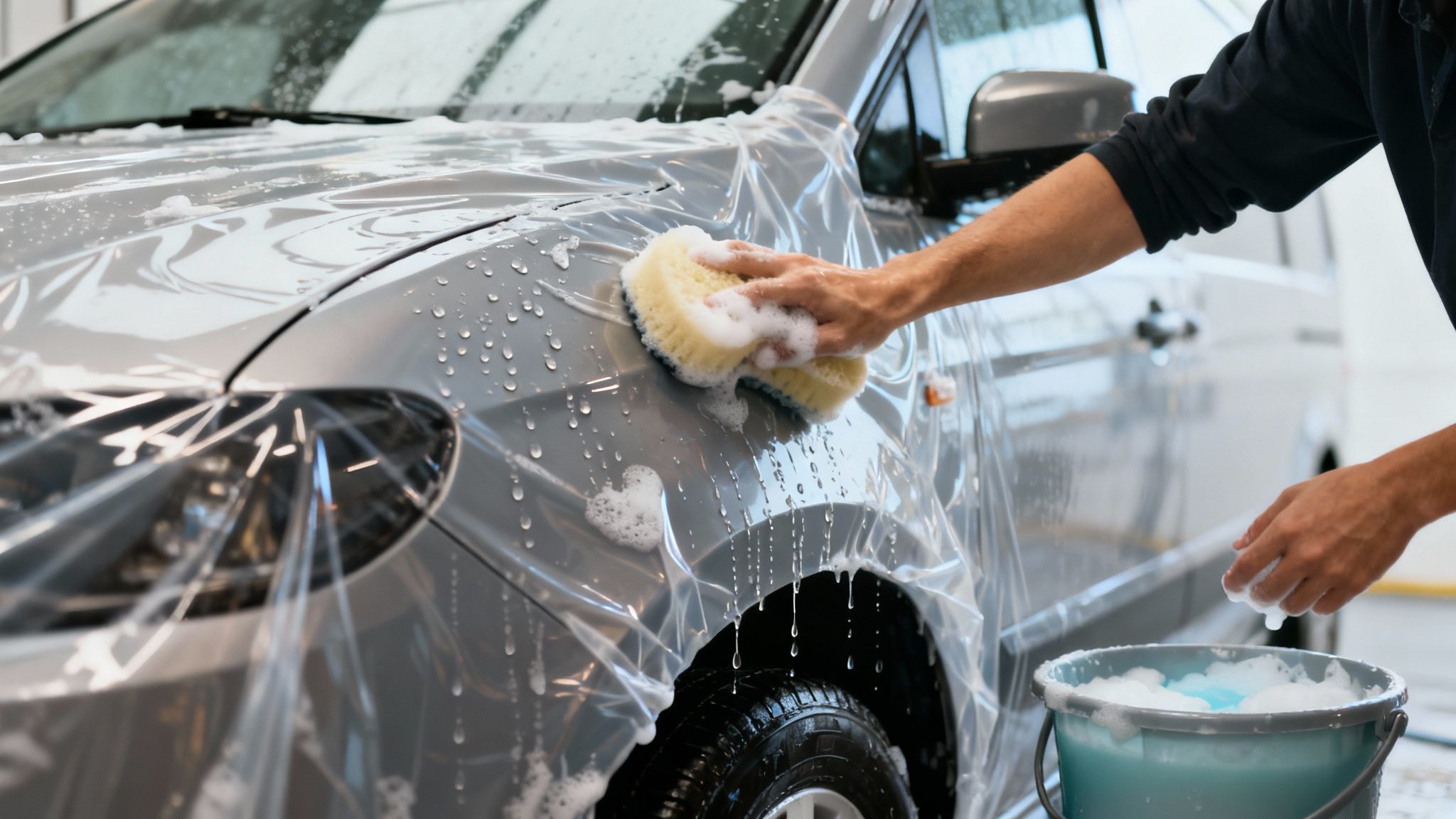
It helps to think of your wrap like the paint job on a brand-new car. It's tough, but it's not invincible. Regular cleaning is your first line of defence against road grime, dust, and other contaminants that can slowly eat away at the vinyl. With a bit of consistent attention, you can easily get the full five to seven-year lifespan out of your wrap.
Essential Washing Dos and Don'ts
When it comes to cleaning, the golden rule is simple: be gentle. You want to avoid harsh chemicals or high-pressure water that can damage the vinyl, causing the edges to lift or the finish to look dull.
Washing Best Practices:
- Do hand wash regularly: The best and safest method is a classic two-bucket hand wash. Grab a soft microfibre mitt or sponge and use a pH-neutral, non-abrasive car wash soap.
- Don't use automated car washes: Steer clear! The high-pressure jets and aggressive brushes in most automatic car washes are far too harsh for vinyl. They can easily catch an edge and cause it to peel.
- Do rinse thoroughly: After washing, give your van a good rinse with clean water to get rid of any soap residue. If left to dry, it can leave streaks and a dull film.
- Don't use a high-pressure jet: If you absolutely must use a pressure washer, keep it on a low setting. Stand at least a metre back from the van, and whatever you do, never aim the nozzle directly at the edges of the wrap.
Some spills need immediate attention. Things like bird droppings, tree sap, and especially fuel spills are corrosive. You need to clean them off as soon as you spot them, as they can permanently stain or even damage the vinyl if left to sit.
Keeping Your Wrap in Top Condition
Beyond just washing, a few other habits will keep your wrap looking brand new. Avoid any abrasive polishes, cutting compounds, or waxes unless they are specifically made for use on vinyl wraps—the wrong product can easily damage the finish.
If you have a matte or satin finish, look for cleaning products designed just for them. These will maintain that unique, non-reflective look without adding any unwanted shine.
At the end of the day, treating your wrap with a bit of care ensures it remains a vibrant, professional reflection of your brand on the road, safeguarding the value of your investment.
Your Van Wrap Questions, Answered
Even with all the numbers laid out, you've probably still got a few questions buzzing around. Let's tackle some of the most common things business owners ask before they decide to wrap their vans.
How Long Does a Van Wrap Last?
You can expect a professionally installed, high-quality van wrap to look great for anywhere between five and seven years. The real-world lifespan comes down to a few key things: the quality of the vinyl and laminate, the expertise of the installer, and how you look after it. A bit of TLC, like regular gentle washing and keeping it out of the harshest Kiwi sun when possible, goes a long way.
Will a Wrap Damage My Van's Paint?
It’s actually the other way around! A properly installed wrap is one of the best ways to protect your van's factory paint. Think of it as a durable, protective skin guarding against UV fading, stone chips, and minor scratches from day-to-day work.
When it's time to remove it, the paint underneath is usually in the same condition as the day the wrap was applied, which is a fantastic bonus for your van's resale value.
A common myth is that wraps hurt the paint. In reality, they preserve it. The vinyl takes all the punishment from the road, leaving your original paint untouched.
Is Wrapping Cheaper Than Painting?
This is a great question. If you're just after a basic colour change, the cost of a high-end paint job and a professional wrap can be quite similar.
However, the moment you get into custom graphics, intricate logos, or specialty finishes like matte, chrome, or satin, wrapping almost always comes out as the more affordable and flexible choice. You get a level of design freedom with vinyl that’s incredibly expensive or just plain impossible to achieve with paint.
Can You Wrap Over Dents and Rust?
Unfortunately, no. A vinyl wrap is like a second skin for your van—it hugs every contour perfectly. That means any dents, rust patches, or flaking paint underneath will be clearly visible. Worse still, the wrap won't stick properly to a damaged or rusty surface.
Any bodywork issues need to be sorted out first. The surface must be smooth, repaired, and primed before the wrap can be applied to ensure that flawless finish and long-term durability.
Ready to turn your van into a mobile billboard that works for you 24/7? At SONI DESIGN, we specialise in creating eye-catching, durable van wraps that make a real statement on the road. Contact us today for a personalised quote and let's bring your vision to life!
Leave a Comment
Stay home & get your daily
needs from our shop
Start You'r Daily Shopping with Nest Mart