
Your cart is currently empty.

When it comes to magnets for car signs, you’re looking for a specific type: a flexible, vehicle-grade magnetic sheet. The key is finding one thick and strong enough to stay put, even when you’re driving at speed, without being so aggressive that it harms your paintwork.
Your Guide to Choosing the Right Magnet for Vehicle Signs
Figuring out which magnetic sign to get for your vehicle can feel a bit like guesswork. Do you just grab the strongest one you can find? Or will that wreck your car's finish? The reality is, it’s all about striking the right balance between holding power, material quality, and how you use it.
Getting this choice right from the start is absolutely crucial. It's the difference between a reliable marketing tool that gets you noticed and a potential hazard that flies off down the motorway.
Think of it like choosing tyres for your car. You wouldn't put racing slicks on for the daily commute in the rain, right? In the same way, the magnet you need for zipping around town at low speeds is very different from what you'd need for consistent, high-speed travel on the open road.
Understanding the Core Principles
Before we get into the nitty-gritty, let's cover the fundamentals that really matter for your business vehicle. Three things work together to make sure your magnetic sign does its job properly:
- Magnet Strength: This is all about the "grip" your sign has on the car. It has to be strong enough to fight off wind, rain, and the vibrations of the road.
- Material Thickness: Generally, a thicker magnet means more magnetic force and better durability. This is what stops the corners from curling up and catching the wind when you're moving.
- Surface Contact: For the magnet to work at its full potential, it has to lie completely flat against the vehicle panel. No gaps, no curves, no bumps.
The goal here is simple: find a magnet that provides a rock-solid hold but is still easy enough to remove without a fight—and without risking damage to your paint. This balance is what makes your mobile advertising both safe and effective.
Permanent magnets are a huge deal in the automotive world, and their role is only getting bigger. The global permanent magnets market was valued at USD 22.18 billion in 2023, with our region, Asia-Pacific, leading the charge. Considering there are around 100 permanent magnet devices in the average modern car, using them for signs is a natural fit for a well-established technology. You can learn more about the permanent magnets industry and its growth on Grandview Research.
Decoding Magnet Materials and Strength
When it comes to car magnets, not all are created equal. You'll quickly find there are two main players in the game, and knowing the difference is crucial for picking a sign that’ll stick with you—literally.
The go-to choice for most vehicle signs is flexible ferrite magnetic sheeting. Think of it as the reliable workhorse. It’s affordable, flexible, and perfectly suited for daily driving. If you're a business owner who needs to pop your branding on and off different vehicles, this is your material. It hits that sweet spot between solid holding power and user-friendliness.
Then you have neodymium magnets. These are the powerlifters of the magnet world—immensely strong for their size. While that sounds great, their sheer force can be overkill for direct contact with your car's paint. They’re usually reserved for very specific, heavy-duty mounting systems rather than being the sign itself.
The Reliable Choice: Flexible Ferrite Sheeting
For just about any business need, flexible ferrite sheeting is the answer. It’s made from a clever blend of iron oxide and strontium carbonate powders mixed into a polymer base, which results in a tough, weather-resistant material. Its real magic lies in how it distributes its magnetic pull evenly across the entire surface, creating a secure, flat bond with your vehicle's panel.
This even distribution is key. It means no high-pressure spots that could dent or damage your paint over time. It also ensures the whole sign stays flush against the car, which is vital for preventing wind from getting underneath and trying to peel it off at speed. That’s why it’s the undisputed industry standard for quality, vehicle-safe magnetic signs.
The diagram below breaks down the three core elements that make a great magnetic sign: the material itself, its thickness, and its overall strength.
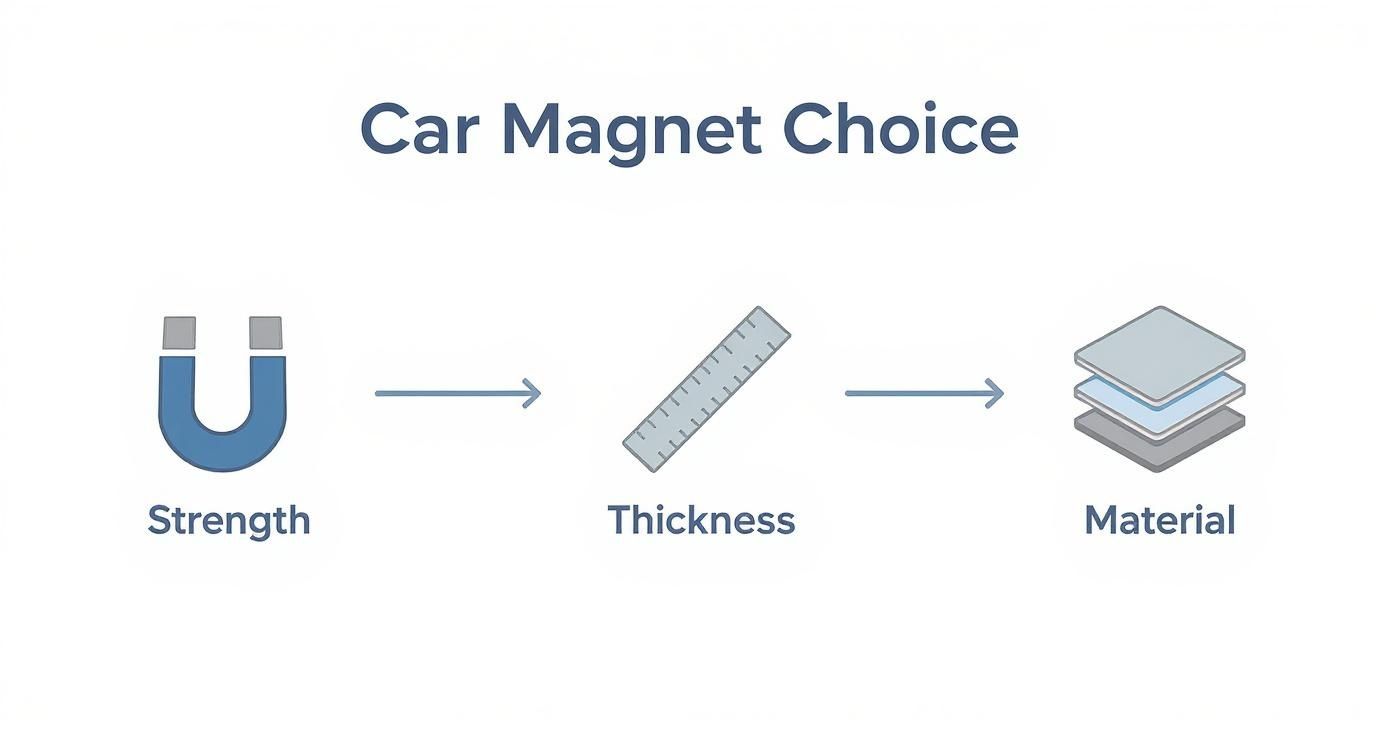
As you can see, a thicker, premium ferrite material is the foundation for a sign that you can trust to stay put on the road.
Comparing Common Magnet Materials for Car Signs
To make it even clearer, here’s a quick comparison of the two main types of magnets you'll encounter for vehicle signs. This should help you see why one is the standard and the other is for more specialised jobs.
| Feature | Flexible Magnetic Sheeting | Neodymium Magnets |
|---|---|---|
| Best For | Daily-use vehicle signs, temporary branding | Specialised mounting systems, heavy-duty industrial use |
| Strength | Moderate and evenly distributed | Extremely high, concentrated pull |
| Flexibility | Highly flexible, conforms to vehicle curves | Rigid, not suitable for direct sign use |
| Cost | Cost-effective and affordable | Significantly more expensive |
| Vehicle Safety | Designed to be safe for paint when used correctly | Can damage paintwork if applied directly due to high force |
Ultimately, for a sign that needs to be applied directly to a car, flexible sheeting provides the right balance of performance and safety.
Getting a Grip on Pull Force
So, how do we actually measure a magnet's strength? We talk about its pull force. This is simply the amount of force needed to pull a magnet straight off a flat steel surface, and it’s usually measured in grams or kilograms per square centimetre.
But here’s the thing: stronger isn’t always better. For a car sign, you need enough pull to hold on tight at motorway speeds, but not so much that you need a crowbar—and a new paint job—to get it off.
A good quality vehicle-grade magnetic sheet typically has a pull force of around 40-60 grams per square centimetre. This gives it a firm grip that can handle wind, rain, and the vibrations of the road, while still being easy enough for anyone to remove safely. At SONI DESIGN, we only use premium magnetic sheeting engineered for this perfect balance, so your sign stays put without ever harming your vehicle.
How to Guarantee Your Car Magnet Stays Secure

We’ve all had that thought: what if my new car sign flies off on the motorway? It’s a common worry, but thankfully, making sure your magnet stays put has less to do with complex physics and more to do with a few simple, practical checks before you drive.
At its core, it's a battle between your magnet's grip and the wind. The force of the wind trying to peel the sign off your vehicle increases dramatically with speed. A sign that feels perfectly secure driving around town at 50 km/h could be in real trouble once you hit 100 km/h.
The sign’s size and the shape of your vehicle panel are just as important. A bigger sign naturally catches more wind, while a magnet placed over a curved or bumpy panel will never make full contact. This creates weak spots and lets air sneak underneath, which is the last thing you want.
Performing a Simple Grip Test
Before you head out, you need to feel confident in the magnet's hold. The best way to get that peace of mind is with a quick, hands-on test.
Once you’ve placed the sign on a clean, flat surface, try sliding it from side to side. You should feel significant resistance – if it moves easily, the grip is too weak for the road. Next, try peeling it off from one corner. A proper, vehicle-grade magnet will put up a fight, requiring a firm and deliberate pull to remove.
This simple check gives you a real-world feel for the forces your sign will face. If it passes this test, you can be confident the magnetic pull is strong enough for everyday driving conditions.
The goal is to achieve a completely flush, gap-free seal between the magnet and the vehicle. Even a tiny air pocket at the leading edge can allow high-speed wind to get underneath and begin peeling the sign away from the surface.
In New Zealand, the use of magnets for car signs and other automotive parts is on the rise, reflecting a wider trend in modern vehicle technology. The market here for components using permanent magnets is expected to see steady growth. You can read more about New Zealand’s automotive magnet market trends on 6wresearch.
Matching Strength to Driving Conditions
The final piece of the puzzle is matching the magnet's strength to your driving habits. Think about your typical day on the road—that’s what determines the level of grip you really need.
- City Driving (Below 60 km/h): For running errands around town with lots of stops and starts, a standard vehicle-grade magnet has more than enough holding power. Wind force is pretty low at these speeds.
- Rural Roads (60-80 km/h): If you're often on open roads, it’s a good idea to go for a premium, slightly thicker magnet. It provides a bit of extra security against the higher wind resistance and changing road conditions.
- Motorway Driving (Above 80 km/h): For anyone who spends a lot of time at high speeds, you should always choose the thickest, highest-quality magnetic sheeting you can get. This ensures maximum adhesion and keeps your sign safely in place.
By thinking about these three things—size, speed, and surface—you can confidently choose and test your magnets for car signs, making sure your branding stays right where it belongs.
Installation and Care to Protect Your Paint

A quality magnetic sign is a fantastic way to get your brand seen, but it’s not a ‘set and forget’ piece of kit. To get the most out of it and keep your vehicle's paint looking immaculate, you need to treat it right. A simple routine for installation, removal, and cleaning will ensure both your sign and your car stay in top-notch condition for years.
The secret to a perfect, paint-safe application is starting with a clean slate. Before you even think about putting magnets for car signs on your vehicle, you need to thoroughly wash and dry both the car's surface and the back of the magnet itself. This simple step gets rid of any dust or tiny bits of grit that could get trapped, which is what causes scratches and prevents a strong, secure seal.
The Correct Application Method
Getting the magnet on right is half the battle for keeping it secure and protecting your paint. Always choose a completely flat surface, like a door panel. You have to steer clear of any curves, ridges, or plastic trim, as these create air gaps that weaken the magnet's grip.
To apply it, hold the sign by the edges and place one side down first. Then, gently let the rest of the magnet lay flat against the panel, smoothing it down from the centre outwards. This little trick forces out any trapped air, creating a vacuum seal that boosts its holding power and stops the wind from getting underneath and peeling it off at the corners.
Remember this simple rule: never slide the magnet into position. Always lift it completely off the surface to reposition it. Sliding a powerful magnet, even a small distance, can drag microscopic dirt particles across the paint, causing fine scratches.
Safe Removal and Regular Cleaning
How you take the sign off is just as important as how you put it on. To remove it without causing any damage, carefully lift one of the edges and peel it away. Whatever you do, don't try to pull it straight off from the middle—this can stretch and weaken the magnetic material over time.
A regular cleaning schedule is absolutely essential for protecting your paintwork. Over time, moisture and fine dust will find their way underneath the sign, and if left unchecked, they can start to dull or even damage your car's clear coat.
Here’s a straightforward checklist to keep everything in great shape.
Car Magnet Care and Maintenance Checklist
| Frequency | Task | Reason |
|---|---|---|
| Weekly | Remove the sign and wipe down the vehicle surface and the back of the magnet with a soft, damp cloth. | This stops moisture and grit from building up, which can lead to paint damage or rust spots. |
| Weekly | Let both surfaces air dry completely before putting the magnet back on. | Making sure no moisture is trapped underneath is critical for the health of your paint. |
| Monthly | Wash and wax the area of your vehicle where the sign sits. | A good layer of wax provides a protective barrier between the magnet and your paint. |
Sticking to this routine is your best defence against any potential issues. While careful installation and maintenance go a long way, it’s also good to know that services like professional paint correction are available if your vehicle's finish ever needs a touch-up. By treating your magnetic sign with a little bit of care, you ensure it remains a valuable, damage-free asset for your business.
Why Your Vehicle Surface Matters
Before you jump into designing the perfect magnetic sign, there's one simple check that’s surprisingly easy to forget. You need to make sure your vehicle is actually magnetic where you want the sign to go. It might sound a bit obvious, but this single step can save you the massive headache of ordering a sign that you can't even use.
The science is straightforward: magnets for car signs only stick to ferromagnetic metals, like steel. But here's the catch—to make cars lighter and more efficient, many manufacturers are swapping out traditional steel for other materials.
What this means is that a growing number of cars, utes, and vans on New Zealand roads have body panels that simply won't work with a magnet.
Materials That Don't Work with Magnets
You can't just assume your vehicle is made entirely of steel. Keep an eye out for these common non-magnetic materials, as they're becoming more and more common:
- Aluminium: A favourite for modern utes, trucks, and luxury cars because it’s so lightweight.
- Fibreglass: You’ll often find this used for bonnets, boots, and custom body kits.
- Carbon Fibre: Popular in high-performance vehicles for its incredible strength and low weight.
- Plastic Bumpers and Trim: Almost all modern bumpers and decorative trim pieces are made from plastic, which isn't magnetic.
If your sign needs to sit on a panel made from any of these, a magnetic sign just isn’t going to be the right tool for the job.
The Hidden Dangers Under the Paint
Even if you've confirmed your panel is steel, what's hiding underneath the paint can still cause trouble. If the vehicle has ever had panel beating or bodywork done, there could be spots with thick layers of body filler—a putty-like substance used to smooth out dents before painting.
A magnet’s grip will be incredibly weak over a patch of filler, and if it's thick enough, it won't stick at all.
Here’s a quick tip: grab a standard fridge magnet and do a quick walk-around of your vehicle. Test the exact spot where you plan to put your sign. You're looking for a strong, consistent pull across the entire area.
This little test takes less than a minute and tells you two things: that the panel is definitely steel and that there are no hidden surprises like body filler lurking under the surface. Taking this step ensures your investment in magnets for car signs is a good one, saving you time, money, and a whole lot of frustration.
Bringing Your Custom Magnetic Sign to Life
Now that you've got a handle on magnet strength and what works on your vehicle, we get to the fun part—designing a sign that actually looks like your brand. This is where working with a team like SONI DESIGN really pays off. It's less about just placing an order and more about a creative partnership to make sure your vision ends up as a powerful marketing tool on wheels.
The journey starts with nailing down the right specs for your needs. This goes beyond just picking a size. We'll think about the specific vehicle you're using, the kinds of roads you drive on, and the look and feel of your brand. Our team is here to help you choose the perfect shape and dimensions to get you noticed, without ever compromising on safety or grip.
From Digital File to Road-Ready Branding
Getting your artwork to us is simple. We accept most common file types and have clear guidelines to make sure your logo and text come out looking crisp and colourful. We then use top-notch, vehicle-grade magnetic sheeting and the latest printing tech to create a sign that not only catches the eye but is also tough enough to handle New Zealand's weather.
This professional quality is what makes all the difference. It ensures your branding looks sharp and consistent, which says a lot about your business. A well-made sign is basically a mobile billboard, grabbing attention wherever you go.
Working with a professional design and printing service means you're tapping into expertise that guarantees a better result. We handle every detail, from the materials we choose to the final print quality, to create a magnetic sign that’s durable, effective, and looks completely professional.
Making an Impact in a Growing Market
Your custom sign isn't just a piece of branding; it's a smart investment in a massive advertising space. In New Zealand’s automotive advertising market, top players invested around NZD 124 million in 2024. Magnets for car signs give you a slice of that visibility without the hefty price tag. And with 22% of New Zealanders thinking about buying new cars, our roads are prime real estate for marketing. You can see more on Nielsen about New Zealand's automotive ad spend.
At the end of the day, a custom magnetic sign is all about hitting that core business goal: getting more eyes on your brand and growing your customer base. If you're keen to dive deeper into marketing, you can discover effective strategies on how to get more customers.
Here at SONI DESIGN, we’re all about helping you create a sign that doesn’t just look fantastic but actually delivers real, measurable results for your business.
Your Top Car Magnet Questions, Answered
When you're thinking about using magnets for car signs, a few questions always pop up. It's totally normal. Getting some straight answers helps make sure you're using them right, protecting your sign and your car's paint job. Let's get into the most common queries we hear.
A big one is always about the weather. Can these signs really handle a classic Kiwi downpour or the harsh summer sun? Absolutely, as long as they're made from proper, vehicle-grade magnetic sheeting. This stuff is specifically engineered to be weather-resistant, holding its own against rain, wind, and UV rays without losing its grip or its colour.
But that durability isn't a "set and forget" deal. A little bit of regular care, especially after heavy rain, goes a long way. You want to make sure moisture doesn't get trapped underneath, which is the key to keeping your vehicle’s paintwork looking pristine.
How Long Do Car Magnets Typically Last?
The real lifespan of a magnetic sign comes down to a few things: the quality of the material, the climate it lives in, and how you treat it. A top-quality, well-looked-after sign in average conditions should give you a good couple of years of service, easily two years or more, before it starts to look tired.
To get the most out of it, just follow a few simple tips:
- A Weekly Clean: Pull the sign off at least once a week to clean both the magnet and the spot on your car.
- Store It Flat: When it's not on the vehicle, keep your magnet somewhere clean and dry, and always store it flat. Don't roll it up or pile things on top of it.
- Sun Smarts: While the material is UV-resistant, years of relentless, direct sunlight will eventually cause some fading, just like with any outdoor sign.
Will Car Magnets Stick to Any Vehicle?
This is a really important one: no, they won't. Magnetic signs need a surface made of a ferromagnetic metal, like steel or iron, to stick to. A lot of modern vehicles, particularly utes and performance cars, are now built with aluminium, fibreglass, or even carbon fibre panels to save weight. Magnets have zero attraction to these materials.
Before you even think about ordering, do this one simple thing: grab a regular fridge magnet and test it on the exact spot you want to put your sign. If it clamps on tight, you’re all good. This five-second check can save you a world of hassle.
By keeping these key points in mind, you can use your magnets for car signs with total confidence, knowing they're a secure, durable, and seriously effective way to get your business seen while you're out and about.
Ready to create a custom magnetic sign that gets your business noticed? The team at SONI DESIGN is here to help you design a high-quality, durable sign that looks professional and stays put. Start designing your perfect car magnet today!
Leave a Comment
Stay home & get your daily
needs from our shop
Start You'r Daily Shopping with Nest Mart