
Your cart is currently empty.

In a crowded New Zealand market, getting a customer through the door once is one thing. Getting them to come back, again and again, is the real challenge. Loyalty cards are a time-tested way to turn a first-time visitor into a familiar face.
They're more than just a piece of plastic or a QR code; they're a tangible promise that you see their business, you value it, and you want to build a real connection that lasts longer than a single transaction.
Why Loyalty Cards Are a Smart Move for Kiwi Businesses
Picture a loyalty card as a bridge. It connects a single, one-off purchase to a long-term, profitable relationship. This simple tool does so much more than hand out discounts—it gives customers a compelling reason to walk past your competitors and straight back to you.
It's about shifting the dynamic from a purely transactional exchange to a relational one. In a market swimming with options, creating that connection is everything. A great loyalty programme makes customers choose you not just for what you sell, but for the recognition and value you offer.
Building Repeat Business and Boosting Spend
At its core, a loyalty card is all about encouraging repeat visits. It’s simple human psychology. When a customer knows their tenth coffee is free, or they’re just one purchase away from a discount, they have a powerful reason to return. This is a direct lever you can pull to increase how often your regulars pop in.
You'll often see these programmes lead to a higher average spend, too. Someone might grab an extra pastry or add a side to their order just to hit that next reward milestone a little faster. The benefits are clear and easy to measure:
- Increased Visit Frequency: Customers have a concrete incentive to come back sooner and more often.
- Higher Average Spend: Shoppers are motivated to spend a bit more to unlock their rewards.
- Stronger Customer Retention: A loyalty programme gives you a real edge, making it much harder for your competitors to lure your regulars away.
Gaining Invaluable Customer Insights
Beyond the immediate boost to your bottom line, loyalty programmes are a goldmine of data. They give you a direct window into your customers' habits, helping you see who your best customers are, what they love to buy, and when they prefer to shop.
This kind of information is pure gold. It allows you to make smarter, data-backed decisions on everything from stock management to your next marketing campaign.
A loyalty programme isn't just another marketing tactic; it's a core strategy for building a resilient business that thrives on the strength of its customer relationships.
And this strategy is particularly powerful right here in New Zealand. Research shows a staggering 97% of Kiwis belong to at least one retail loyalty programme—one of the highest participation rates in the world. This tells us that Kiwi consumers are already on board and actively looking for these kinds of initiatives.
For any local business weighing up the idea, digging into broader customer engagement best practices really highlights why these programmes are such a no-brainer. At the end of the day, loyalty cards create a win-win cycle: customers feel valued and rewarded, and your business enjoys consistent, predictable growth.
Choosing the Right Loyalty Programme for Your Business
Picking the right loyalty programme is a bit like choosing the right tool for a job. You wouldn't use a hammer when you need a screwdriver, right? The same logic applies here. The stamp card that's a massive hit at a bustling Auckland café probably won't do much for an online clothing boutique based in Wellington. It all comes down to matching the programme to your business goals, your customers' habits, and what you can realistically manage day-to-day.
Your first big call is whether to go with physical cards or a digital system. This is a classic head-versus-heart decision, and both have their place.
Physical vs. Digital: The Great Debate
A physical card—think of your local bakery’s coffee card—is like a personal handshake. It’s tangible, sitting right there in your customer's wallet as a constant reminder. They’re brilliantly simple, don't require any tech savvy, and create a really direct, personal connection at the counter. For businesses that thrive on face-to-face interaction, they're a no-brainer.
On the other hand, a digital loyalty programme is like having a direct line to your customer’s pocket. It’s incredibly convenient for them (no more lost cards!) and gives you a goldmine of data on their spending habits. Digital is the way to go if you want to get smart about understanding customer behaviour and sending out targeted, personalised offers.
To help you decide, here’s a quick rundown of the pros and cons for each.
| Feature | Physical Cards | Digital Cards |
|---|---|---|
| Customer Experience | Tangible, simple, satisfying to get a stamp. Can be lost or forgotten. | Convenient, always on their phone. Requires app download or sign-up. |
| Business Operations | Easy for staff to manage. No complex tech or training needed. | Requires POS integration and staff training. Automates tracking. |
| Data & Insights | Provides very little customer data beyond visit frequency. | Rich data on purchasing habits, customer demographics, and visit times. |
| Marketing | Limited to in-store promotion and the card itself. | Enables personalised emails, push notifications, and targeted offers. |
| Initial Cost | Low cost for design and printing. | Higher initial setup cost for software or app development. |
| Best For... | Cafés, bakeries, car washes, small retailers with frequent, low-value sales. | Retailers, restaurants, online stores, businesses wanting to build deep customer profiles. |
Ultimately, the best choice really hinges on your customers and how you operate. Are they tech-savvy or do they prefer something simple? Is your team ready to handle a new digital system during the lunch rush?
First, What’s Your Goal?
Before you even think about design, you need to be crystal clear on what you're trying to achieve. Are you just trying to get more people through the door, more often? Or is your real aim to get each customer to spend a little bit more every time they visit? Maybe you’re less concerned with sales and more interested in gathering data to sharpen your marketing.
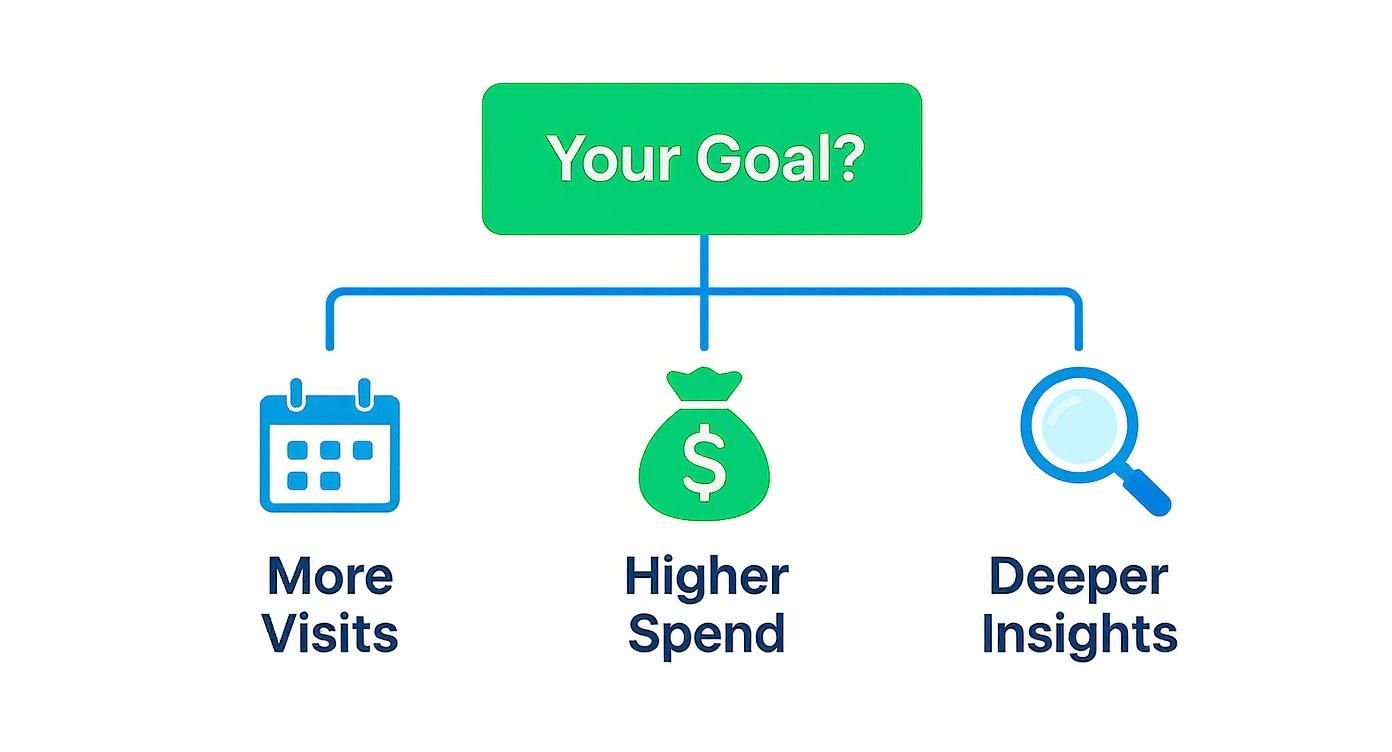
As you can see, your core objective really dictates the kind of programme that will get you the results you’re after.
Finding a Reward Structure That Clicks
Once you’ve got your goal and format sorted, it’s time to think about the rewards themselves. There’s no single "best" way to do it; it's all about what will actually motivate your customers.
Here are a few of the most popular models we see working well for Kiwi businesses:
- The Classic Stamp Card: You know the one: "buy nine, get the tenth free." It’s beautifully simple for everyone involved. This is a winner for businesses with high-frequency, low-cost purchases like coffee, sandwiches, or maybe a car wash. The reward is quick and easy to understand.
- The Points System: Here, customers earn points for every dollar they spend, which they can later cash in for discounts or freebies. This is a fantastic way to encourage a higher spend per visit and works a treat for retail stores, restaurants, and service businesses where purchase values vary.
- The Tiered Programme: This model is all about making your best customers feel special. As they spend more, they "level up" through tiers—think bronze, silver, gold—unlocking better perks and exclusive offers along the way. It gamifies loyalty, creating a real sense of achievement and turning loyal customers into genuine brand advocates.
At the end of the day, the most effective loyalty programmes are the ones that feel genuinely generous to the customer but are dead simple for your team to manage, even during a frantic Saturday rush.
For example, a local bookstore might run a points system where $1 equals 1 point, and 100 points get you a $10 voucher. It directly encourages people to add that extra book to their purchase to hit the next reward. A hair salon, however, might use a tiered system where clients who visit six times a year get "VIP" status, giving them priority booking and a free treatment. Each model is tuned to drive a very specific behaviour that benefits the business.
Designing a Loyalty Card That Customers Actually Use
A great loyalty card does more than just track purchases; it earns a permanent spot in a customer's wallet. Think of it as a pocket-sized billboard for your brand. Its design needs to do more than just look good—it has to be clear, compelling, and make people want to use it.
The most common trap businesses fall into is creating a card that’s confusing or just plain forgettable. If a customer has to squint to read the offer or can't figure out the benefit in a split second, that card is destined for the bin. Your design has to communicate value instantly, turning a simple piece of card into a tangible reminder of why they love doing business with you.
Getting the Core Elements Right
Before you even start thinking about colours and fonts, you need to nail the card's core function. What's the goal? What do you want your customer to do? How do they earn their reward? The design must answer these questions at a glance. Clarity is everything.
A loyalty card that actually works should always include these key bits of information:
- Your Branding: Your logo and brand colours need to be front and centre so it’s instantly recognisable as yours.
- A Clear Offer: What's the deal? "Buy 9 Coffees, Get 1 Free" is simple and powerful. Avoid vague promises that don't mean anything.
- Simple Instructions: A single, short sentence is all you need. For example, "Get one stamp for every $20 spent."
- A Call to Action (CTA): What should they do next? Point them to your website, share your Instagram handle, or simply prompt them to present the card on their next visit.
- Contact Details: At a minimum, include your address, phone number, or website. This cleverly turns your loyalty card into a business card, too.
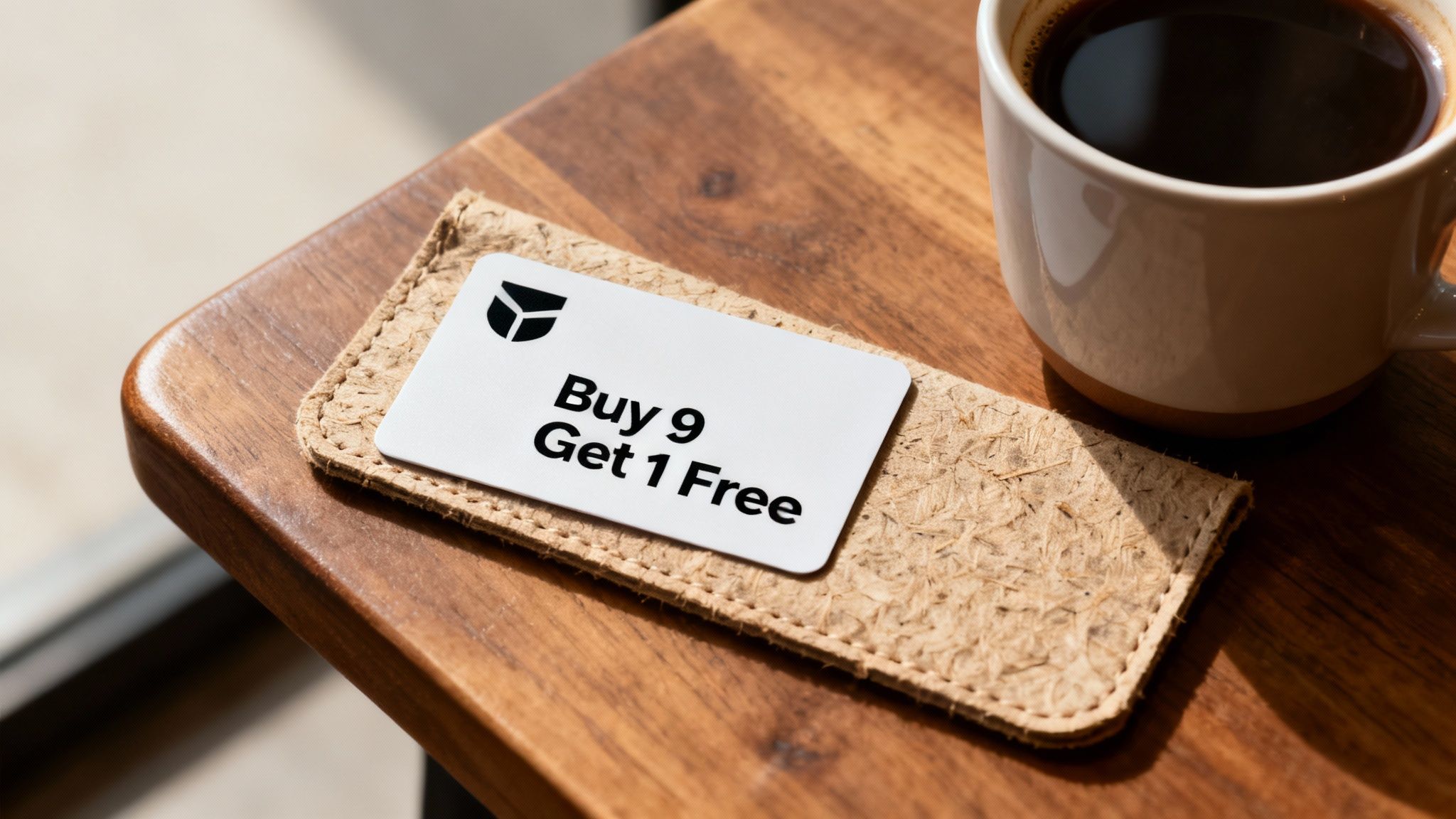
More Than Just Ink on Paper
The actual feel of your card says a lot about your brand. A flimsy, easily bent card can subtly communicate a lack of quality. On the other hand, a sturdy, well-finished card feels more like a premium membership pass. For businesses here in NZ, choosing the right material for your loyalty cards is a critical part of the design process.
Think about the impression you want to leave. A high-quality card simply feels more valuable and is far less likely to be tossed out. It’s a small detail, but it has a big psychological impact on how customers see your entire brand.
The tangible quality of a loyalty card is a direct reflection of your business's standards. A card that feels premium suggests a premium experience, encouraging customers to value it and, by extension, your brand.
When you're chatting with a designer or printer, ask about different card stocks and finishes. A thicker stock (think 350gsm or higher) offers great durability, while a matte or satin finish can give a sophisticated, modern feel that also resists fingerprints and general wear and tear. These choices elevate the card from a disposable coupon to something worth holding onto.
Layout and Flow for Maximum Impact
How you arrange the information on the card guides your customer's eye and makes it either easy or frustrating to use. A cluttered, chaotic design is just overwhelming. Instead, use a clear visual hierarchy to draw attention to the most important parts—the offer and the stamping area.
Map out the user's journey. The front of the card should be all about your brand and the main benefit. It’s the hook. The back is where the mechanics live—the stamp boxes, the fine print, and your contact details.
Here’s a simple layout that works time and time again:
- The Front: Pop your logo right at the top. Below it, state the core offer in a bold, easy-to-read font.
- The Back: Arrange your stamp boxes in a clean grid (like 2x5 or 3x3). Leave a little dedicated space at the bottom for your address and website.
By prioritising clarity, using quality materials, and thinking through a logical layout, you create a loyalty card that doesn't just look professional—it actively encourages people to come back. It becomes a tool that customers are genuinely happy to carry and eager to use, driving the repeat business every Kiwi company is looking for.
How Loyalty Programmes Boost Your Bottom Line
While loyalty cards are a fantastic way to make your customers feel valued, their real magic is what they do for your business's financial health. A well-thought-out programme isn't just another cost—it's a smart investment with a tangible return. It works by gently nudging customer habits in ways that add up to real, measurable growth.
At its core, a loyalty programme is all about increasing your Customer Lifetime Value (CLV). Think of CLV as the total revenue you can reasonably expect from a single customer over the entire time they shop with you. A loyalty card gives them a solid reason to stick around, helping turn a one-time visitor into a reliable, long-term source of income.
Driving More Frequent Visits and Bigger Spends
The first change you’ll likely notice is how often your loyal customers pop in. When someone knows they’re just one coffee away from a free one, it creates a little psychological nudge to pick your café over the one down the road. That simple incentive can be all it takes to turn an occasional customer into a regular.
And this isn't just a theory; the numbers from here in New Zealand back it up. Recent studies found that 61% of Kiwis make a point of shopping more often with brands whose loyalty programmes they like. What’s even more interesting is that 37% of consumers say they’ll happily spend a bit more with a business that rewards them. You can learn more about these Kiwi consumer habits to see just how powerful this is locally.
Think of your loyalty programme as a defensive strategy. It creates a 'switching cost' for your customers. It's not about money, but about losing their hard-earned progress and rewards, making them think twice before trying a competitor.
By encouraging that repeat business, you build a much more stable and predictable cash flow—something every small and medium-sized Kiwi business can appreciate.
Turning Loyal Customers into Your Best Marketers
One of the most potent—and often underestimated—perks of a great loyalty programme is its power to fuel word-of-mouth marketing. When customers have a positive experience and feel genuinely appreciated, they naturally become advocates for your brand. They'll chat about you to friends, family, and colleagues.
This creates an organic marketing channel that’s not only incredibly effective but also costs you next to nothing. Just think about the knock-on effects:
- Real Social Proof: A recommendation from a mate carries far more weight than any flashy ad ever could.
- The Right Audience: Your happy customers will instinctively refer people who are likely to be a perfect fit for your business.
- Built-in Trust: New customers who arrive via a referral walk in with a positive impression already formed.
Whether it’s a physical card tucked into a wallet or a digital pass on their phone, it acts as a constant, subtle reminder of your business. In a crowded marketplace, that top-of-mind awareness is priceless. When a need arises, you’ll be the first place they think of. Ultimately, the loyalty cards NZ businesses use are about more than just keeping customers; they're a surprisingly effective engine for sustainable growth.
Integrating Loyalty Cards with Your POS System
A great loyalty card is only half the battle. If the experience at the checkout is clunky and slow, even the best-designed programme can fall flat. For your loyalty scheme to be a real winner, tracking rewards needs to be completely seamless for both your customer and your staff. This means making sure your physical loyalty cards NZ businesses use can “talk” to your Point of Sale (POS) system without causing any headaches.
The end goal is a smooth, quick process that doesn't hold up the queue. For some businesses, this might mean a simple manual system is best, while for others, an automated solution is the only way to go. Let's dig into how you can get this crucial connection right.
Simple Systems for Simple Programmes
For the classic "buy nine coffees, get one free" stamp card, you really don't need a complex technical setup. The physical card is the system. Your team just needs to remember to stamp the card with each qualifying purchase. Easy.
This manual approach is beautifully straightforward and works wonders for businesses like local cafés, bakeries, or food trucks where speed and simplicity at the counter are everything. There’s no software to worry about and staff training is minimal. You just need to be clear with your team about what gets a stamp and what doesn't.
But what happens when you grow, or when you want to understand your customers a bit better? That’s when you need a system to do more of the heavy lifting. This is where your POS system becomes your best friend.
Automating Tracking with Barcodes and QR Codes
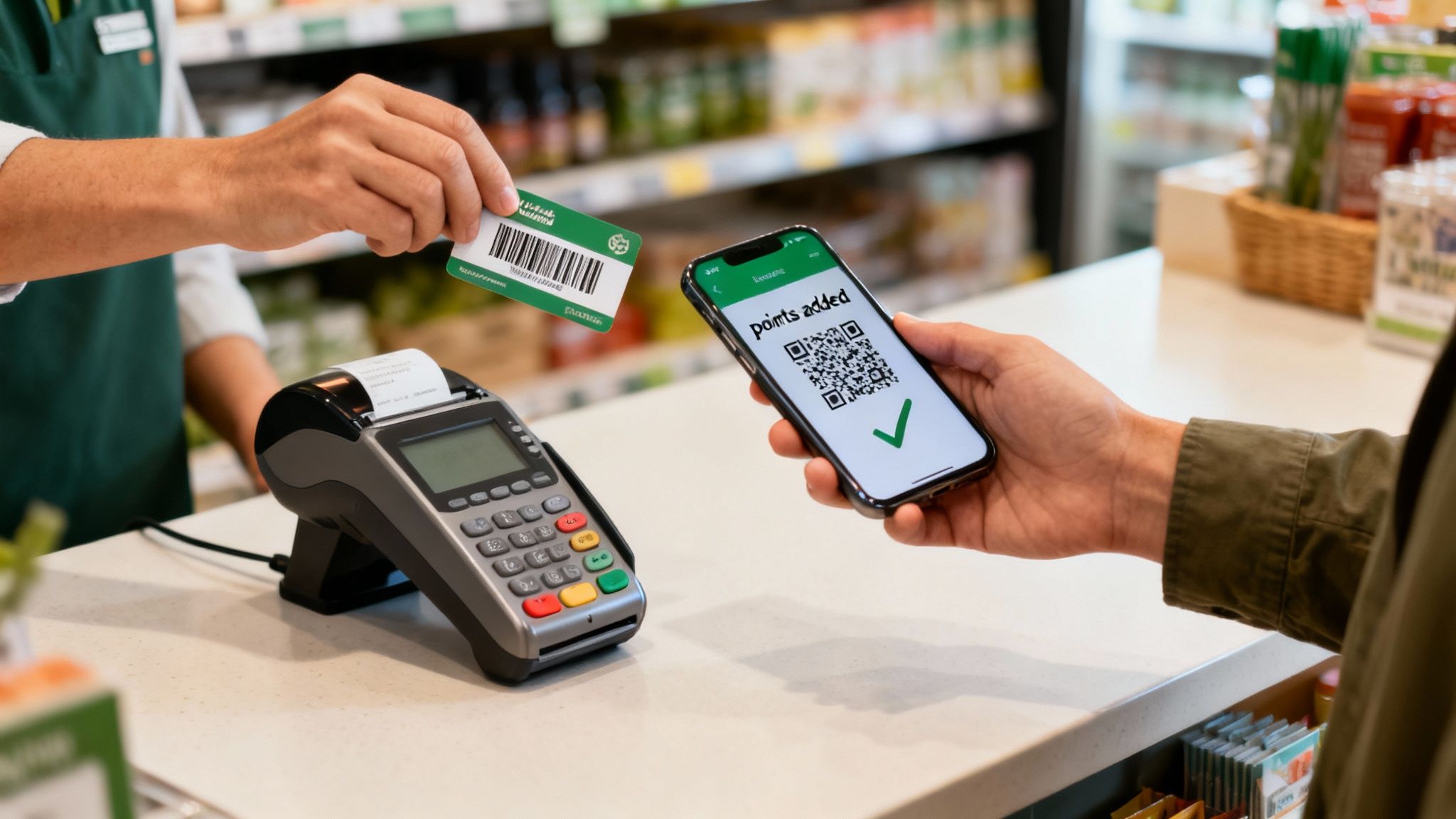
If you're running a points-based system or a tiered programme, automation is non-negotiable. The easiest way to link a physical card to a customer's digital profile is with a barcode or a QR code. When you’re getting your loyalty cards printed, adding one of these is a small step that makes a world of difference.
Here’s the basic flow:
- Unique Code: Each card is printed with its own unique barcode or QR code.
- Customer Profile: When a customer signs up, you scan their card to link that unique code to their new profile in your POS system.
- Quick Scan: At checkout, your staff simply scan the card. The POS instantly finds the customer, logs their purchase, and updates their points balance. All done.
This whole process is lightning-fast, accurate, and gets rid of any chance of human error. It also unlocks a treasure trove of data on customer spending habits—something a simple stamp card could never do.
Think of your POS system as the central hub for your loyalty programme. Before you even think about printing a single card, you have to confirm that your system can actually support the type of programme you have in mind. A quick chat with your provider now can save you from a very costly mismatch later on.
Key Questions for Your POS Provider
Most modern POS systems used across New Zealand, like Lightspeed (formerly Vend) or Tyro, have loyalty features built-in or can integrate with specialised loyalty apps. Before you commit to a card design, it’s vital to get on the phone with your POS provider and ask these critical questions:
- Does our current plan include a loyalty module, or is it an extra cost?
- Can the system handle a points-based or tiered programme?
- Does it support unique barcodes or QR codes for customer tracking?
- How easy is it to create customer profiles and link them to physical cards?
- What kind of reports can we pull to see how the loyalty programme is performing?
Getting clear answers here is the most important step in building a system that actually works. It ensures your beautifully designed cards will function perfectly in the real world, creating that smooth experience that keeps your customers coming back for more.
Understanding NZ Privacy Laws for Your Programme
Let’s talk about something that can make or break your entire loyalty programme: trust. When a customer signs up, they’re not just giving you their business; they’re handing over their personal information. How you handle that data is everything.
In New Zealand, this isn't just about good business sense—it's the law. The Privacy Act 2020 is the official guide, and it’s designed to keep things fair and transparent for everyone. Getting this right builds strong relationships, while getting it wrong can lead to serious fines and a damaged reputation that’s hard to fix.
Think of Yourself as a Data Custodian
It helps to shift your mindset. You don't own this customer data; you're simply its custodian. You've been trusted to look after their name, email, and maybe their purchase history, all with the goal of giving them a better experience. Your main job is to keep it safe.
This means being completely open with your members from day one. They have a right to know what information you’re collecting and, more importantly, why you need it. A vague privacy policy just won’t do. Clearly explain how you’ll use their details to make their experience better—whether it's for sending personalised deals or a special birthday offer.
The Key Rules You Can't Ignore
The Privacy Act has a few core principles that are essential for any loyalty programme. Think of these as your bottom line:
- Only Collect What You Need: Stick to the essentials. If you don't need a customer's physical address to run your coffee stamp card, don't ask for it. Keep it simple and relevant.
- Be Transparent: Your privacy policy should be easy to find and even easier to read. Use plain language to explain what you collect, how you use it, and if you share it with anyone.
- Keep It Secure: You are legally on the hook for protecting customer data. This means using secure systems and having safeguards in place to prevent data breaches or unauthorised access.
- Allow Access and Changes: Your customers have the right to ask for a copy of the information you hold on them and to request corrections if anything is out of date.
When you run a loyalty programme, you’re collecting ‘personal information’—any detail that can identify a living person. This makes you responsible for being upfront about your data practices and protecting that information like it’s your own.
Getting your head around the specific NZ privacy laws is a critical step in designing your programme. By treating customer privacy with the seriousness it deserves, you're not just ticking a legal box. You're building the kind of solid trust that turns first-time buyers into loyal regulars.
Your Loyalty Card Questions Answered
Even with the best-laid plans, a few practical questions always come up just before you're ready to hit 'go' on a new loyalty programme. Let's tackle some of the most common queries we hear from Kiwi business owners, giving you the straightforward answers you need to move forward with confidence.
How Much Should I Budget for Loyalty Cards?
There’s no one-size-fits-all answer here, as the cost for loyalty cards NZ businesses will find depends entirely on the choices you make. A simple, standard-sized card on a basic 350gsm stock might only set you back a dollar or so per card, even for a small run. But that price will climb as you add special features like unique QR codes, go for a thicker recycled card stock, or add premium finishes like foil stamping.
As a good rule of thumb, budget somewhere between $1 to $3 per card for a quality physical card from a local printer. Don't forget to factor in design costs if you aren't creating the artwork yourself. It can be tempting to go for the absolute cheapest option, but investing a little more in a durable, beautifully designed card often pays for itself. It makes a much better impression and will actually last in a customer's wallet.
What's the Best Reward to Offer?
Honestly, the "best" reward is whatever truly motivates your customers. It has to feel both valuable and, crucially, achievable. A free product that slots in naturally with what you already sell is often a huge winner—think a free coffee from a café or a complimentary dessert at a restaurant. This gets customers enjoying your core products and often feels more special than a small percentage discount.
The most successful rewards strike a perfect balance. They need to be generous enough to excite your customers but sustainable enough that you can offer them time and time again without tanking your profit margins.
Think about your average customer spend. If most people spend around $10, a reward that requires $500 of spending will feel completely out of reach. A good benchmark is to set the reward value at around 5-10% of the total spend needed to earn it. For a classic "buy 10, get one free" deal, that's a simple 10% reward. For a points system, it might mean 100 points (earned by spending $100) gets the customer a $5-$10 voucher.
How Do I Prevent Loyalty Card Fraud?
Fraud is a totally valid concern, especially with simple stamp-and-go systems. Who's to stop a customer from stamping their own card at home? Thankfully, there are some pretty easy ways to minimise the risk.
- Use a Unique Stamper: Don't just grab a generic star or tick stamp from the local stationery shop. Order a small, custom-made self-inking stamp with a unique little design or your business initials. It makes it much harder to fake.
- Staff Signature: Get your staff to initial or sign right over the stamp. It’s a simple but surprisingly effective extra layer of verification.
- Vary Your Ink Colour: Every few months, switch up the colour of your ink pad. It's a quick way to make any old, self-stamped cards stand out.
- Automate with QR Codes: For total peace of mind, the best approach is using cards with unique QR codes that link to a customer's profile in your POS system. This gets rid of manual stamping altogether and makes fraud impossible.
Should My Loyalty Card Have an Expiry Date?
For most simple programmes, like the classic stamp card, it's usually best to steer clear of expiry dates. The whole point is to build long-term goodwill, and a card that never expires feels more like a genuine thank you and less like a transaction. It allows customers to earn rewards at their own pace without feeling pressured.
That said, for specific high-value rewards or more complex points systems, an expiry date can be a useful tool. For example, you might state that points expire if an account has been inactive for 12 months. This encourages people to keep coming back and helps you keep your programme data tidy by clearing out dormant accounts. If you do go down this route, just make sure the expiry date is printed clearly on the card and you mention it when the customer signs up.
Ready to bring your vision for the perfect loyalty card to life? The team at SONI DESIGN specialises in creating stunning, high-quality printed materials that help Kiwi businesses connect with their customers. From eye-catching design to premium card stocks and finishes, we’ll work with you to craft a loyalty card that your customers will love to use. Let’s create something extraordinary together!
Leave a Comment
Stay home & get your daily
needs from our shop
Start You'r Daily Shopping with Nest Mart