
Your cart is currently empty.

A good lightbox in New Zealand is one of the hardest-working tools you can have for your business. It's essentially a bright, illuminated sign designed to get you noticed, whether it's high noon or the middle of the night. Think of it as a smart investment that combines a tough frame, your unique graphics, and modern LED lighting to create a beacon for your brand.
What Is A Lightbox And Why Your Business Needs One
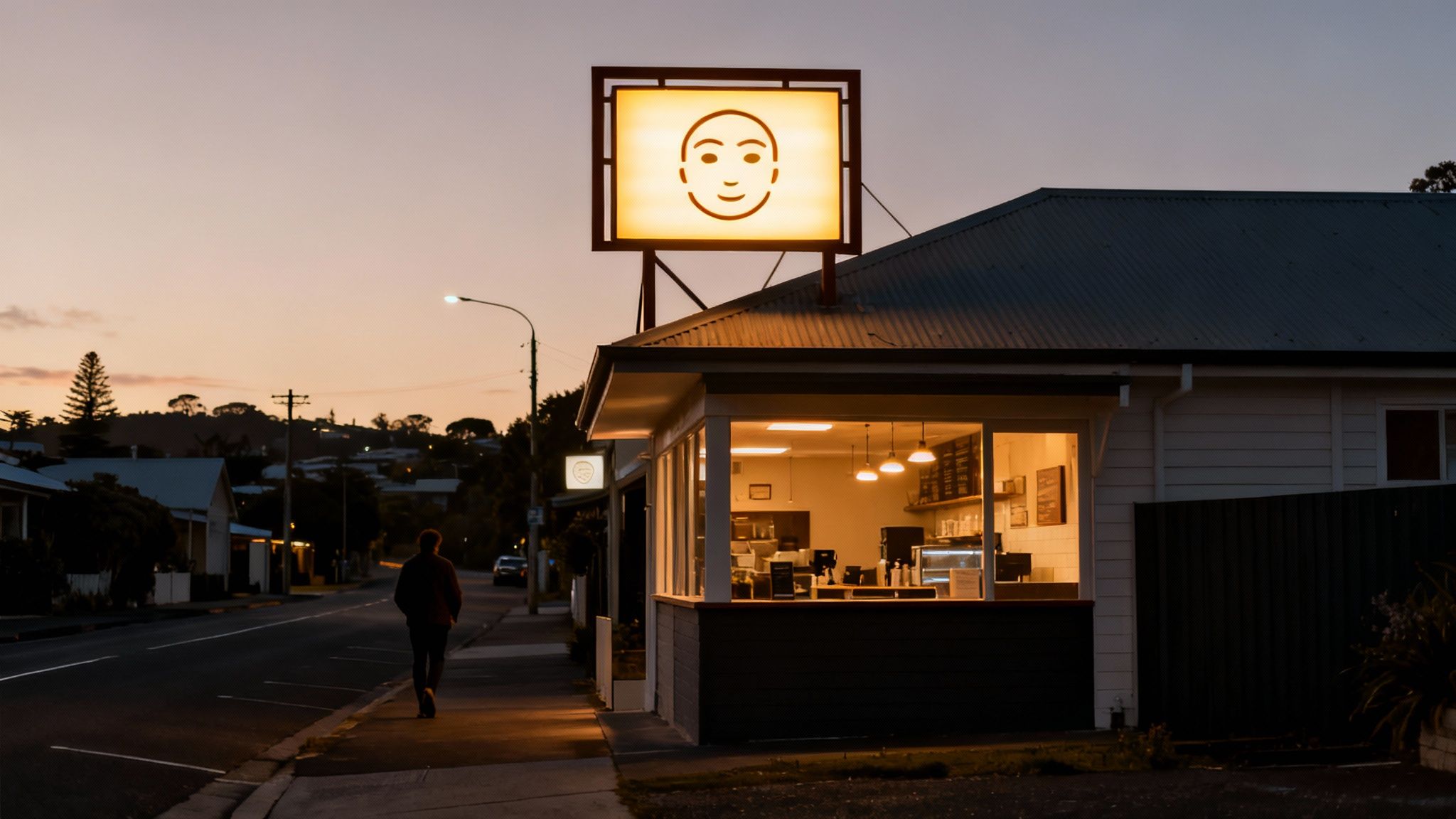
Imagine your lightbox as your business’s most dedicated employee—it’s out there, 24/7, making sure people see you. It's your silent brand ambassador, glowing on a busy street or standing out in a crowded shopping centre, ensuring you never just blend into the background.
The concept is quite simple but incredibly effective. A lightbox has three key parts: a sturdy outer frame, a graphic panel with your logo or message, and an internal light source—which these days is almost always energy-efficient LEDs. It’s this combination that transforms a standard sign into a vibrant, impossible-to-miss display.
The Power of Visibility
The whole point of a sign is to be seen, and that’s where a lightbox really shines. In a sea of competitors, you need to cut through the visual clutter. An illuminated sign guarantees your business is visible not just during the day, but also on those grey, overcast afternoons and long after the sun has set.
This constant visibility translates directly into tangible results.
- Drives Foot Traffic: It’s a literal beacon, catching the eye of people walking or driving by and guiding them right to your front door.
- Builds Brand Recognition: Every time someone passes your glowing, professional sign, it reinforces your brand in their mind.
- Creates a Polished Image: A well-made lightbox projects an image of quality and stability, building trust with potential customers before they even step inside.
A lightbox is far more than just a sign. It's a strategic investment in your brand's presence and a clear signal that you’re open and ready for business. By lighting up your storefront, you instantly lift your professional image and attract a much wider audience.
A Versatile Marketing Asset
At its heart, a lightbox is a powerful visual merchandising tool. If you want to understand its full impact, it helps to know the core principles of visual merchandising and how clever displays can drive sales. It’s a smart asset that fits almost any industry here in New Zealand.
For instance, a lively café could use a lightbox with a warm glow to create a cosy, welcoming vibe. A law firm, on the other hand, might choose a crisp, clean white light to communicate authority and professionalism. This adaptability makes it an essential piece of kit for any Kiwi business looking to make a strong, lasting impression.
What Are My Options? A Look at Different Lightbox Types
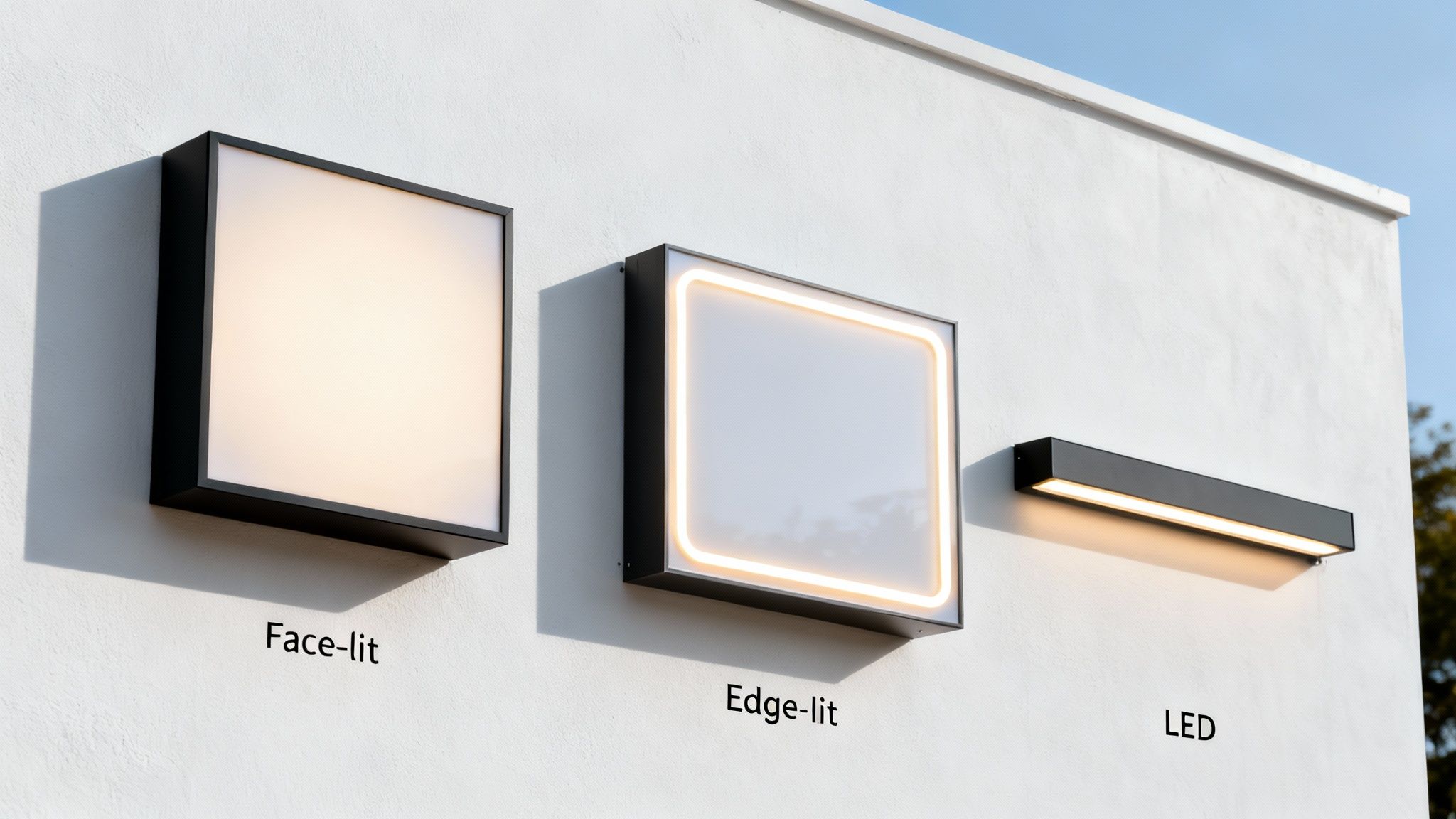
When you start looking into lightbox signs for your business here in New Zealand, you'll quickly realise they aren't all cut from the same cloth. Each type has its own distinct personality and creates a completely different vibe, so choosing the right one is key to matching your brand's style.
Getting to know the main styles is your first step. It's about figuring out whether you need something bold and bright to shout from the rooftops, or something more subtle and sophisticated.
Let’s break down the most common types you’ll come across so you can decide which one will make your business truly shine.
Face-Lit Lightboxes: The Classic All-Rounder
When you picture a lightbox, this is probably what comes to mind. The face-lit style is the traditional workhorse of the signage world. The entire front panel lights up from behind, creating a bright, even glow that’s impossible to miss.
This classic approach is all about making a powerful impact. It’s designed to be seen clearly from a distance, making it a go-to choice for retail stores, takeaway joints, or any business on a busy road that needs to grab attention.
Think of a bustling street in Auckland or Wellington at dusk; the face-lit signs are the ones that cut through the visual clutter, broadcasting their message loud and clear.
Edge-Lit & Halo-Lit Signs: A Touch of Class
If you're after a more refined, high-end look, then edge-lit or halo-lit signs are fantastic options. Instead of blasting light through the front face, these designs cleverly focus it around the letters or logo, creating a sophisticated 'halo' effect.
An edge-lit sign typically sends light through a clear acrylic panel, making any engraved graphics or polished edges glow. A halo-lit sign, on the other hand, is usually made of individual letters or shapes that are lit from behind, casting a soft glow onto the wall they’re mounted on.
This more subtle illumination adds a real sense of depth and quality. It’s a popular choice for:
- Boutique hotels wanting to project a premium feel.
- Professional services like law firms and accountants.
- Upscale restaurants and bars where atmosphere is everything.
No matter the style, the real game-changer in recent years has been the complete switch to LED technology. It wasn't just a minor upgrade—it fundamentally changed how lightboxes are built, making them brighter, more reliable, and much cheaper to run.
Why Modern LEDs Are the Only Way to Go
Not too long ago, most lightboxes were lit with fluorescent tubes. They worked, but they were a real headache. They were fragile, had a short lifespan, often created ugly 'hotspots' of uneven light, and chewed through power. Today, high-quality LED modules are the undisputed industry standard for good reason.
Making the switch is more than just keeping up; it’s a smart business decision. Modern LEDs deliver a brighter, perfectly even light that makes your graphics look sharper and your colours pop.
The efficiency is a massive drawcard. LEDs can slash the energy use of a sign by up to 80% compared to old fluorescent tubes, which translates into real savings on your monthly power bill. Better yet, with a typical lifespan of 50,000 hours or more, an LED lightbox can keep glowing brightly for over a decade with barely any maintenance. For a busy Kiwi business owner, that’s a level of reliability you can count on.
LED vs Fluorescent Tubes A Quick Comparison
See why modern LED technology is the superior choice for lightbox illumination in New Zealand.
| Feature | Modern LED Modules | Old Fluorescent Tubes |
|---|---|---|
| Energy Use | Very low – up to 80% more efficient | High – a significant drain on power |
| Lifespan | Extremely long (50,000+ hours) | Short (10,000 hours on average) |
| Brightness | Bright, crisp, and perfectly even | Can be dim, with uneven hotspots |
| Durability | Robust and resistant to shock | Fragile glass, easily broken |
| Maintenance | Virtually maintenance-free | Frequent bulb replacements needed |
| Cost | Higher initial cost, but lower running cost | Lower upfront, but expensive to run |
Ultimately, while the initial investment might be slightly higher, the long-term savings in power and maintenance make LEDs the clear winner for any new lightbox project.
Choosing Materials That Last in New Zealand's Climate

A lightbox is a serious investment in your brand’s visibility, so you want to make sure it’s built to last. New Zealand's unique climate—with its intense UV rays, damp air, and salty coastal winds—can be incredibly tough on outdoor signs. Getting the materials right from day one is the key to protecting your investment and keeping your sign looking sharp for years.
Think of it like building a house on the coast; you wouldn't use standard framing timber. You’d choose materials designed to stand up to the sea spray. It's the same principle for a lightbox. This is why experienced Kiwi sign makers are so particular about every single component they use.
From the internal frame you never see to the graphic face everyone does, each part plays a critical role in how well your sign performs and how long it lasts. Let's break down the key materials you'll be looking at.
The Frame: The Backbone of Your Sign
The frame, or 'chassis', is what holds everything together. It needs to be strong enough to handle the weight of the sign face and lighting, all while resisting wind and weather without twisting or failing. For a lightbox in New Zealand, this usually comes down to two choices: aluminium or steel.
Aluminium is the go-to for good reason. It’s light, which makes installation much simpler and puts less stress on your building. Critically, it’s also naturally rust-resistant—a massive plus in our often damp climate.
Steel, on the other hand, brings sheer strength to the table, making it a solid option for exceptionally large or complex signs. The trade-off is its weight and its vulnerability to rust. A steel frame needs a heavy-duty protective coating like galvanising or powder-coating, especially in places like Tauranga or Napier where sea salt is constantly in the air.
The Face: Where Your Brand Meets the World
The face is the translucent panel that brings your graphics to life. It has two jobs: look fantastic and diffuse light evenly, all while standing up to the elements. Here, the two main contenders are acrylic and polycarbonate.
Acrylic (you might know it by brand names like Perspex) is brilliant for light diffusion. It creates a smooth, even glow that makes colours look rich and vibrant. It's also excellent at resisting yellowing from UV exposure, which keeps your sign looking fresh, not faded.
Polycarbonate (also known by names like Lexan) is the tough one. It’s up to 30 times more impact-resistant than acrylic, which makes it the undisputed champion for signs in high-traffic areas, at ground level, or anywhere vandalism or accidental knocks are a real possibility.
While acrylic delivers unmatched optical clarity and vibrant colour, polycarbonate’s toughness gives you essential peace of mind for signs in busy public spaces or areas exposed to harsh weather.
Choosing Between Acrylic and Polycarbonate
So, which one is right for you? It really boils down to your sign’s specific location and what it needs to endure.
- For pure visual appeal: If your sign is high up on a building, away from potential damage, acrylic’s flawless finish and superior light transmission will make your brand pop.
- For high-risk areas: If your sign is at street level in a bustling city centre or near a school, the impact resistance of polycarbonate is a must-have.
- For extreme weather: For spots known for hailstorms or high winds that could throw debris around, polycarbonate's durability provides vital protection against cracking or shattering.
Finishes and Graphics That Endure
The final touches are just as crucial as the core structure. The finish applied to the frame and the type of graphics on the face are what people will see up close, and they play a huge role in the sign’s longevity.
A powder-coated finish on an aluminium frame is the industry standard for a tough, professional look. This process bakes on a dry powder to create a finish that's far more durable than standard paint. It can be colour-matched precisely to your brand guidelines. If you're near the coast, always specify a marine-grade powder coat for extra protection against salt corrosion.
For the graphics themselves, we use translucent vinyl. This specialty vinyl is designed to let light shine through, making your logo and colours glow. Using a high-quality, UV-stable vinyl is essential to stop your branding from fading, cracking, or peeling under our harsh sun, ensuring it looks great for years to come.
Design And Lighting Tips For Maximum Impact
A great lightbox isn't just a box with a light in it; it's a carefully crafted piece of marketing. The difference between a sign that gets noticed and one that just blends into the background comes down to smart decisions about its design and lighting.
Getting these details right from the start means your investment pays off. It's about creating a sign that not only looks sharp but actually does its job: grabbing attention and clearly communicating your brand's message to everyone who passes by, day or night. Let's walk through the practical choices that will make your lightbox truly effective.
Finding The Perfect Size And Scale
First things first: how big should your sign be? It’s a common mistake to think bigger is always better. The real goal is to find the right scale for your location to get maximum visibility without being obnoxious. Your sign needs to be big enough to be read from a distance but shouldn't overwhelm your shopfront or break any local council rules.
Think about where people will be when they see it. A sign on a busy main road, where cars are whizzing by, needs to be much larger and simpler than one on a quiet pedestrian lane where people can get up close. A good rule of thumb is to measure your building's frontage and consider the speed of passing traffic. It's this balance that makes a sign feel like it belongs.
Getting The Illumination Just Right
Lighting is where the magic happens, but the technical jargon can be confusing. For now, let’s focus on the two concepts that matter most: lumens, which is all about brightness, and colour temperature, which sets the mood.
Lumens is simply the measure of how bright the light is. You need enough brightness for your sign to pop, especially at night, but not so much that it creates a blinding glare for people looking at it. An experienced sign maker can calculate the perfect lumen level based on your sign’s size and the ambient light of its surroundings.
Colour temperature, measured in Kelvin (K), is about the feel of the light—is it warm and cosy, or cool and modern?
- Warm White (2700K - 3000K): This is that soft, yellowish glow you’d find in a cosy pub or café. It’s perfect for creating a welcoming, inviting atmosphere for hospitality businesses and boutique shops.
- Neutral White (3500K - 4500K): Think of this as the "just right" light. It’s clean and balanced, making it a versatile choice for most businesses where you want your brand colours to look accurate.
- Cool White (5000K - 6500K): This is a crisp, almost blue-ish white light that communicates professionalism, cleanliness, and technology. It’s a great fit for medical clinics, tech companies, or sleek office buildings.
Choosing the right colour temperature is a subtle but powerful branding tool. A warm glow can make a hospitality business feel welcoming from the street, while a cool, crisp light reinforces a message of clinical precision and professionalism.
Core Principles For Effective Sign Design
Once you’ve locked in the size and lighting, it’s time to think about the graphic design. A truly effective lightbox communicates its message in a split second. To get there, you need to stick to a few fundamental rules.
1. High Contrast is Non-Negotiable
For your sign to be readable, you need a strong contrast between the background colour and your text or logo. There’s a reason the classic combinations work so well: black on white, white on blue, or yellow on black are all incredibly easy for the human eye to process quickly, even from a distance.
2. Choose Bold, Readable Fonts
Save the fancy, elaborate script fonts for your printed menus or business cards. For a lightbox, you need clean, bold typefaces that are easy to read at a glance. Sans-serif fonts like Helvetica, Futura, or Arial are popular for a reason—they get the message across without any fuss.
3. Keep Your Message Simple
Your lightbox isn't the place to tell your life story. Its job is to tell people who you are and what you do, as quickly as possible. More often than not, your business name and a clean, well-designed logo are all you need. Remember, most people are only going to give it a few seconds of their attention.
The visual appeal of your lightbox sign also largely depends on the quality and type of printing used for the face. You can explore various custom printing options to achieve your desired aesthetic and durability. By combining thoughtful sizing, appropriate lighting, and clean design, you create a powerful beacon that builds brand recognition and draws customers in.
Navigating Installation, Costs, And Council Consents
So, you’ve landed on a fantastic design. The next step is the exciting part—bringing your lightbox to life. But before it's shining bright on your building, there are a couple of practical hurdles to clear: figuring out the total cost and getting to grips with New Zealand's rules around installation and council consents.
Getting these details sorted from the get-go is crucial. A clear budget means no nasty surprises, and understanding council requirements ensures your project goes smoothly, without any expensive delays or fines popping up later.
Breaking Down The Costs Of Your Lightbox
The price of a lightbox isn’t a simple, off-the-shelf figure. Think of it more like a custom build, where the final quote depends on a few key ingredients: the size of the sign, the complexity of your design, the materials you choose, and the specific needs of the installation.
To give you an idea of what to expect, we've put together some ballpark figures for lightbox signage in New Zealand.
Estimated Lightbox Cost Guide For NZ Businesses
Use these ballpark figures to help budget for your new illuminated signage project.
| Lightbox Size And Complexity | Typical Price Range (NZD) |
|---|---|
| Small & Simple (e.g., standard rectangle, ~1m x 0.5m) | $900 – $2,500 |
| Medium & Custom (e.g., larger, custom shapes, premium finishes) | $2,500 – $6,000 |
| Large & Complex (e.g., oversized, halo effects, difficult install) | $6,000 – $15,000+ |
These estimates cover a wide range, but they should help you frame your initial budget. A good signage partner will provide a detailed quote breaking down all the costs for you.
Remember, a quality lightbox is a long-term asset for your business. While it's tempting to focus solely on the upfront cost, it’s the return on investment from years of enhanced visibility that truly matters.
Why You Definitely Need A Registered Electrician
This one is a non-negotiable. In New Zealand, any fixed-wired electrical work—which is exactly what connecting your lightbox to the building's main power supply is—must be done by a registered electrician.
It’s not just a good idea; it's a legal requirement under the Electricity (Safety) Regulations 2010. A "sparky" will make sure all the wiring is safe, compliant with NZ standards, and properly weatherproofed to handle our unpredictable weather. Once the job is done, they’ll issue a Certificate of Compliance (CoC), which is your official proof that the installation is safe and up to code.
The Maze Of Council Consents
"Do I need council consent?" It's one of the most common questions we hear, and the answer is usually, "It depends." The rules can differ slightly between city and district councils across the country, but the reasons for needing consent are generally pretty consistent.
You’ll almost certainly need to talk to your local council if your sign ticks certain boxes related to its size, location, or features. The best first step is always to check your local district plan.
Understanding Building And Resource Consents
Getting your head around the two main types of consents can feel a bit confusing, but they cover very different things.
-
Building Consent: This is all about structural safety. You might need a building consent if your lightbox is particularly large, heavy, or installed in a way that could affect the building itself. A classic example is a large sign that juts out over a public footpath—the council needs to know it's securely attached and won't pose a risk to anyone walking underneath.
-
Resource Consent: This focuses on the sign's impact on the wider environment and community. You will almost always need a resource consent if your business is in a special character or heritage area, if your sign is bigger than the local rules allow for your zone, or if it has flashing or moving lights that could be a hazard to drivers.
Here’s a quick visual guide to the design elements that often play a big role in consent requirements.
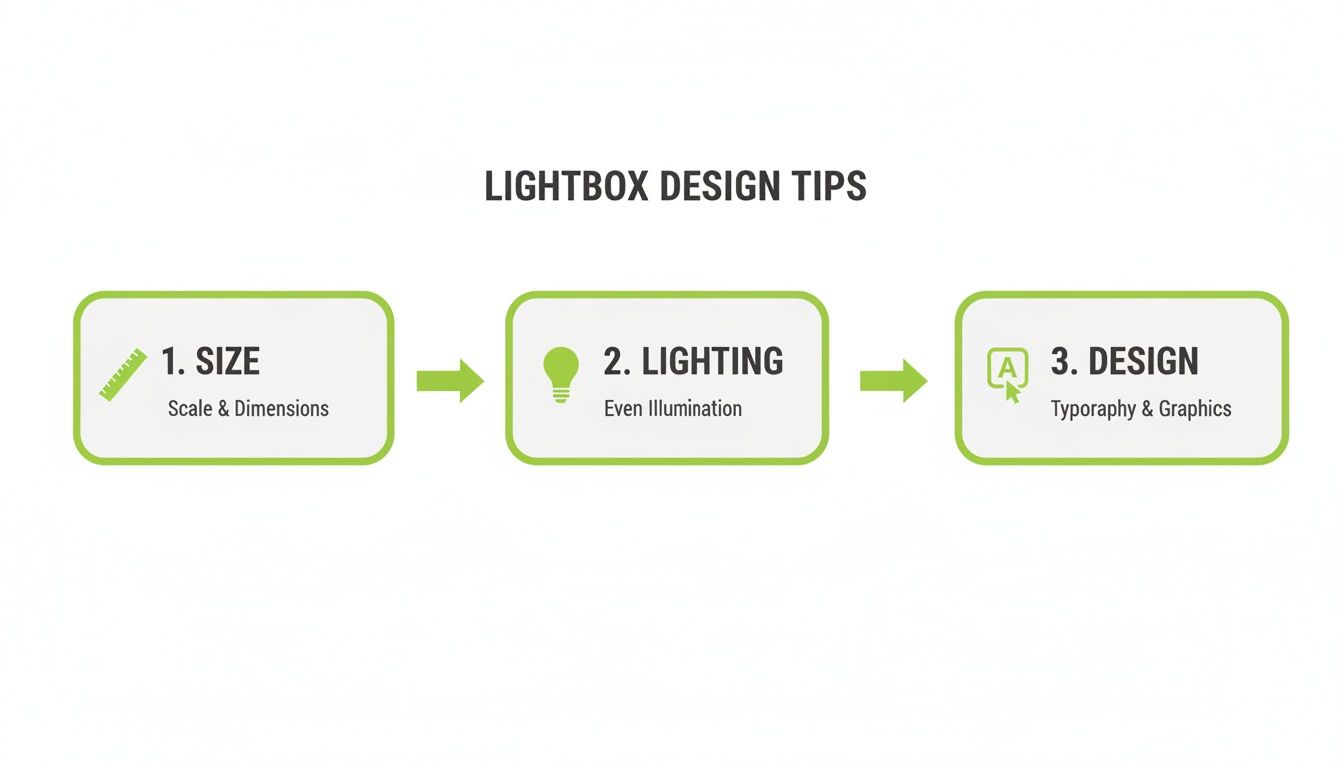
As you can see, decisions around size, lighting, and overall design are all connected, and they all need to align with local regulations.
This is where your signage partner becomes your best friend. An experienced local sign maker will be familiar with the district plans in your area and can give you solid advice on what, if any, consents you’ll need. Many can even manage the entire application process for you, which can save a massive amount of time and headaches.
How To Choose The Right Local Signage Partner
So, you’ve got a vision for a brilliant new lightbox. The final piece of the puzzle is finding the right people to build it for you. This isn’t just about finding a manufacturer; it’s about finding a local partner who gets it—someone who understands everything from the wild Wellington wind to the specific quirks of your local council.
A great sign company is more than just a supplier. They’re your guide, making sure the lightbox you end up with is not only stunning but also built to last and completely above board. They’re the difference between a sign that just hangs there and one that becomes a landmark, pulling in customers day after day.
Look For A Strong Local Portfolio
Before you sign on the dotted line, ask to see their previous work. A good sign maker will be proud of their portfolio and should have plenty of examples of projects they’ve completed right in your area. Look for signs that are similar in style or complexity to what you’re after.
Better yet, go and see them in person. How do they look up close? Pay attention to the quality of the finish, how crisp the graphics are, and—most importantly—how well they’ve held up over time. Seeing their work out in the real world is the best proof you can get that they build signs that can handle New Zealand’s unpredictable weather.
Prioritise In-House Capabilities
Things tend to go a lot smoother when the team designing your sign is the same one building it. A signage company with in-house design and fabrication capabilities can offer a much more seamless experience. Communication is direct, so your vision is less likely to get lost in translation between different contractors.
When one company handles everything from the initial sketch to the final installation, you have a single point of contact. This means better quality control and clear accountability from start to finish.
This integrated approach saves a huge amount of time and hassle. It means the people you brainstorm ideas with are just a few steps away from the workshop, ensuring every little detail is nailed exactly as you planned.
Expertise In Local Council Regulations
Let's be honest: navigating council rules can be a real headache. This is where an experienced local partner is worth their weight in gold. They’ll have a solid grasp of the district plans and consent requirements for your specific town or city, knowing exactly what’s needed to get your sign approved.
They can tell you upfront if your design is likely to need a building or resource consent and can help you tweak it to meet all the local rules. A partner with this kind of know-how can often handle the entire consent application for you, saving you from a mountain of paperwork. This expertise ensures your lightbox new zealand project moves forward without costly delays or nasty surprises, making the whole process feel easy.
Got Questions About Lightbox Signage? We've Got Answers
Even with a solid plan in mind, you’ve probably got a few lingering questions. Let's tackle some of the most common queries we hear from Kiwi business owners about getting a quality lightbox sign.
How Long Do Modern LED Lightboxes Last?
Think of a modern LED lightbox as a long-term investment in your brand's visibility. The high-quality LED modules tucked inside are typically rated for an impressive 50,000+ hours of continuous use.
What does that look like in the real world? If you run your sign for 12 hours a day, every single day, you're looking at well over a decade of bright, consistent performance before you'd even begin to notice any dimming. That kind of longevity makes it a seriously smart, cost-effective choice.
Can I Change The Graphic On My Lightbox Sign?
Yes, and honestly, this is one of the best things about them. The graphic panel on the front—what we call the 'face'—is designed to be swapped out.
So, when it's time for a rebrand, a new promotion, or you just want to give your storefront a fresh look, it’s a simple job. A sign company can print and fit a new custom face for a fraction of the cost of replacing the whole unit.
This adaptability turns your lightbox from a static fixture into a dynamic marketing tool that can change and grow right alongside your business. It's an investment that keeps on giving.
Are Lightboxes Durable Enough For NZ Weather?
Absolutely, but only if they’re built properly by professionals using the right stuff. A quality lightbox in New Zealand is specifically engineered to handle our famously unpredictable climate.
They’re built tough, using weather-resistant materials like powder-coated aluminium frames and impact-resistant polycarbonate or acrylic faces. More importantly, all the electricals inside are sealed to a high IP (Ingress Protection) rating, keeping them safe from driving rain, dust, and salty sea air. From a scorching summer sun to a southerly gale, a well-made sign will keep performing flawlessly.
Ready to make your brand shine? The team at SONI DESIGN specialises in creating high-impact, durable lightbox signage built for New Zealand conditions. Let's work together to create something extraordinary for your business.
Leave a Comment
Stay home & get your daily
needs from our shop
Start You'r Daily Shopping with Nest Mart