
Your cart is currently empty.

For any New Zealand business looking to make an impact, a light box isn't just another sign. It's your 24/7 salesperson, working tirelessly to make your brand impossible to miss, day or night.
Why a Light Box is a Bright Idea for Your NZ Business
Getting started with illuminated signage can seem like a big step, but it’s actually quite straightforward. Think of this guide as your local expert, showing you exactly how light boxes can act as a powerful beacon for your business, whether you're on a bustling city street or a quiet suburban corner.
These aren't just glowing rectangles; they're dynamic canvases ready to tell your brand's story. A well-designed light box can turn a generic shopfront into a local landmark, help people find their way through a corporate office, or give a retail space that polished, modern edge.
The Growing Demand for Illuminated Displays
You only have to look around to see that bright, professional signage is on the rise. In fact, the consumer segment of the New Zealand lamps and lighting market is projected to hit around US$219.66 million by 2025. This includes the kind of high-quality LED panels that power modern light boxes.
This steady growth points to a clear trend: Kiwi businesses are realising just how much a smart investment in their physical presence can pay off. You can explore more about these market trends over on Statista.com.
More Than Just a Sign: An Investment in Visibility
Putting up a light box is a strategic move to boost your visibility and build brand recognition. From a café in Queenstown to a high-end boutique in Auckland, the benefits are immediate and impactful.
- Constant Brand Exposure: Your message shines brightly around the clock, catching the eye of potential customers no matter the time or weather.
- A Professional First Impression: A sleek, evenly lit sign speaks volumes about quality and credibility. It builds trust before a customer even walks through the door.
- Unbeatable Attention-Grabbing Power: Our eyes are naturally drawn to light. In a crowded marketplace, an illuminated sign cuts through the visual clutter and makes your business stand out from the pack.
By using illumination, you’re not just putting up a sign—you're creating a focal point that actively pulls people in. It’s about turning a passing glance into a potential customer, and in today's market, that’s a massive advantage.
Choosing the Right Type of Light Box for Your Needs
Picking the right light box isn’t about finding the “best” one on the market; it’s about finding the best one for your business. The perfect sign for a cafe on a busy Auckland street will be totally different from what a high-end retailer in a Wellington mall needs.
It really comes down to where it’s going, how often you’ll need to change your message, and the kind of impression you want to make.
Let's break down the main options you'll find here in NZ. We'll help you match the right light box to your specific goal, so you end up with a sign that truly works for you.
If you're still weighing up your options, this quick flowchart can help confirm if a light box is the right path for your business signage.
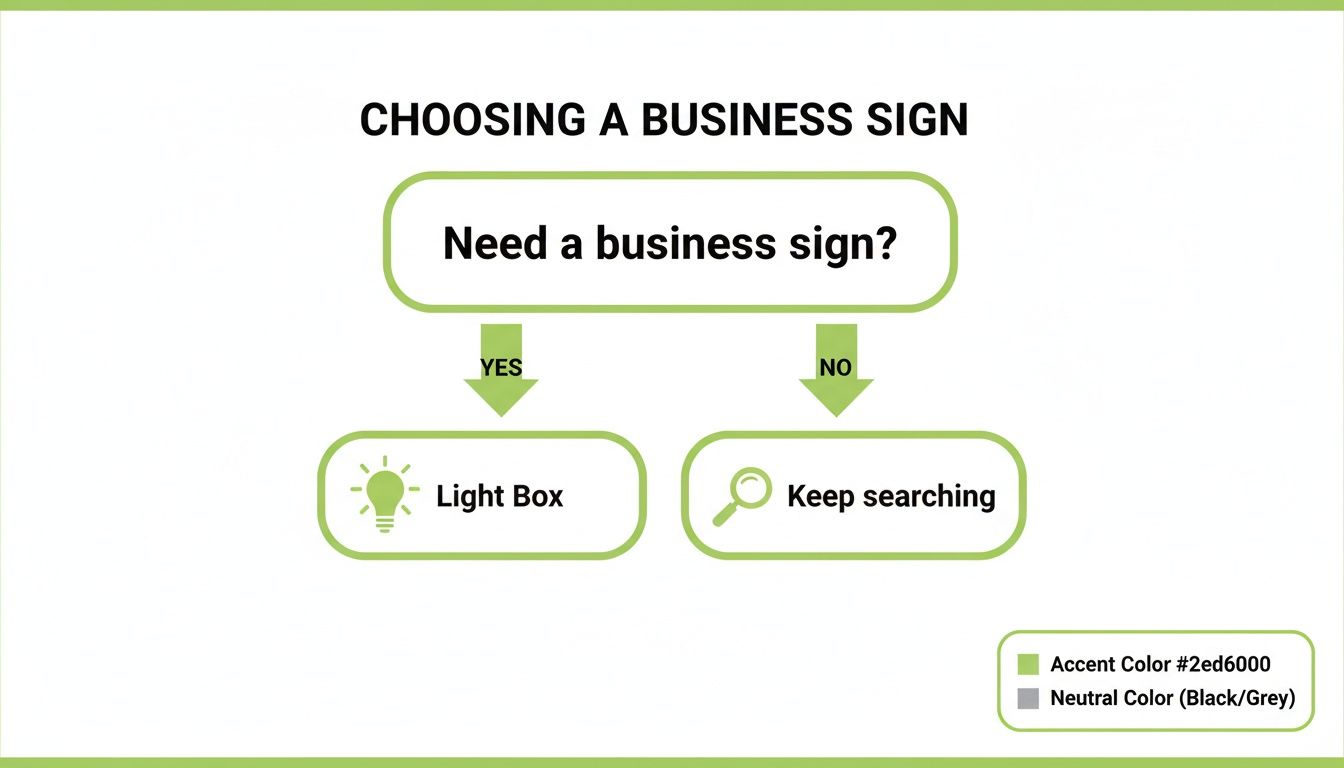
As you can see, for actively promoting what you do, a light box is a brilliant and straightforward solution.
Single-Sided Light Boxes: The Indoor Storyteller
Imagine your favourite framed picture, but with a vibrant, illuminated core. That’s a single-sided light box. They mount flat against a wall and are designed to create one powerful focal point, pulling your customers’ eyes exactly where you want them.
These are the absolute workhorses of indoor branding. They’re perfect for making your logo pop behind the reception desk, lighting up a menu in a cosy cafe, or putting a spotlight on a hero product in your shop. Since they only need to be seen from the front, they’re a cost-effective way to bring any interior space to life.
A dental clinic in Wellington, for example, could use one in their waiting room to show off calming imagery or service info, setting a modern, professional tone.
Double-Sided Light Boxes: The Street-Side Magnet
If you need to catch the eye of people coming from both directions, the double-sided light box is your best friend. These signs stick out from your building, perpendicular to the wall, making sure your message is seen by everyone walking or driving up and down the street.
They are the classic high-street attention-grabber. A double-sided light box is like a beacon, signalling your location to everyone nearby. This makes them a must-have for businesses on busy roads or in pedestrian-heavy spots, like Auckland's Commercial Bay or the laneways in Christchurch.
A double-sided sign gives you twice the visibility without doubling your footprint. It’s a smart way to capture a much wider audience and announce your presence with real confidence.
Illuminated Snap Frames: The Quick-Change Artist
For any business with constantly changing specials, promotions, or events, the illuminated snap frame is a game-changer. These light boxes are all about convenience. The frame literally snaps open from the front, so you can swap out graphics in minutes.
No tools, no calling in a professional. It's the glowing equivalent of a poster frame you can update yourself. This makes them perfect for:
- Retail shops advertising weekly deals.
- Cinemas showing off the latest movie posters.
- Restaurants highlighting seasonal menus or a happy hour special.
Their sheer ease of use means you can keep your marketing fresh and react quickly to new campaigns without having to buy a whole new sign every time.
LED Fabric Light Boxes: The Seamless Masterpiece
When you want to make a truly premium, high-impact visual statement, LED fabric light boxes are the way to go. These systems use a special fabric graphic that’s stretched perfectly taut across the frame, held in place with a silicone edge.
The result is breathtaking. You get a completely seamless, edgeless image with incredibly rich colours and perfectly even light. The fabric diffuses the light so beautifully that it gets rid of any hotspots or glare, giving you a sophisticated, gallery-quality finish. It's no wonder they're a top choice for high-end retail brands, trade show displays, and corporate offices where looking your best is non-negotiable.
A Quick Guide to Selecting Your Light Box
Feeling a bit overwhelmed? Don't be. This table breaks down the key differences to help you quickly pinpoint the best fit for your business.
| Light Box Type | Best Use Case | Typical Price Point | Ease of Updating Graphics |
|---|---|---|---|
| Single-Sided | Indoor branding, reception areas, retail displays | $$ | Moderate (requires unscrewing) |
| Double-Sided | High-street visibility, busy roads, foot traffic | $$$ | Moderate to Difficult |
| Illuminated Snap Frame | Frequent promotions, menus, retail specials | $$ | Very Easy (DIY in minutes) |
| LED Fabric | High-end retail, trade shows, premium interiors | $$$$ | Easy (can be done by staff) |
Ultimately, the best choice aligns with your budget, your location, and how dynamic your marketing needs to be. A snap frame is brilliant for a fast-moving cafe, while a fabric light box delivers that "wow" factor for a luxury brand.
Understanding Materials for Durability and Style
A light box is much more than just a glowing graphic. It’s a physical structure, and it needs to hold its own against daily wear and New Zealand's famously unpredictable weather. The materials that go into it are the very foundation of its lifespan, its look, and how well it does its job.
Think of it like building a house. The choice of framing timber, cladding, and windows all play a part in creating a home that’s not only stylish but built to last. It’s exactly the same with a light box.
Getting the material selection right means your investment won't just look great on day one, but will keep representing your brand professionally for years. From the salty air of a coastal Bay of Plenty town to the harsh sun in Central Otago, the right combination of components makes all the difference.
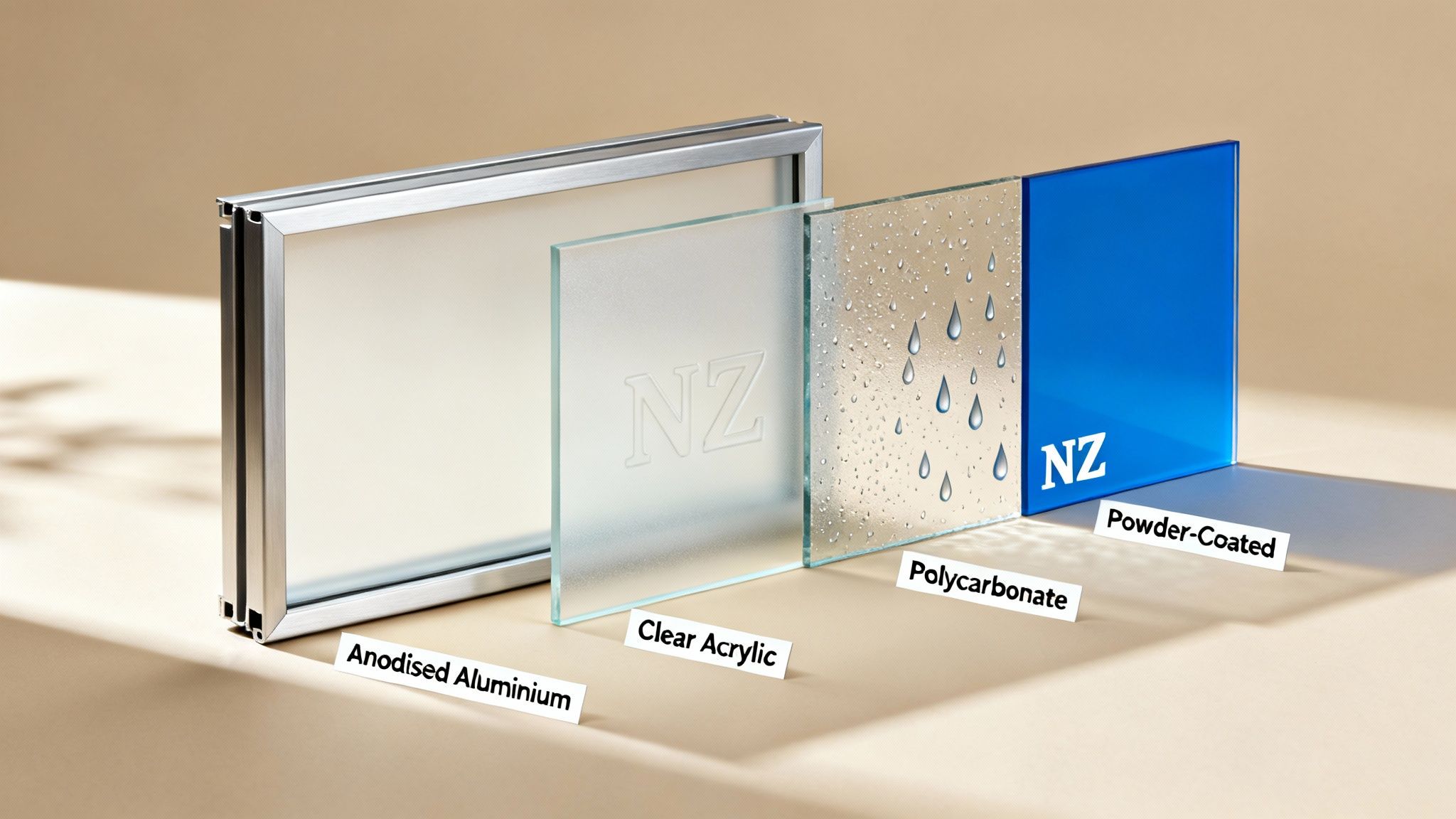
This is why having a good chat with your supplier is so important. Knowing the basics helps you ask the right questions, ensuring you get a light box built specifically for your environment and needs.
The Frame: The Backbone of Your Light Box
The frame is the skeleton of your light box; it provides all the structural integrity and shape. For nearly all modern light boxes in NZ, aluminium is the undisputed champion. It hits that perfect sweet spot between being strong and lightweight, which makes installation easier without compromising on sturdiness.
Aluminium frames are also incredibly resistant to rust and corrosion. For any outdoor sign in New Zealand, that’s a non-negotiable. This built-in resilience means the structure won't weaken or look shabby after a few seasons of rain and humidity.
The choice of an aluminium frame is a long-term decision for stability and a clean, modern aesthetic. It’s the reliable foundation upon which a visually stunning and durable sign is built.
The Face: Where Your Message Lives
The "face" is the translucent panel your graphic is applied to. It needs to be tough enough to protect the lights inside while also diffusing the light evenly for that smooth, vibrant glow. The two main players here are acrylic and polycarbonate.
-
Acrylic (Perspex): This is the go-to for its brilliant optical clarity and fantastic light diffusion. It creates a flawless, even illumination that really makes colours pop. Its only downside is that it's more brittle than its counterpart, making it a better fit for indoor use or sheltered outdoor spots.
-
Polycarbonate (Lexan): Think of this as the heavy-duty option. Polycarbonate is hugely impact-resistant—up to 250 times stronger than glass—which is perfect for high-traffic areas, low-hanging signs, or anywhere vandalism might be a worry. While its light diffusion is still excellent, it's not always quite as crystal-clear as acrylic.
Your location really dictates the choice. For an indoor menu board in a Wellington cafe, acrylic is ideal. For a double-sided sign hanging over a busy Christchurch footpath, the sheer toughness of polycarbonate is a much safer bet.
Finishes: Bringing Your Brand Colour to Life
The final touch is the finish on the frame, which is as much about protection as it is about aesthetics. A raw aluminium finish has a sleek, industrial look, but custom finishes are where you can really let your brand identity shine.
Powder coating is the industry standard for adding colour and an extra layer of defence. The process involves electrostatically applying a dry powder to the metal, then baking it to create a hard finish that’s much tougher than conventional paint.
This gives you a durable, uniform colour that resists chipping, scratching, and fading from UV exposure, keeping your brand colours true for the long haul. Whether you need to match a specific Pantone shade or just want a classic matte black, powder coating delivers a premium, lasting result for any light box in NZ.
The Tech That Makes Your Sign Shine
The magic behind a brilliant light box isn’t really magic at all—it’s the technology powering it. Think of it as the engine under the bonnet; it’s what turns a simple graphic into an unmissable beacon for your brand. While older signs relied on clunky fluorescent tubes, today's light boxes in NZ are almost exclusively powered by modern LEDs, and for very good reason.
Trying to light a sign with old fluorescent tubes is like lighting a room with a few scattered, flickering candles. You end up with uneven patches of light, dark spots, and a generally inconsistent, dated look. That blotchy effect can make even the most professional design look cheap.
Modern LEDs, on the other hand, are like a perfectly engineered lighting grid. They give you a smooth, flawless glow from edge to edge. This consistency is what makes your branding look sharp and professional, creating that premium finish that grabs attention effortlessly.
Understanding LED Colour Temperature
It’s not just about brightness; the type of light matters. LEDs come in different colour temperatures, which are measured in Kelvin (K). This has nothing to do with heat—it’s all about the colour tone of the white light, and it can subtly change how customers feel about your brand.
- Warm White (2700K - 3000K): This is that soft, yellowish, inviting glow you get from a traditional light bulb. It’s excellent for creating a cosy, comfortable atmosphere, making it a perfect fit for cafes, bakeries, and hospitality spots aiming for a relaxed vibe.
- Cool White (4000K - 5000K): This light is crisp, bright, and has a slight blueish tint, a lot like natural daylight. It creates a sense of cleanliness, modernity, and focus, so it's a fantastic choice for healthcare clinics, tech companies, and professional services that want to project an image of efficiency and clarity.
- Daylight (6000K - 6500K): This is a very bright, intense white light that delivers maximum visibility and true-to-life colour. You'll often see this in retail settings where showing accurate product colours is vital, or for outdoor signs that need to cut through the daytime glare.
The right choice reinforces your brand identity without you having to say a word. A warm glow can make a restaurant feel more intimate, while a cool white can make a medical centre appear more sterile and professional.
The Smart Investment: LEDs and Your Power Bill
For any Kiwi business owner, keeping operational costs down is always front of mind. This is where LED technology really proves its worth as a smart, long-term investment. Modern LEDs are incredibly energy-efficient, using up to 75% less power than the old fluorescent tubes to produce the same amount of light. That translates directly into lower monthly power bills.
This efficiency is particularly important in New Zealand's energy market. The national electricity retailing industry is worth an estimated NZ$9.8 billion, a figure that shows just how significant energy costs are for businesses. Making the switch to energy-efficient LED systems is a direct way to lower your overheads and boost your bottom line. You can dig into more data on New Zealand's electricity industry from IBISWorld.
Choosing an LED light box isn't just an aesthetic upgrade; it's a strategic financial decision. The energy savings over the lifespan of the sign often far outweigh any initial cost difference, delivering a strong return on investment.
On top of that, LEDs have an exceptionally long lifespan, often lasting for 50,000 hours or more. This means fewer replacements, less maintenance, and a sign that you can rely on to represent your business day in and day out. When you add up the lower power bills and minimal upkeep, it’s easy to see why LED is the undisputed king of modern illuminated signage.
How NZ Industries Are Winning With Light Boxes
It’s one thing to talk about specs and materials, but it’s seeing a tool in action that really shows you what it can do. Light boxes are more than just illuminated signs; they're incredibly versatile assets, and across New Zealand, businesses are using them to grab attention, direct customers, and ultimately, drive sales.
From a bustling high street to a quiet medical centre, these displays are making a real difference. Let's look at some real-world examples of how different Kiwi industries are putting light boxes to work.
Retail and Hospitality: The Customer Magnets
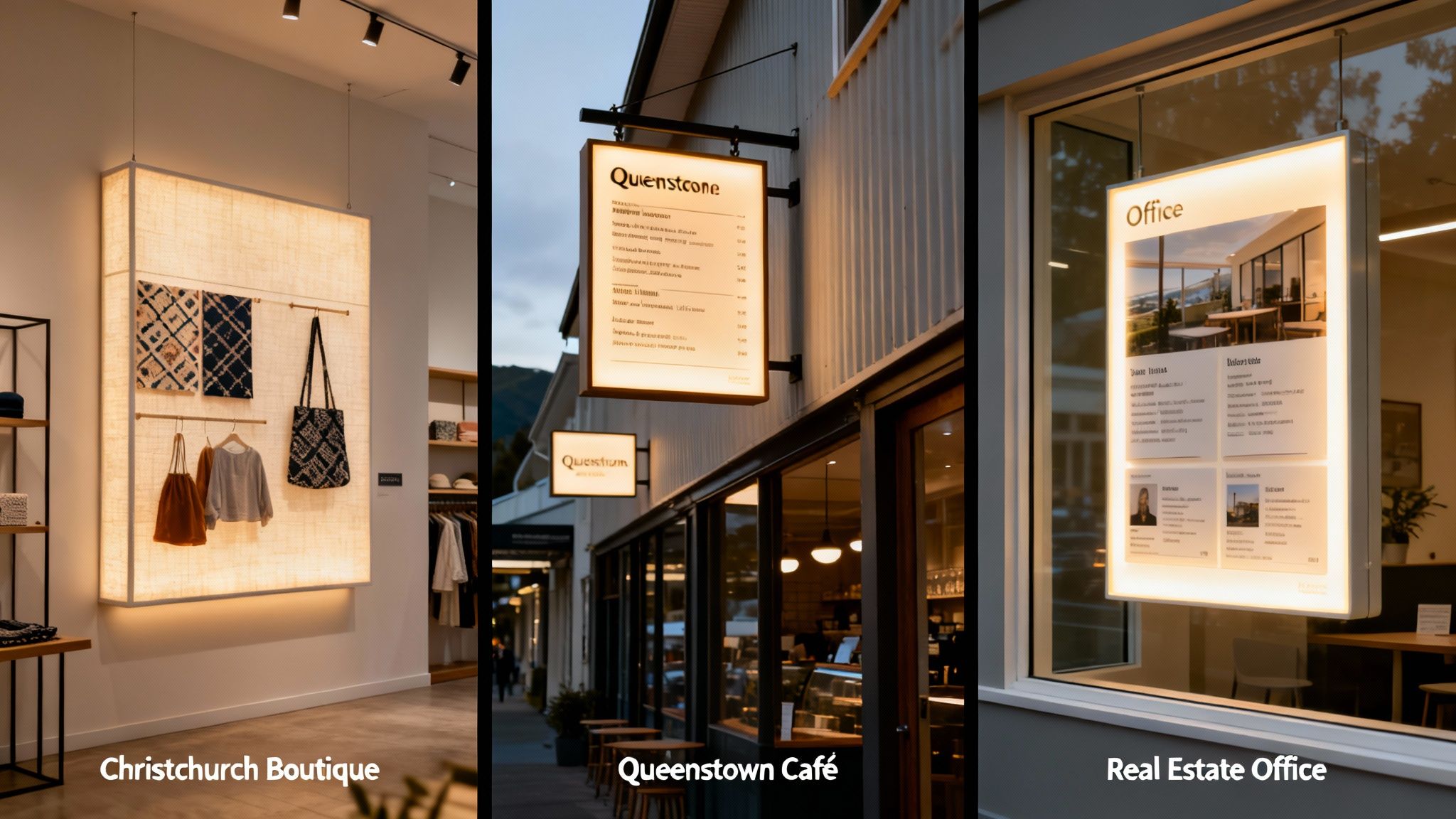
In the cut-throat worlds of retail and hospitality, you have to stand out or you’ll be missed. Think of a Christchurch clothing boutique launching its new seasonal collection. They use a massive LED fabric light box in their window, creating a seamless, edge-to-edge backdrop that’s impossible to ignore. It stops shoppers in their tracks, turning a simple window display into an event.
Over in a busy Queenstown laneway, a cafe needs to catch the eye of hungry locals and tourists. Their solution? A double-sided projecting light box with their logo and menu. It acts like a beacon, visible to people walking from either direction and practically doubling their chances of pulling someone in for a flat white.
Real Estate and Corporate: Polished First Impressions
For businesses that rely on trust and professionalism, like real estate agencies and corporate firms, the right first impression is everything. An Auckland real estate office, for instance, uses sleek illuminated snap frames to display its property listings. They can swap a "For Sale" poster to "Sold" in seconds, keeping their window fresh and creating a real sense of success and momentum.
Step into a corporate lobby in Wellington, and you might see a subtle, wall-mounted single-sided light box glowing with the company logo. It’s a sophisticated touch that reinforces the brand from the moment a client walks in, setting a professional tone before a single handshake.
A well-placed light box does more than just display information; it crafts an experience. It can generate excitement for a new product, create a welcoming atmosphere, or build immediate brand credibility, all before a single word is spoken.
Healthcare and Events: Providing Clarity and Direction
In places where clear communication is absolutely crucial, light boxes play a vital role. A medical centre in Tauranga uses them for wayfinding, with illuminated signs clearly pointing the way to "Reception" or "X-Ray." The bright, easy-to-read text helps reduce patient stress and keeps the clinic running smoothly.
Event organisers lean on them heavily, too. A trade show at the Viaduct Events Centre can be a sea of sameness, but portable fabric light boxes make exhibitor booths pop with vibrant backdrops. They’re also perfect for creating a specific mood, much like a wedding monogram projection can transform a venue.
While their use is widespread, it's interesting to see how the market shifts. The New Zealand market for special-purpose lighting, which includes some light boxes, was estimated at US$51 million in 2024. Although this figure shows a contraction from the previous year, it highlights a key trend: the strong, ongoing demand from core sectors like retail is being balanced by a potential dip from others like events. For suppliers, the focus is clearly shifting towards providing ultra-efficient, long-lasting solutions for these stable, high-value markets.
Finding the Right Light Box Supplier in New Zealand
Choosing the perfect light box is only half the job. Finding the right partner to bring it to life is just as important, and it can be the difference between a sign that becomes a genuine asset and one that just creates headaches.
This isn't just about finding a company that sells light boxes in NZ; it's about finding a local expert who gets your vision and understands the practical realities of making it happen. A great supplier is more than just a salesperson—they’re a consultant and a craftsperson rolled into one. They should be able to guide you through material choices, help you navigate local council rules, and ultimately deliver a finished product that’s built to last.
What to Look for in a Supplier
When you start looking at potential partners, it’s all too easy to focus on the price tag. But the real value lies in a blend of quality, expertise, and service. A cheap sign that gives up the ghost after a year is far more expensive than a well-made one that shines bright for a decade.
Here are a few things that separate the good suppliers from the great ones:
- Local Knowledge and Compliance: Do they actually understand New Zealand council regulations? A partner with experience in your specific region can save you from some seriously expensive compliance dramas down the track.
- A Strong Portfolio: Don’t be afraid to ask to see their previous work. Does their portfolio show off a range of styles and high-quality finishes that match the look you’re going for?
- Customisation Capabilities: Your brand is unique, and your sign should be too. A top-tier supplier like SONI DESIGN won’t just push a standard, off-the-shelf box. They’ll work with you to create a completely custom light box that fits your exact needs.
- End-to-End Service: The best partners handle the whole process—from the first design chat to the final installation and even ongoing maintenance. This makes everything smooth and stress-free for you.
Key Questions to Ask Any Potential Supplier
Before you sign on the dotted line, you need to ask some good questions. This is your chance to get a feel for their expertise and make sure they’re the right fit for your project. Think of it as an interview for a key member of your marketing team.
Get a list of questions ready so you cover all the important stuff. Here’s a good place to start:
- What materials do you recommend for my specific location and why? This question quickly reveals if they understand how NZ’s weather and environment will affect the sign’s durability.
- Can you walk me through your design and proofing process? This will tell you how much input you get and what the workflow looks like.
- Who handles the installation, and what does that process involve? You’ll want to know if they use their own skilled crew or if they just subcontract the work out.
- What warranties or guarantees do you offer on the frame, lighting, and graphics? This is a huge indicator of how much confidence they have in their own product.
Choosing a supplier is a long-term decision. You're not just buying a product; you're investing in a relationship with a local partner who will help your brand shine for years to come. Finding someone with proven expertise and a commitment to quality is paramount.
Still Have a Few Questions? We’ve Got You Covered.
Even after exploring all the options, it's completely normal to have a few more practical questions pop up. When Kiwi business owners are thinking about investing in a light box, we find the same key concerns come up time and time again.
So, let's tackle those common queries head-on. We've put together straightforward answers to help you feel 100% confident in your decision.
What’s the Ballpark Cost for a Custom Light Box in NZ?
That’s a bit like asking how much a car costs – it really depends on the model and the extras! The final price tag for a light box is shaped by a few key things: its size, the materials you choose (e.g., tough polycarbonate vs. standard acrylic), and how complex the design is. A simple, single-sided indoor sign will always be easier on the wallet than a large, double-sided pylon sign with a custom powder-coated finish.
Think of your light box less as a cost and more as a long-term investment. It's an employee that works 24/7 to pull in customers and build your brand, delivering a return that you'll see day in and day out.
Do I Need Council Approval for My Signage?
Ah, the classic Kiwi question. Navigating council rules can feel a bit tricky, as what’s required in Auckland might be different from the rules in Dunedin. Generally, things like the sign's size, where it’s being placed, and whether your building sits in a special heritage zone all play a part in determining if you need consent.
This is exactly where a seasoned local supplier becomes your best friend. They know the local regulations inside and out and can steer you through the compliance maze, making sure your sign ticks all the boxes without any headaches.
How Long Do These Things Actually Last? And What About Maintenance?
This is where modern light boxes truly shine. The high-quality LEDs we use today are built to last, often rated for 50,000 hours or more of continuous operation. To put that in perspective, that’s over five years of being lit up non-stop.
As for upkeep? It’s refreshingly simple. Beyond a quick wipe-down now and then to keep the face clear of dust and grime, your light box is pretty much a "set and forget" part of your business. That impressive lifespan and minimal maintenance make it a super reliable and cost-effective choice.
Can I Change the Graphics Myself?
Absolutely, as long as you pick the right type of light box! If you're running regular sales or seasonal promotions, you need that flexibility. Two fantastic options are built specifically for easy updates:
- Illuminated Snap Frames: Just like they sound. The frame edges snap open and shut, letting you pop in a new printed graphic in under a minute. It’s that easy.
- LED Fabric Light Boxes: These use a slick system where the fabric graphic has a silicone edge. You simply pull the old one out and tuck the new one in.
Both of these systems give you the power to keep your marketing fresh and dynamic, without needing to call in the pros every time you've got something new to say.
Ready to light up your brand and leave a lasting impression? The team at SONI DESIGN specialises in creating custom light box solutions that are built to perform and designed to stand out. Explore our signage services and start your project today!
Leave a Comment
Stay home & get your daily
needs from our shop
Start You'r Daily Shopping with Nest Mart