
Your cart is currently empty.

In a world crammed with digital tools and apps, the classic whiteboard still holds its ground as the undisputed champ of collaboration. A large white dry erase board isn't just a piece of office furniture; it's a dynamic canvas for sparking creativity, hammering out strategy, and building real teamwork. It provides a shared, tangible space that brings people together and fosters a genuine connection.
Why Your Workspace Needs a Whiteboard
Think of a large whiteboard as more than just a blank surface. It’s the place where messy ideas start to take shape and big-picture visions come into focus. It pulls your team away from their individual screens and gathers them around a central point to solve problems together. This simple act encourages everyone to jump in, leading to far more energetic and productive conversations.
From mapping out sales territories in an Auckland real estate agency to brainstorming a new menu in a Wellington café, this tool is incredibly versatile. Its value is clear right across New Zealand's business community, where organisations have embraced whiteboards as productivity powerhouses. Sectors like real estate, legal, and financial services depend on them to visualise strategy. In fact, market analysis suggests the New Zealand whiteboard market is set to hit around USD 2.8 million by 2025, with over 11,300 small and medium-sized businesses in Auckland alone using large boards.
Fostering Spontaneous Creativity
Digital tools can be clunky. You have to log in, open an app, and click through menus, which can kill a fleeting moment of inspiration. A whiteboard, on the other hand, is always on and ready to go.
- Immediate Idea Capture: Anyone can walk up, grab a pen, and jot down a thought or sketch out a diagram. There's no friction.
- Visual Thinking: It’s perfect for drawing connections, building mind maps, and laying out complex processes in a way that text on a screen just can't match.
- Low-Stakes Brainstorming: The fact that you can erase everything in a second makes people less afraid to share rough or half-formed ideas. This freedom leads to much more open and creative sessions.
If you're interested in creating an inspiring home office, a large whiteboard is a must-have. It provides a dedicated zone for big-picture thinking, pulling you away from the endless distractions of your computer screen and giving your best ideas room to breathe.
Choosing the Right Whiteboard Surface Material
Picking the right surface for your large dry erase board is a bit like choosing tyres for a car.## Choosing the Right Whiteboard Surface Material
Picking the right surface for your large dry erase board is a bit like choosing tyres for a car. You wouldn't put budget tyres on a high-performance vehicle, and the same logic applies here. The material you choose affects everything—how well it cleans, how long it lasts, and even the overall look of your room.
It’s worth thinking about the bigger picture. Choosing the right material for interior design in commercial spaces is about balancing function with form, and your whiteboard should be no different. You want something that works brilliantly day-to-day but also fits into your space without sticking out like a sore thumb.
If you're wondering whether a whiteboard is even the right tool, this little decision tree can help clear things up.
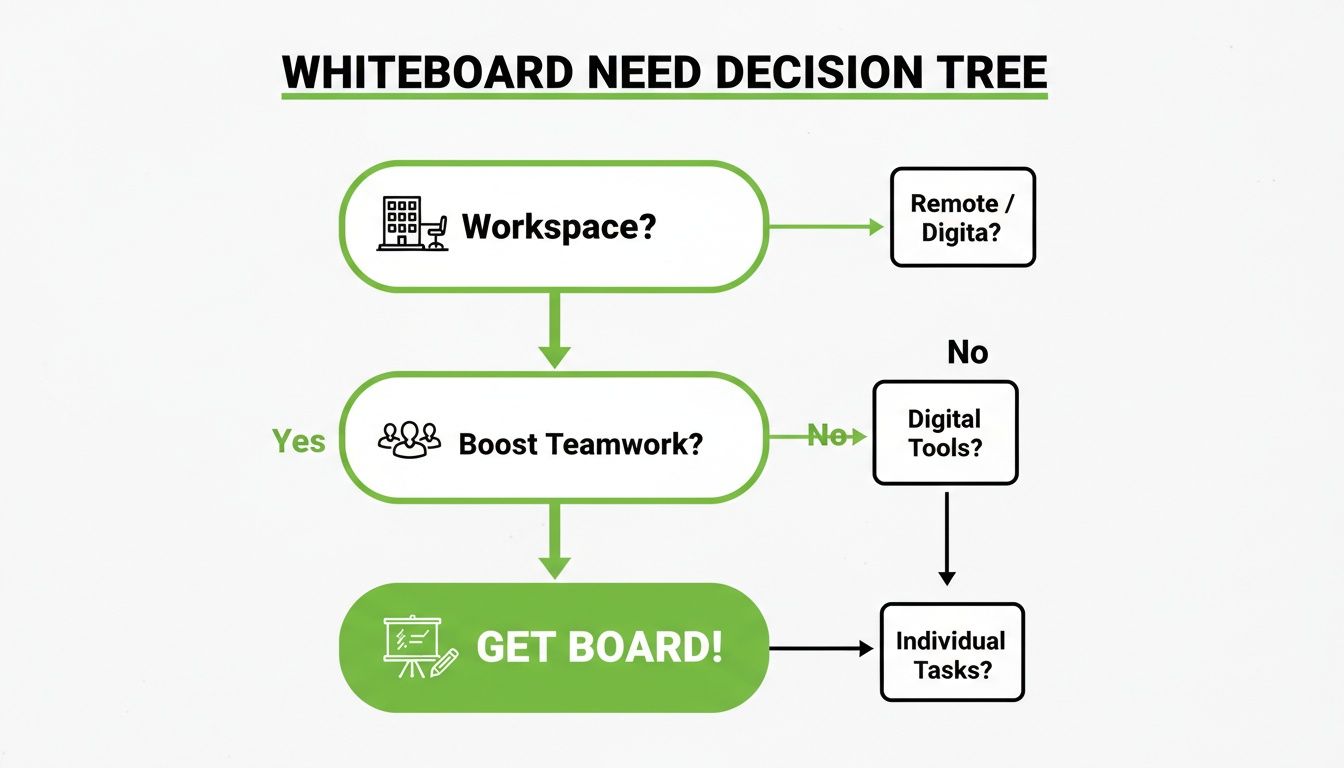
As you can see, for any professional space trying to get people collaborating more effectively, a big whiteboard is often the simplest and best answer.
Melamine: The Budget-Friendly Option
Melamine is the most common surface you'll find, especially if you're looking for an affordable option. It's essentially a resin-coated layer over a particleboard base. Think of it as the entry-level model—perfectly fine for a home office or a staff room that only sees occasional use.
The catch? That coating is porous. Over time, marker ink seeps in, leaving behind those frustrating faint marks known as "ghosting." It’s a solid starting point, but don't expect it to stay pristine with heavy use.
Porcelain Steel: The Durable Workhorse
Step into any busy classroom, bustling boardroom, or hospital ward, and you'll likely find a porcelain steel board. This is the heavy-duty choice. A ceramic finish is baked onto a steel core at incredibly high temperatures, creating a surface that’s non-porous and tough as nails.
A high-quality porcelain surface is built to last a lifetime. It resists scratches, dents, and stains far better than melamine, ensuring a clean erase every single time. It's an investment in reliability for any space that sees heavy daily use.
Because they have a steel core, these boards are also magnetic. This adds a whole other layer of usefulness for pinning up notes, charts, or documents. They cost more upfront, but their sheer longevity makes them a smarter financial choice for high-traffic areas in the long run.
Glass: The Premium, Aesthetic Choice
If you're after a clean, modern, and professional look, you can't beat a glass whiteboard. Made from tempered safety glass, they bring a touch of class to any space and are exceptionally durable.
The biggest win for glass is its completely non-porous surface. It will never stain or ghost, period. You could leave a note on it for a year, and it would wipe away as if it were written five seconds ago. Available in different colours and finishes, a glass board can be a real design statement in an executive office or a client-facing meeting room.
Whiteboard Surface Material Comparison
To make things even clearer, here's a quick side-by-side comparison to help you weigh up the pros and cons of each material at a glance.
| Material Type | Best For | Durability | Stain Resistance | Price Point |
|---|---|---|---|---|
| Melamine | Low-use areas, home offices, budget-conscious buyers | Low | Low | $ |
| Porcelain | High-traffic areas, schools, offices, hospitals | High | High | $$ |
| Glass | Executive offices, boardrooms, modern interiors | Very High | Excellent | $$$ |
Ultimately, the best choice boils down to how often you'll be using the board and what your budget looks like. For constant, daily collaboration, investing in porcelain or glass will pay dividends in the long term.
How to Select the Perfect Size and Layout
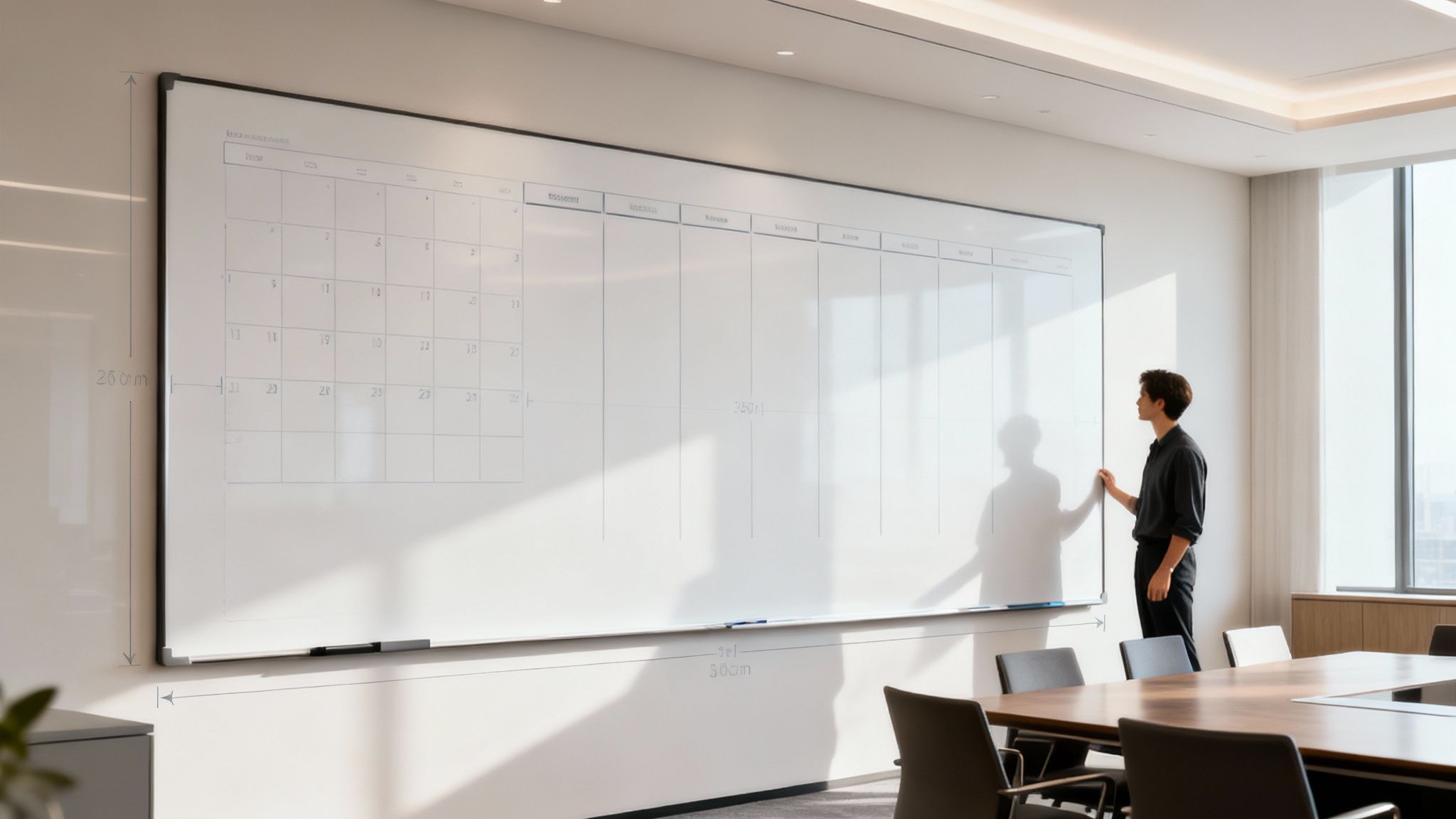
Choosing the right size for a large white dry erase board is about more than just finding a blank spot on your wall. It’s about creating a canvas that truly fits the way your team thinks and works. A board that’s too small can feel like a bottleneck for ideas, while one that's too big can completely overwhelm the space. The real goal is to find that perfect balance where the board becomes a natural, integrated part of your environment.
A great place to start is to think about who’s using the board and from how far away. In a big conference room, for instance, a scrawl that looks fine up close might be illegible to someone at the far end of the table.
Here’s a handy rule of thumb: for every three metres of viewing distance, the text on the board should be at least 2.5 cm high. This simple check ensures everyone has a clear view and can stay engaged.
Sizing for Different Environments
The best size and layout really come down to the setting. What works for a high-energy marketing brainstorm is completely different from what a teacher needs for a structured lesson.
- Corporate Boardrooms: Go big. Think expansive, wall-to-wall coverage. Boards measuring 2400mm x 1200mm or even larger create an impressive canvas perfect for strategic roadmaps, detailed mind maps, and sprawling project timelines.
- Training and Classrooms: Here, accessibility is everything. A long, wide board (like a 3000mm x 1200mm) mounted slightly lower on the wall allows teachers and students to write and collaborate at the same time without getting in each other’s way.
- Small Meeting Rooms or Offices: When space is tight, think vertically. A taller board, around 1200mm x 1800mm, gives you plenty of writing real estate without taking over the whole room.
This need for visual, collaborative tools is something we’re seeing a lot of in New Zealand's education sector. As Kiwi schools embrace more dynamic teaching styles, the demand for large, interactive surfaces has shot up, with the market growing by nearly 50% between 2019 and 2025. You can learn more about this growth in the interactive whiteboard market.
Going Beyond the Blank Canvas
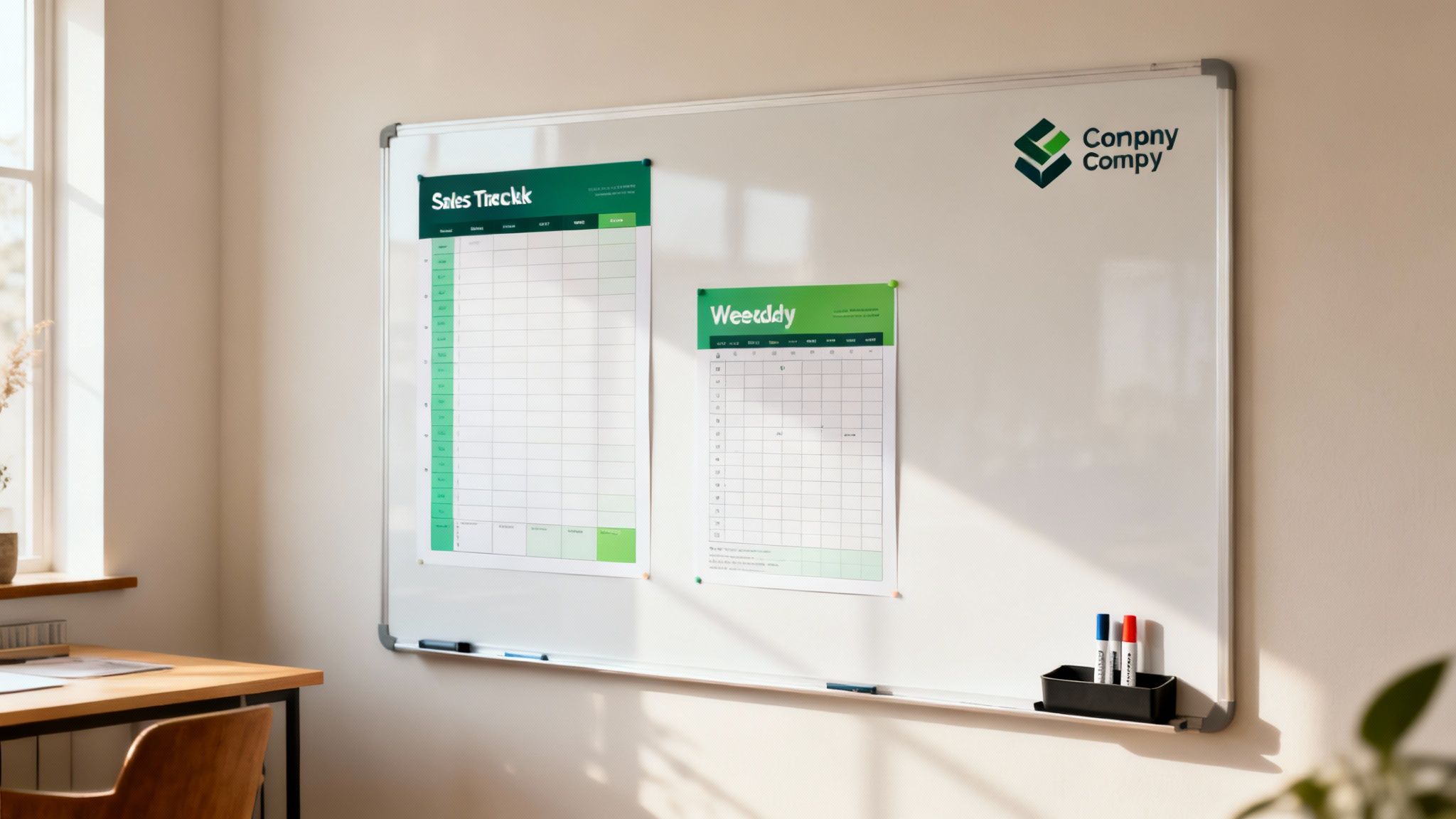
A large whiteboard doesn't have to be just a plain white rectangle. Custom-printed layouts can completely change the game, turning a simple tool into a specialised system built just for your business. Imagine having your most-used templates ready to go.
Custom layouts transform a standard whiteboard into a purpose-built productivity hub. By printing grids, templates, or branding directly onto the surface, you eliminate the need to redraw common formats, saving time and ensuring consistency.
Think about the possibilities:
- A permanent weekly calendar grid for managing projects.
- A sales pipeline tracker with your specific stages already mapped out.
- A Kanban board layout for your agile team to hit the ground running.
- Your company logo and brand colours to make the space feel truly yours.
By taking the time to consider both the physical size and the functional layout, you can choose a whiteboard that not only fits your space but actively boosts your team’s workflow and collaborative spirit.
Installing Your Whiteboard for Safety and Stability
Getting your new large white dry erase board up on the wall can feel like a big job, but with a bit of planning, it’s more straightforward than you might think. A secure installation isn’t just about aesthetics; it’s about making sure the board is safe and stable for everyone, especially in a busy classroom or office where it's going to get a lot of use.
First up, you need to decide if you want a fixed or a flexible setup. A wall-mounted board is the go-to for most people, giving you a permanent and super-sturdy surface. But if you need to be able to move your ideas from room to room, a mobile stand with castor wheels is a brilliant choice. They’re perfect for dynamic workspaces or venues that host different events.
Preparing for a Secure Mount
A little bit of prep work before you pick up the drill will save you a world of trouble. The kind of wall you have—be it plasterboard, brick, or concrete—dictates the hardware you'll need. A quick tap-and-check is all it takes to figure this out.
A level and securely mounted whiteboard is the foundation of a great collaboration space. Taking the time to measure correctly and use the right fixings for your wall type ensures the board will be safe and reliable for years to come.
Get your tools together before you start. You'll generally need:
- A spirit level (a crooked whiteboard is a constant distraction!)
- A tape measure for getting the placement just right
- A drill with the right bits for your specific wall
- The correct wall anchors or plugs to ensure a solid grip
- An extra pair of hands to help lift and hold the board
Finding the Best Location
Where you put the board is just as important as how you hang it. Think about the natural flow of traffic in the room. You want a spot that’s easy to get to without causing a bottleneck.
Lighting is another huge factor. Nothing makes a whiteboard harder to read than a nasty glare. A classic mistake is placing the board directly opposite a window or under a bright, focused light. Look for a wall with more even, indirect light.
Finally, hang it at a height that works for your team. A good rule of thumb is to have the centre of the board at about eye level. This makes it comfortable for most people to write on and easy for everyone to see.
Transform Your Whiteboard with Custom Designs
Why stick with a plain white rectangle when your board can be a powerful extension of your brand? A standard large white dry erase board is a handy tool, no doubt, but a custom-designed one is a genuine asset. It stops being just a writing surface and becomes a piece of functional art that tells your company’s story.
When you add your logo, brand colours, or specific templates, you lift the board from a generic office supply to a core part of your workspace’s identity. It’s a subtle but constant reminder of your brand, creating a more cohesive and professional atmosphere. This kind of visual consistency makes your whole space feel more intentional and organised.
From Blank Slate to Branded Masterpiece
Think of that whiteboard as prime real estate on your wall. Customisation lets you make the most of that space by embedding your company's personality right onto it. It's a chance to create something that feels uniquely yours, which can have a surprisingly positive impact on team morale and what clients think of you.
A branded board shows a real commitment to detail and culture. It sends a quiet message that you care not just about the work being done, but also the environment where it all happens.
A custom large white dry erase board bridges the gap between utility and identity. It becomes a storytelling tool that reinforces company culture, streamlines processes, and makes a memorable impression on both employees and visitors.
For example, a marketing agency in Auckland could have its creative mantra beautifully printed along the top of its main brainstorming board. Or a busy Queenstown café might use a custom board with its logo to display daily specials and staff notices, blending it seamlessly into its décor.
Functional Designs for Every Industry
Customisation isn't just about looking good; it's about boosting efficiency. By printing the frameworks you use every day directly onto the board, you save time and cut out repetitive setup tasks for good.
Here are a few practical ideas for different New Zealand businesses:
- Healthcare Clinics: A board pre-printed with a patient care checklist or a staff rota helps ensure clear communication and cuts down on errors.
- Real Estate Agencies: A permanent sales tracker or a map of local suburbs allows agents to visualise progress and strategy at a glance.
- Training Centres: Custom grids for workshop activities or feedback templates can guide sessions and keep participants focused.
- Project Management Teams: A permanent Kanban or Scrum board layout means you never have to redraw columns, letting your team get straight to work.
Ultimately, a custom design turns your large white dry erase board into a strategic tool. It stops being just a place to jot down notes and becomes a system designed specifically to support your team’s unique workflow. By blending branding with function, you create a dynamic asset that not only improves productivity but also proudly reflects who you are.
How to Keep Your Whiteboard Looking Brand New
There’s nothing better than a spotless, gleaming whiteboard. It’s a blank canvas just waiting for the next great idea. Keeping it that way is actually pretty simple, and a little bit of care goes a long way in making sure your board stays a reliable tool for years to come.
The biggest headache for any whiteboard owner is ghosting—those faint, stubborn shadows of old writing that just won’t go away. This happens when ink seeps into the tiny, invisible pores of the board’s surface. The good news is that preventing it is easy once you get into a good routine.
Simple Habits for a Clean Slate
The golden rule is to clean your board regularly. Ink that’s been left to sit for weeks becomes much tougher to get rid of, so a quick wipe after each brainstorming session or meeting can make all the difference.
For a consistently clean board, stick to these fundamentals:
- Stick to Microfibre Cloths: These are your whiteboard’s best friend. They’re designed to lift away marker dust without leaving behind tiny scratches. Steer clear of paper towels or anything abrasive, as they can create micro-scratches that trap ink permanently.
- Invest in Good Quality Markers: It might be tempting to grab the cheapest markers, but they often use pigments that are notorious for staining. Sticking with well-known brands means you get vibrant colours that also erase cleanly.
- Clean It Often: Wiping the board down daily with a dry cloth is a fantastic habit. Once a week, give it a proper clean with a dedicated whiteboard spray to get rid of any sneaky residue build-up.
Honestly, prevention is everything. Just by using the right markers and a proper eraser or microfibre cloth, you’ll sidestep 90% of cleaning problems before they even begin.
One last tip: resist the urge to grab standard household cleaners. Things like glass cleaner or all-purpose sprays contain chemicals that can eat away at the board’s special coating, causing permanent damage and making ghosting inevitable. If you’re really stuck with a stubborn mark, a cloth lightly dampened with isopropyl alcohol can work wonders, but make sure to wipe it down with a clean, water-dampened cloth afterwards and dry it completely.
Still Have a Few Questions?
Even after you've weighed up all the options, a few lingering questions can pop up just as you're about to make a final decision. It’s completely normal. Let's run through some of the most common queries we get from businesses across New Zealand to help you feel totally confident in your choice.
What’s the Best Way to Get Permanent Marker Off My Board?
We’ve all been there—that heart-stopping moment you realise you’ve used a permanent marker by mistake. Take a deep breath; your board isn't ruined! The fix is surprisingly simple.
Grab a good-quality dry erase marker and just draw right over the top of the permanent ink. The solvent in the dry erase ink will actually break down the permanent stuff. Give it a moment, then wipe it all away with a clean microfibre cloth. For stubborn marks, you might need a second go, but it almost always does the trick.
Can I Get a Magnetic Whiteboard?
You certainly can! In fact, magnetic capability is one of the most popular features because it adds a whole new layer of function. Your board instantly becomes more than just a writing surface; it’s now a dynamic planning tool or an interactive noticeboard.
It’s perfect for pinning up project printouts, key documents, or team photos right next to your handwritten notes.
Heads Up: Porcelain steel and some glass whiteboards are naturally magnetic because of what they're made of. Melamine boards, on the other hand, are not. If you need this feature, make sure you specifically ask for a magnetic surface when you're ordering.
How Do I Choose Between a Glossy or a Matte Finish?
This really comes down to the lighting in your room and what you’ll be using the board for. Each finish has its own clear strengths.
-
Glossy Finish: This is the classic, go-to option. It offers a super smooth writing feel and makes marker colours really pop. The downside? It's highly reflective, which can cause a lot of glare in brightly lit rooms or spaces with big windows.
-
Matte (or Low-Glare) Finish: This surface is a game-changer for reducing reflections. It’s designed to diffuse light, making the board easy to read from anywhere in the room. It's the perfect choice for classrooms, training rooms, or any office where you might be video conferencing and pointing a camera at the board.
Are There Eco-Friendly Whiteboard Options?
Yes, absolutely. For businesses focused on sustainability, there are some great choices out there. Generally, porcelain and glass boards are your most eco-friendly bets.
Their sheer durability means they can last for decades, cutting down on the waste that comes from constantly replacing cheaper, less robust boards. Many premium porcelain boards are also made with a high percentage of recycled materials and are 100% recyclable themselves when they finally reach the end of their very long life. Don’t be afraid to ask your supplier about their products' environmental credentials to find a solution that aligns with your company’s values.
At SONI DESIGN, we specialise in creating custom large white dry erase boards that are as functional as they are beautiful. Let us help you design a board that perfectly fits your brand and workflow. Visit our website to see what's possible
Leave a Comment
Stay home & get your daily
needs from our shop
Start You'r Daily Shopping with Nest Mart