
Your cart is currently empty.

Forget the dusty old corkboard tucked away in the back hallway. Today’s large notice boards are so much more than that. Here in New Zealand, they’ve become vibrant, essential communication hubs for offices, schools, and community spaces. Think of them as the original, most reliable social wall—a central spot for crucial updates, team projects, and community news.
More Than Just a Pinboard: How Large Notice Boards Anchor Communication
This guide is about helping you see past the pins and paper. We’ll get into how the right materials, smart placement, and a bit of custom branding can turn a simple board into a powerful tool for your organisation. We'll walk through everything, from picking a surface that lasts and looks good, to getting the installation just right for everyone to see.
In any shared space, clear communication is the glue that holds everything together. It doesn’t matter if it’s a chaotic school corridor, a focused corporate office, or a friendly local community centre—information needs a central, easy-to-access home. Large notice boards do exactly that. They provide a physical anchor for announcements, schedules, and shared ideas, cutting through the digital noise with an at-a-glance source of truth that you just can't miss.
The Original Social Wall
Long before digital feeds took over, the notice board was the original social wall. It’s a real, interactive space where people physically gather, share information, and connect. An email can be deleted and a chat message can get buried, but a notice board offers a constant, persistent display. That repeated exposure is what makes sure messages aren't just sent, but are actually seen and remembered.
For instance, a school can use one to post photos of student achievements, building a real sense of community pride. In an office, a board can become a visual project tracker with Kanban cards, making teamwork transparent and easy to follow.
A well-placed and well-managed notice board becomes more than just a piece of furniture; it evolves into the heartbeat of an organisation's internal communication strategy, fostering a sense of belonging and shared purpose.
A Versatile Communication Tool
The sheer versatility of large notice boards is what makes them indispensable. To see where they fit in the bigger picture, it’s useful to explore the different kinds of business signage available today. While digital signs are great for certain things, the hands-on, collaborative nature of a traditional notice board offers benefits you just can’t replicate on a screen.
They adapt beautifully to almost any environment:
- Corporate Offices: They're perfect for team updates, health and safety notices, and celebrating company wins.
- Educational Institutions: From primary schools to universities, they’re the lifeblood for daily announcements, event promotion, and showcasing student work.
- Community Centres: They connect locals by advertising events, volunteer opportunities, and public service information.
By the time you're done with this guide, you’ll have a solid understanding of how to use these platforms to build connection and clarity in your own space, with plenty of insights from us at SONI DESIGN—New Zealand's experts in custom notice board solutions.
Choosing the Right Materials for Durability and Style
Picking the right material for a large notice board is a bit like choosing tyres for a car. You wouldn't put racing slicks on a farm truck, right? The surface you choose dictates not just how the board looks, but how it performs day-to-day, how long it will last, and how much cleaning it will need. It’s all about balancing looks with real-world function.
A material that works beautifully in a quiet architect's office might not last a week in a busy primary school hallway. So, let's walk through the most common options to find the perfect match for your space and your style.
Classic and Versatile Surfaces
For most of us, the word "notice board" instantly brings to mind the classic cork board. And for good reason. Cork is a brilliant material whose self-healing nature allows it to take countless pins without looking like a battlefield. This makes it perfect for displays that are constantly being updated. It also has a warm, natural look that feels right at home in classrooms, staff rooms, and community centres.
If you want a bit more flair, fabric-covered boards are a fantastic choice. They offer a great way to bring a pop of colour or texture into a room, and you can often match them to your organisation’s branding or interior design. They’re built with a pinnable core just like a cork board, but the fabric adds an extra layer of durability, hiding marks and scuffs much better.
This simple decision tree can help you visualise which path to take based on your environment.
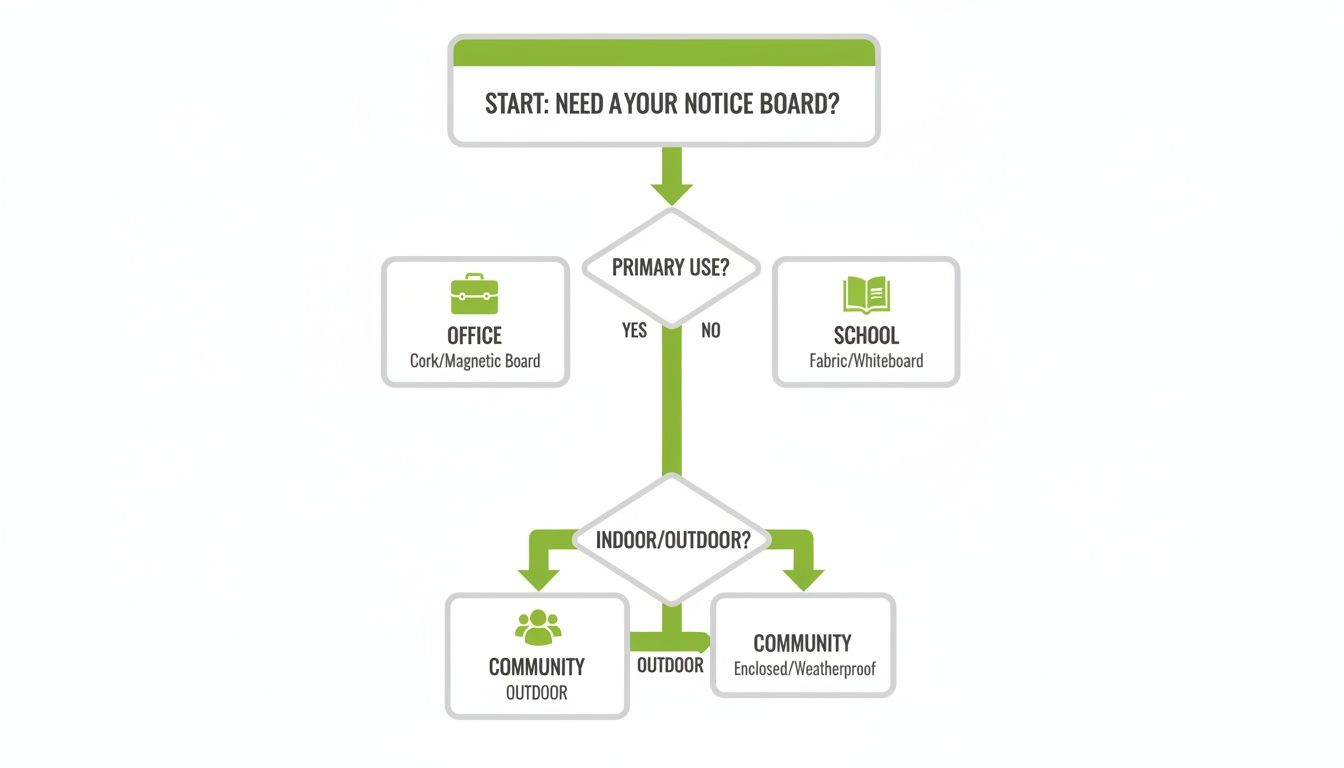
As the flowchart shows, thinking about where and how the board will be used is the first step to narrowing down the best material for the job.
High-Performance Materials for Demanding Environments
When your notice board is going into a high-traffic lobby or needs to double as a brainstorming tool, you need something tougher. Think of these as the heavy-duty options.
Magnetic glass boards offer a sleek, modern finish with incredible functionality. Because the surface is non-porous, you’ll never see those annoying "ghost" marks left behind by whiteboard markers. The tempered glass is exceptionally durable and a breeze to clean, making these boards ideal for corporate boardrooms, hospital wards, and high-end commercial spaces where looking sharp is non-negotiable.
For the absolute toughest environments, nothing beats porcelain enamel steel boards. These surfaces are fired at incredibly high temperatures, creating a finish that’s virtually indestructible—it resists scratches, dents, and even harsh chemicals. They're also magnetic and provide a fantastic writing surface, making them a smart long-term investment for universities, training centres, and industrial sites where they’ll be used constantly.
Choosing a material is an investment in your communication strategy. A durable, well-suited surface ensures your board remains a functional and attractive asset for years, rather than becoming a worn-out eyesore that needs frequent replacement.
To make the choice even clearer, here’s a quick comparison of the materials we've covered.
Comparing Notice Board Materials
| Material Type | Best For | Durability | Maintenance | Aesthetic |
|---|---|---|---|---|
| Cork | Low-traffic areas, frequent pinning, budget-conscious projects. | Good. Self-heals from pinholes but can crumble over time. | Low. Occasional dusting. | Natural, warm, traditional. |
| Fabric-Covered | Offices, schools, and branded environments needing a pop of colour. | Very Good. Fabric resists scuffs and hides pinholes well. | Low. Can be wiped or vacuumed. | Versatile, colourful, modern. |
| Magnetic Glass | Boardrooms, healthcare, high-end spaces where aesthetics matter. | Excellent. Resists scratches and impact. Won't ghost or stain. | Very Low. Wipes clean easily. | Sleek, contemporary, professional. |
| Porcelain Steel | High-use educational, industrial, and commercial settings. | Exceptional. Resistant to scratches, dents, chemicals, and fire. | Very Low. Easy to clean and highly durable. | Clean, functional, long-lasting. |
Each material has its place, and the best one for you really depends on matching its strengths to your specific needs.
The Frame Matters More Than You Think
The frame does more than just hold the board together; it’s a key part of its overall look and feel. The two main choices, aluminium and wood, set completely different tones.
- Aluminium Frames: These offer a clean, modern, and professional finish. Aluminium is light but very strong, which makes it a great choice for really big boards. Its slim profile fits perfectly in contemporary offices, healthcare facilities, and universities.
- Wood Frames: For a warmer, more traditional, or inviting feel, a wood frame is the way to go. It can add a touch of classic style to heritage buildings, community halls, or offices trying to create a cosy atmosphere. You can even match the wood type and finish to existing furniture.
Here in New Zealand, the materials that form the core of these boards have strong local roots. The backing for many boards is made from particleboard, a staple of our wood processing industry. Following the Canterbury rebuild in 2011, the demand for radiata pine panels for these kinds of building materials shot up by 20%, highlighting just how reliant we are on robust, local resources. You can see more data on NZ's forestry and wood processing industry to get the full picture.
Ultimately, getting the combination of surface and frame right means you’ll end up with a large notice board that not only works perfectly but actually makes the space look better.
Where You Place Your Board Matters Most
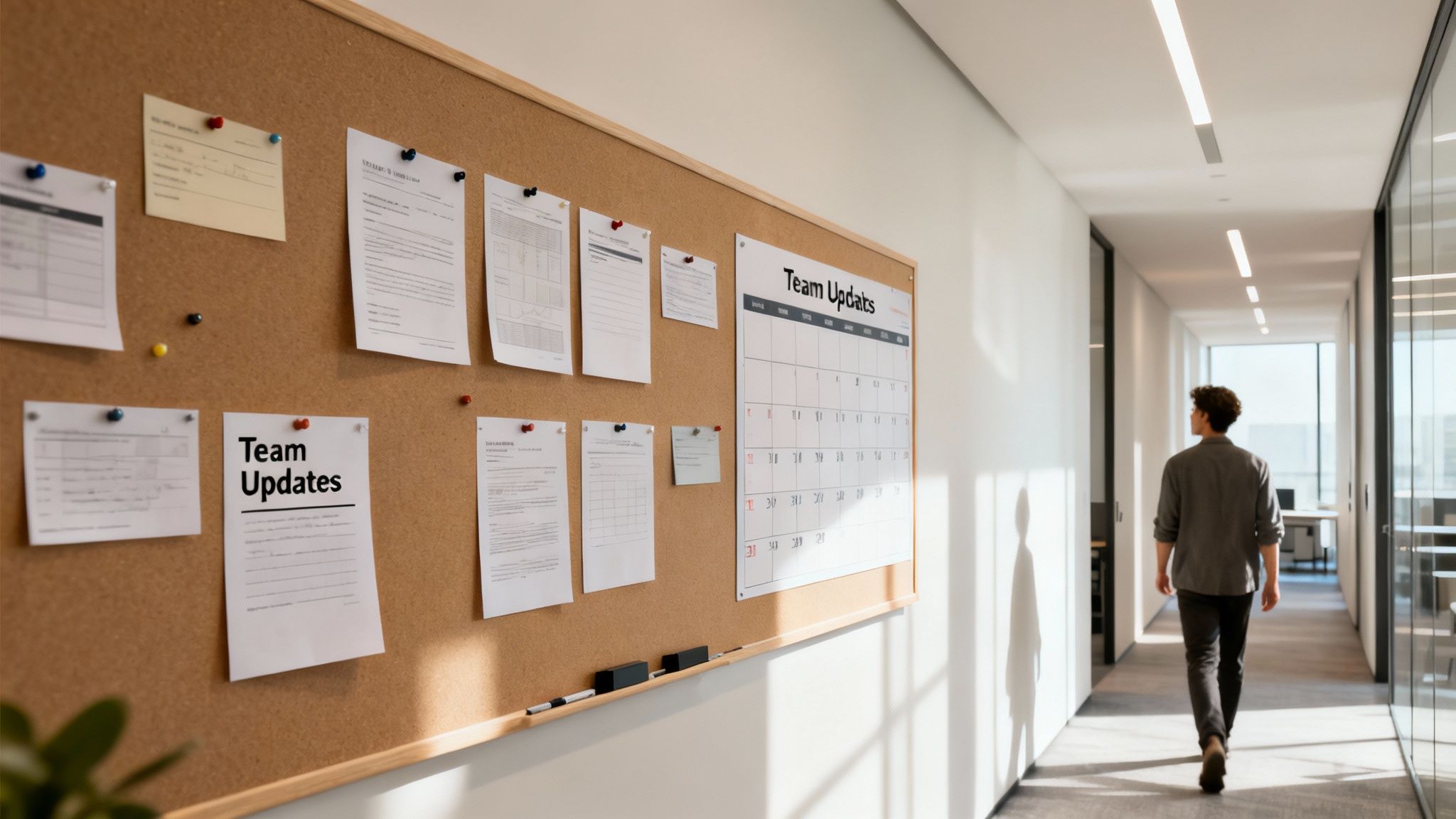
You can choose the perfect material and the slickest frame, but even the best large notice boards are useless if they’re tucked away in a forgotten corner. Strategic placement is what turns a board from a piece of furniture into a real communication hub. Getting this right means thinking less like a decorator and more like a strategist, analysing how people actually move through your space to find the ultimate spot for maximum impact.
Putting up a notice board isn't just about finding a blank wall. It's about spotting the natural gathering points and high-traffic arteries of your building. Where do people pause, wait, or congregate? These are your prime locations—places where a board can grab attention without being an interruption.
Finding Your High-Traffic Hotspots
To find the best spots, you need to become an observer of the daily flow. Every space, whether it's an office, school, or community centre, has its own rhythm. The goal is to place your board directly in the line of sight within these key zones.
Look for these common hotspots:
- Entrances and Lobbies: This is the first and last place people see, making it perfect for crucial announcements and welcome messages. A board here sets the tone for your whole organisation.
- Staff Rooms and Kitchens: Where there's coffee, there's conversation. These relaxed settings are fantastic for internal comms, team updates, and social event notices.
- Main Corridors and Junctions: Think of the main hallways as information highways. Placing a board where corridors intersect guarantees thousands of eyeballs will pass it every single day.
- Near Lifts or Stairwells: These are natural waiting zones. People are just standing around, often looking for something to read. A well-placed board can easily capture this idle attention.
Once you’ve found a potential spot, watch how people use the space for a day. Do they rush past without a glance, or do they tend to linger? The answer will tell you if you’ve found a winner.
Getting the Size and Scale Just Right
The size of your notice board should really be dictated by two things: the viewing distance and the wall it’s on. A board that’s too small will get completely lost on a large wall, and nobody will be able to read it from afar. On the flip side, a board that’s too big for its space can feel overbearing and just look wrong.
A good rule of thumb is to make sure the text and key visuals are legible from the main traffic path. For a busy school corridor, this might mean a very large board with big, bold headings. In a cosy office kitchen, a more moderately sized board feels much more appropriate.
Strategic placement and appropriate sizing aren't just about visibility. They’re about respecting your audience's time and attention. A board that is easy to see and read feels helpful; one that is poorly placed feels like an afterthought.
Installation and Accessibility Considerations
Proper installation is non-negotiable, both for safety and usability. A securely mounted board is an absolute must, especially in public spaces or schools where it will see a lot of interaction. Whether you go for a traditional wall mount or a mobile stand, make sure it’s stable and can handle the weight.
Even more importantly, keep accessibility at the front of your mind. The centre of the notice board should be positioned at roughly eye level for the average person, which is typically around 1.5 metres from the floor. This simple step ensures that most people, including those in wheelchairs, can comfortably see and interact with the information.
Follow these simple installation guidelines:
- Check for Obstructions: Make sure the board isn’t blocked by opening doors, furniture, or other fixtures. It needs a clear, unobstructed line of sight.
- Ensure Good Lighting: A board stuck in a dim corner might as well be invisible. Place it in a well-lit area or consider adding a dedicated light above it.
- Secure the Mounting: Use the right hardware for your wall type—plasterboard, brick, and concrete all need different fittings to guarantee the board is firmly and safely attached.
By thinking carefully about location, size, and installation, you ensure your large notice board becomes an active, effective communication tool rather than just another piece of wall decoration.
Transforming Your Board into a Branding Tool
A large notice board doesn't just have to be a functional item hanging on the wall. Think of it as a blank canvas. With a bit of strategic thinking, it can become a powerful statement piece that reinforces your brand’s identity and lifts the professionalism of your entire space.
This is where you move beyond just pinning up notices and start communicating your organisation's personality. Customisation is what unlocks this potential, turning a standard product into something that feels completely integrated with its surroundings. It’s your chance to show what your brand is all about without saying a word.
Aligning Your Board with Your Brand Palette
One of the easiest yet most effective ways to brand your notice board is through colour. A generic grey or brown board can feel completely out of place in a carefully designed interior. Why settle for that when you can get a perfect match?
Consider these powerful options:
- Fabric Colour Matching: We can cover fabric boards in materials that match your brand’s specific PMS (Pantone Matching System) colours. This ensures total consistency with the rest of your branding.
- Frame Colour Customisation: Aluminium frames can be powder-coated in any colour you can imagine. You can either make them blend seamlessly into the wall or use a bold, contrasting shade from your brand palette to make them pop.
Getting these details right makes your notice boards look like they were designed for the space, not just added as an afterthought. It sends a message of care and professionalism to every visitor, client, and team member who walks by.
Adding Logos and Custom Graphics
To really take your branding to the next level, why not add permanent graphics directly onto the board itself? It’s a brilliant way to keep your brand front and centre, turning the board into a constant marketing asset.
A real estate agency, for example, could have its logo subtly printed in the corner of a large board that displays property listings. In the same way, a school could feature its crest on boards in the main hall, building a sense of pride and identity for students and visitors.
A branded notice board acts as a silent ambassador for your organisation. It subtly reinforces who you are and what you stand for, creating a more cohesive and immersive brand experience within your physical space.
Creating Hybrid Boards for Unique Needs
Sometimes, one type of surface just doesn't cut it. The ultimate custom solution is a hybrid board, which combines different materials to handle multiple communication needs in one clean, elegant unit. This is where getting expert guidance from a provider like SONI DESIGN can make a world of difference.
Imagine these practical combinations:
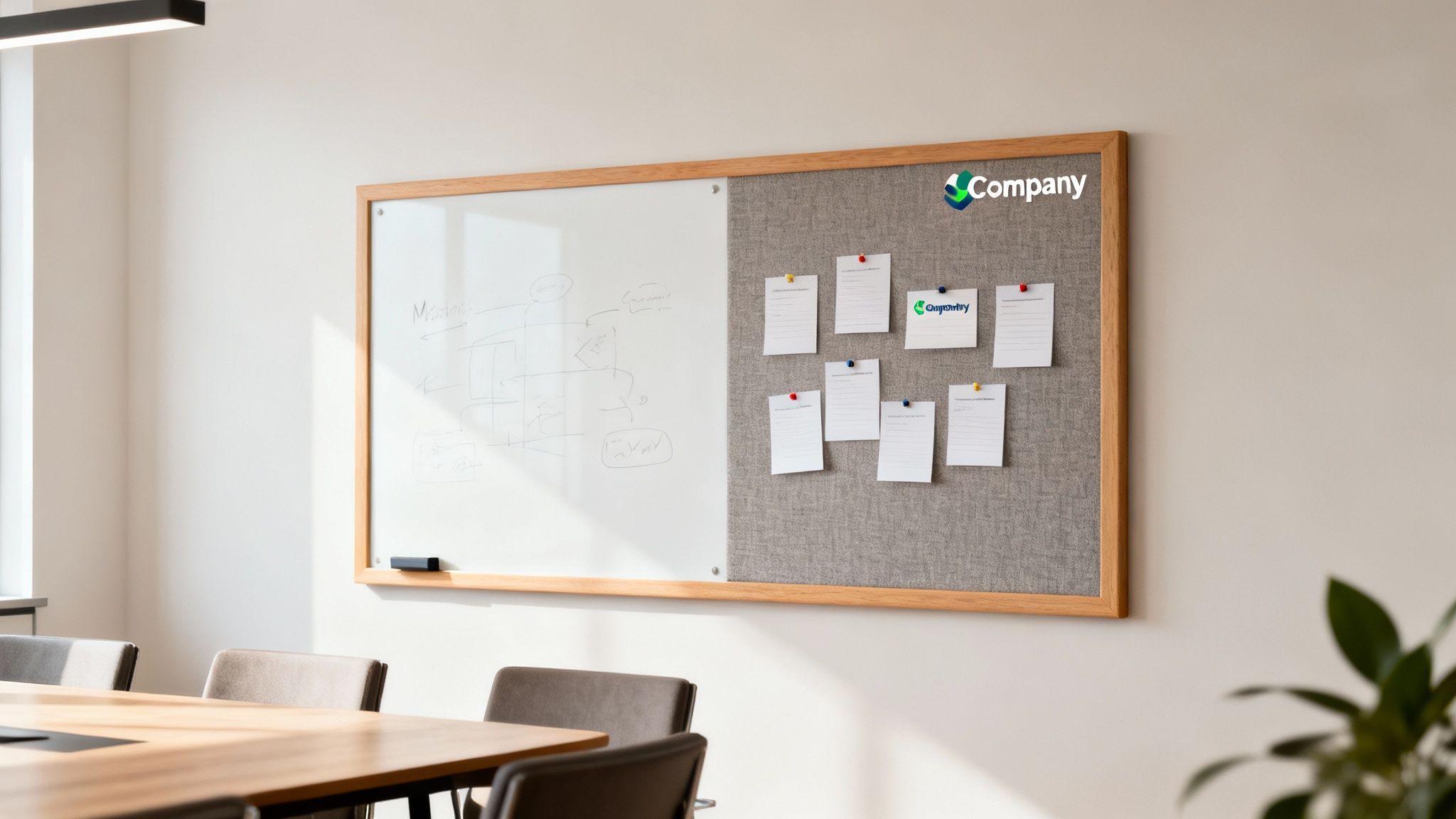
- Pinboard and Whiteboard: A classic for a reason, this hybrid is a favourite in offices. It lets teams pin up long-term notices and project documents while also having a dedicated space for brainstorming, diagrams, and quick notes.
- Cork and Magnetic Glass: This combo offers the classic, warm feel of cork for physical items alongside a sleek, modern magnetic glass surface for a more polished look.
By creating a bespoke board, you’re not just solving a communication problem—you’re investing in a purpose-built tool that makes work easier and fits your brand's look perfectly. It’s this blend of smart function and tailored design that turns a simple board into an indispensable feature of your environment.
Here’s the rewritten section, crafted to sound like an experienced human expert.
How Different Industries Use Large Notice Boards
To really get a feel for their value, you need to see large notice boards in action. Their job changes completely depending on where they are, solving very different communication puzzles across New Zealand. A board is never just a board; it’s a tool that gets shaped by the needs of the people who use it.
From the noisy hallways of a school to the quiet, confidential corners of a hospital, these surfaces transform into command centres, shared canvases, and community hubs. Let’s take a look at how different sectors put them to work every day.
Education: The Heartbeat of Campus Life
Walk into any school, college, or university, and you’ll find that the large notice board is the true heartbeat of the place. It’s the central point for a constant stream of information meant for students, staff, and parents alike. They’re absolutely vital for broadcasting daily announcements, exam timetables, and sign-up sheets for extracurricular clubs.
But they’re more than just admin tools. They build a sense of community. When you display student artwork, celebrate a sports team’s victory, or showcase academic achievements, a simple board becomes a source of pride and recognition. In these high-traffic areas, durability is everything, which is why you’ll often see fabric-covered or tough porcelain steel boards as the go-to choice.
Healthcare: Confidential Command Centres
In places like hospitals and clinics, communication has to be clear, accurate, and often, private. Tucked away in staff-only areas, large notice boards act as critical command centres for coordinating patient care. They’re used for:
- Staff Scheduling: Displaying rosters and on-call duties so everyone knows who’s working and when.
- Patient Updates: Sharing essential, non-sensitive patient information during shift handovers in private nursing stations.
- Procedural Reminders: Posting health and safety protocols, hygiene guidelines, and updated procedures to keep standards high.
Magnetic glass or whiteboard surfaces are perfect here. They’re a breeze to sanitise and update in a flash, which is non-negotiable in a fast-paced medical environment.
Corporate: Bringing Agile Projects to Life
The modern office has completely reinvented the humble notice board, turning it into a dynamic tool for project management and teamwork. With the rise of agile thinking, Kanban boards have become a common sight. Tasks are visualised on cards that move across columns—from "To Do" to "Done."
These boards give you a brilliant at-a-glance overview of a project’s progress, making workflows transparent and encouraging everyone to chip in. They become a physical anchor for daily stand-up meetings, getting people to talk and solve problems away from their screens. A hybrid board, with a magnetic whiteboard for brainstorming and a pinnable surface for project documents, is a popular and seriously effective solution.
In an office, a large notice board breaks down digital barriers. It encourages face-to-face interaction and creates a shared, tangible record of a team's journey, making progress visible to everyone.
Retail: Driving Sales and Team Spirit
For any retailer, a well-placed large notice board is a powerful sales tool. Position it near the entrance or at the till, and it can instantly grab a customer’s attention with eye-catching promotions, special offers, and new product announcements.
They’re just as important in the staff room. You can use them to display sales targets, new training info, and employee recognition notices, which helps keep the team motivated and in the loop. A brightly coloured fabric board that matches the store's branding can be a particularly smart choice.
Hospitality: Keeping Everyone on the Same Page
In the fast-paced world of hospitality—from hotels to bustling cafes—clear communication is everything. Back-of-house, a large notice board makes sure the entire team is on the same page, displaying things like:
- Daily specials for the kitchen and front-of-house staff.
- Function sheets for upcoming events or large bookings.
- Shift schedules and cleaning rosters.
Out front, a notice board in the lobby can give guests valuable info about local attractions, restaurant hours, or special hotel events, making their stay that much better.
Emergency Management: A Lifeline in a Crisis
You never appreciate the power of clear, visible information more than during a crisis. Large-scale physical signage is indispensable for public safety, a fact we’ve seen proven right here in New Zealand.
During the North Island weather events of 2023, authorities used a placard system—essentially large, official notice boards—to assess property damage and communicate risk to the public. They issued 8,675 placards, with 3,340 properties receiving yellow stickers for restricted access and 494 getting red stickers that prohibited entry entirely. This system was absolutely critical for community resilience in a hazard-prone country. You can dive deeper into these key economic and industry trends in New Zealand.
This powerful example shows that whether it’s for daily business or a critical emergency, a large notice board’s ability to provide clear, unmissable information is timeless and essential.
Bringing Your Custom Notice Board to Life
So, you've explored the world of large notice boards. You know what a difference the right materials, placement, and branding can make. The final piece of the puzzle is turning that knowledge into a physical product that works perfectly in your space.
That’s where we come in. At SONI DESIGN, our job is to guide you through that final step, making the whole process straightforward. It all starts with a simple chat to figure out exactly what you need, followed by a detailed design process, and then a clean, professional installation that respects your premises.
Your Partner in Custom Design
Picking the right company isn't just about placing an order; it's about finding a team you can collaborate with. We're dedicated to top-notch craftsmanship and real, attentive service. Our aim is to deliver a communication tool you’ll be proud of for years to come.
What we create is more than just a board. It’s a functional, stylish, and durable feature that genuinely lifts the entire feel of your environment.
Speaking of design, it's always interesting to see how technology is influencing our spaces. If you're curious about the future of interiors, this complete guide to AI-powered home design offers some great insights into the latest trends.
A custom-designed notice board isn’t just a purchase; it’s an investment in your organisation's culture, communication, and visual identity. Getting it right ensures it pays dividends daily through improved engagement and a more professional appearance.
Ready to create a solution that’s built just for you? Let's talk. Get in touch with the team at SONI DESIGN today to start the conversation and see what we can do.
Got Questions? We’ve Got Answers.
You've explored the options, but a few practical questions might still be swirling around. That’s completely normal. Here, we tackle some of the most common things people ask us about choosing, installing, and looking after their large notice boards. We want to clear up any lingering uncertainties so you can feel 100% confident in your choice.
Let's dive into the details.
How Do I Keep My Notice Board Looking Its Best?
Good news – keeping your board in top shape is straightforward. Different surfaces just need slightly different care.
-
Fabric and Cork Boards: These are the low-maintenance heroes. A quick dust or a gentle once-over with a vacuum’s brush attachment is all it takes to keep them looking fresh.
-
Whiteboards and Glass Boards: For everyday smudges, a simple microfibre cloth works wonders. If you get stubborn marker stains or "ghosting," a proper whiteboard cleaning spray will sort it out. The golden rule? Never use abrasive cleaners. They’ll scratch and permanently ruin the writing surface.
-
Porcelain Steel Boards: These things are built tough. You can clean them with standard non-abrasive cleaners without worrying about damage, which is why they’re perfect for high-traffic, demanding spaces.
What's the Wait Time for a Custom Board?
The timeline for a custom notice board from SONI DESIGN really depends on what you’re after. A custom-sized fabric board with a standard frame, for instance, usually takes a couple of weeks once the design is signed off.
If you're dreaming up something more complex, like a hybrid board with your company branding printed on it or a unique frame colour, it might take a little longer. No matter what, we’ll give you a clear and honest timeline right from the start, so you’ll know exactly when to expect your new board.
Can a Big Notice Board Go on Any Wall?
Pretty much, but the secret is in how it’s installed. Standard plasterboard walls are generally fine, as long as you use the right wall anchors to get a solid, secure fit.
For the real heavyweights, like our large glass or porcelain steel boards, we always recommend fixing them to something more substantial. Think brick, concrete, or directly into the wall studs.
Before you even think about drilling, it's vital to know what your wall is made of. A securely mounted board isn't just about looks; it's a safety essential for everyone in the building. If you're unsure, we're always here to give advice on the best way to hang your board.
Are There Eco-Friendly Notice Board Options?
Yes, definitely! We’re seeing more and more notice boards designed with sustainability in mind. Cork, for example, is a fantastic renewable resource. It's harvested from the bark of cork oak trees, and the tree isn't harmed in the process at all.
Many of our board frames are also made from aluminium, which is one of the most recycled (and recyclable) materials on the planet. If finding an eco-friendly solution is important for your organisation, just say the word. We can point you toward the greenest options we have.
Ready to find the notice board that’s a perfect fit for your space? The team at SONI DESIGN is here to guide you through it all, from the first sketch to the final installation. Get in touch with us today and let's create a communication hub you’ll be proud of.
Leave a Comment
Stay home & get your daily
needs from our shop
Start You'r Daily Shopping with Nest Mart