
Your cart is currently empty.

A roll of brown kraft paper is so much more than just a way to wrap things up. For any modern business, it’s a workhorse – a strong, versatile, and eco-friendly material that solves a dozen problems at once. That signature strength comes from a special manufacturing method called the Kraft pulping process, which is why it’s tough enough for everything from secure packaging to creative displays. Honestly, this humble brown roll is one of the most strategic assets an NZ business can have.
Why Kraft Brown Paper Is Such a Smart Business Choice
In a market flooded with complex and often costly packaging, the kraft brown paper roll stands out for its beautiful simplicity and incredible versatility. It’s best to think of it less as a disposable wrapper and more as a multi-purpose tool that can elevate almost every part of your operation. Its real value goes far beyond the dispatch desk, influencing everything from your brand’s first impression to your environmental footprint.
The secret to its incredible performance is right there in the name. 'Kraft' is the German word for 'strength,' and it perfectly captures the paper's core quality. This toughness is the direct result of a wood pulping process that strips out most of the lignin, leaving behind long, interlocked cellulose fibres. The end result is a paper that is far more durable and tear-resistant than your standard-issue stuff.
More Than Just a Wrapper
For businesses here in New Zealand, this translates into real-world advantages. The durability of a kraft brown paper roll means your products are genuinely protected in transit, which cuts down on the headaches of damage and costly returns. It also works brilliantly as a void fill, cushioning fragile items inside a box without piling on extra weight and driving up shipping costs. It’s that perfect mix of strength and efficiency that makes it so practical.
But its benefits aren't just functional. Kraft paper has a distinct, natural look that really connects with today's consumers. That earthy, unbleached appearance quietly signals a commitment to quality and authenticity. In a world of online shopping, this visual appeal is a massive part of creating a memorable unboxing experience, turning a simple delivery into a genuinely positive moment for your brand. For businesses focused on their environmental impact, the move towards biodegradable packaging is a huge trend, and kraft paper is a fantastic, ready-to-go solution.
For many of your customers, the packaging is the very first physical thing they’ll ever touch from your brand. Kraft paper helps you make that first impression a great one, reflecting values of sustainability, quality, and care.
At the end of the day, choosing a kraft brown paper roll is a savvy business decision. It’s a smart investment in protecting your products, polishing your brand image, and operating more sustainably. As we get into the nitty-gritty of its uses and technical specs, you’ll start to see just how indispensable this simple material can be.
Choosing the Right Kraft Paper for Your Needs
https://www.youtube.com/embed/33z85yrP7gM
Picking the right kraft brown paper roll for your business can feel a bit technical at first, but it's really straightforward once you know what to look for. It’s not just about finding the cheapest option; it’s about matching the paper’s specs to what you actually need it to do. Get this right, and you'll protect your products perfectly without wasting a cent.
This simple decision tree helps visualise how different business needs point to specific uses for kraft brown paper roll, from shipping to branding.
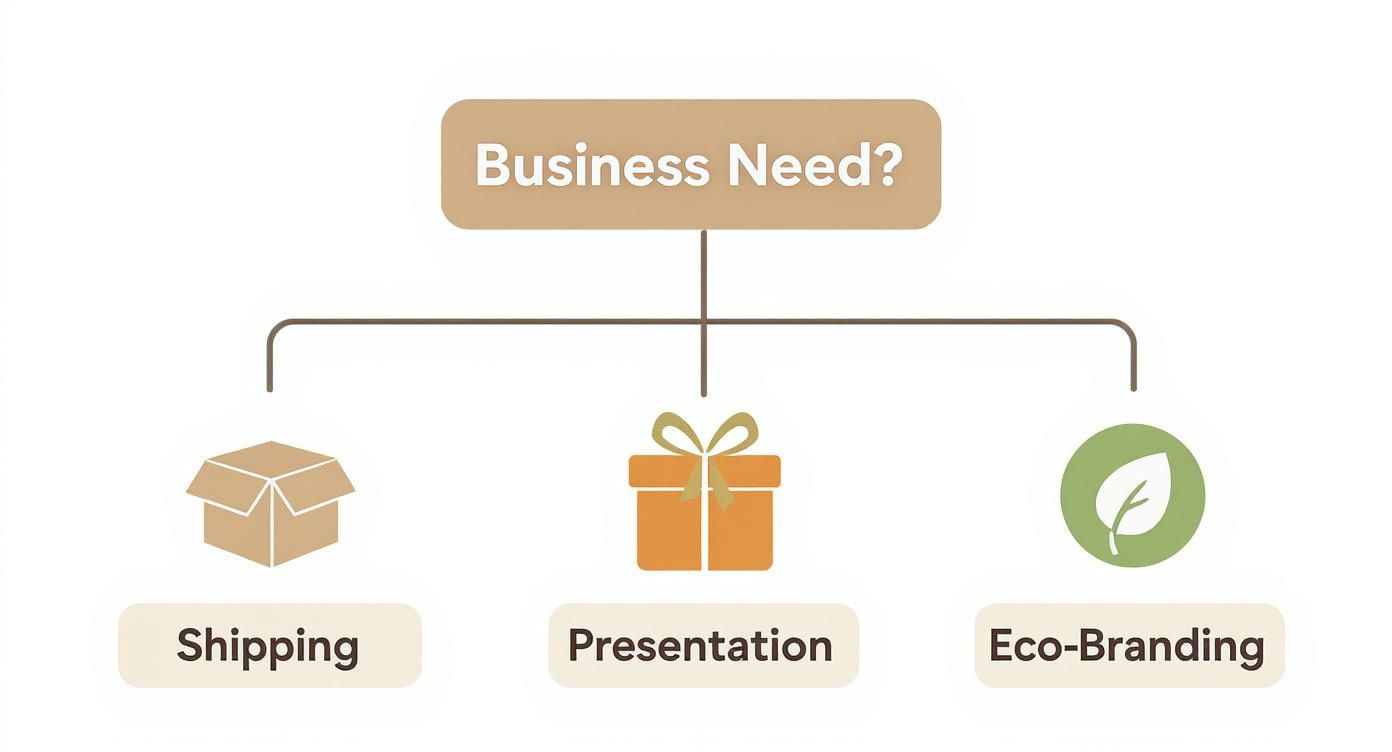
The main takeaway here is that your end goal—whether it's bulletproof protection, beautiful presentation, or showcasing your eco-credentials—should guide your choice.
Decoding Paper Weight (GSM)
The first and most important factor is the paper's weight, which is measured in GSM (Grams per Square Metre). Think of it like fabric. A light, sheer curtain is delicate and see-through, while a heavy-duty canvas tent is thick, tough, and built to last. Kraft paper follows the same principle.
A low GSM number means the paper is lighter and more flexible. A high GSM number means you're getting a thicker, more rigid, and far more durable sheet.
Getting the GSM right is the single most effective way to balance cost and performance. Paper that’s too heavy is a waste of money, while paper that’s too light risks damaged goods and unhappy customers.
For example, a lightweight 40-60 GSM paper is the go-to for void fill. It’s inexpensive and easy to scrunch up to plug the gaps in a shipping box, stopping your items from rattling around without adding much weight or cost to your postage.
On the other hand, if you're wrapping something heavy or with sharp corners, you’ll want a heavy-duty 120+ GSM kraft paper. Its superior tear resistance means the package stays securely wrapped and protected, no matter how rough the journey.
To make things easier, here’s a quick-reference table to help you match the paper thickness to the job at hand.
Kraft Paper Weight Application Guide
| GSM Range (Grams per Square Metre) | Best Used For | Key Characteristics |
|---|---|---|
| 30-50 GSM | Void fill, light interleaving, wrapping non-fragile items. | Thin, flexible, and economical. Easily scrunched. |
| 60-80 GSM | General-purpose wrapping, gift wrapping, retail packaging. | Good balance of strength and flexibility. The "all-rounder". |
| 90-110 GSM | Wrapping medium-weight items, heavy-duty void fill, box liners. | Stronger and more durable with good puncture resistance. |
| 120+ GSM | Protecting heavy or sharp-edged items, pallet lining. | Very thick, rigid, and offers maximum tear resistance. |
This guide should give you a solid starting point, helping you narrow down the best option for your specific packaging needs.
Matching Roll Width to Your Products
Next up is a practical detail that’s easy to overlook: the width of the roll. If you choose a roll that's far too wide for your products, you'll end up constantly trimming off excess paper, which is literally throwing money away.
To get it just right, take a moment to measure the things you ship most often.
- Measure Your Average Product: Jot down the length, width, and height of your top-selling items.
- Figure Out Your Wrapping Needs: How much paper do you need to wrap each one comfortably, with a neat and professional overlap?
- Pick the Closest Width: Choose a roll width that’s the closest match to your needs to slash your offcuts and reduce waste.
A boutique selling small jewellery boxes, for instance, would be perfectly happy with a narrow 300mm or 450mm roll. But a business shipping large, framed art prints would need something much wider, like 900mm or more.
Virgin vs. Recycled Kraft Paper
Finally, you’ll see options for both virgin and recycled kraft paper. One isn’t automatically better than the other; the best choice comes down to your brand’s look, feel, and sustainability goals.
-
Virgin Kraft Paper: This is made from new wood pulp. It typically has a very consistent, clean light brown colour and a smoother finish. Because it offers maximum strength, it's often the top choice for high-end retail packaging where that flawless, pristine look is part of the brand experience.
-
Recycled Kraft Paper: As the name suggests, this is the eco-friendly choice, made from post-consumer recycled materials. The colour and texture can have slight variations, sometimes with tiny visible fibres. This gives it a rustic, authentic charm that many eco-conscious brands absolutely love.
For businesses like Soni Design's clients, where a strong environmental message is key, using a recycled kraft brown paper roll is a no-brainer. It instantly communicates that commitment to customers, showing that sustainability is woven into every part of the brand, right down to the packaging.
Kraft Paper’s Place in the New Zealand Economy
That simple brown paper roll is more than just a packaging supply; it's a quiet workhorse in New Zealand's industrial ecosystem. More than that, it’s a tangible symbol of our country's shift towards more sustainable practices. Its influence stretches far beyond the warehouse floor, weaving together local manufacturing, the circular economy, and what Kiwi consumers now expect from businesses.
Here in New Zealand, we don't just import and sell kraft paper. We make it. Local mills are a crucial part of the story, turning raw and recycled fibres into the durable, versatile paper that businesses across the country depend on. This homegrown production supports Kiwi jobs and strengthens our ability to rely on ourselves.
This local focus ties directly into the idea of a circular economy. Instead of the old "take-make-dispose" mindset, our paper industry is built to keep valuable materials in play for as long as possible. The wastepaper and cardboard we put in our recycling bins are collected, repulped, and transformed into new products—including fresh rolls of kraft paper.
What’s Driving the Demand for Kraft Paper?
The fact that you see kraft paper everywhere these days is no accident. It’s the result of powerful market trends and a real change in how people think. Kiwis are more conscious of their environmental impact than ever before, and they’re actively supporting brands that share their values.
A few key things are fuelling this shift:
- The Push Against Plastic: There's a strong, nationwide movement away from single-use plastics. Businesses are on the hunt for practical, eco-friendly alternatives, and kraft paper fits the bill perfectly.
- The "Unboxing" Moment: Online retailers have caught on that packaging is the first physical touchpoint a customer has with their brand. Kraft paper provides a natural, rustic feel that comes across as more authentic and thoughtful than plastic bubble wrap.
- Sustainability is a Selling Point: Using recycled or recyclable materials isn't just a nice-to-have anymore. For many shoppers, it’s a minimum requirement. A roll of kraft paper instantly signals that a brand is thinking about its environmental footprint.
Kraft paper's popularity is a direct response to a changing market. It solves a practical need for protection while meeting the ethical and aesthetic demands of modern Kiwi consumers. For a business, that makes it a smart, strategic choice.
This is all happening against a more complex industrial backdrop. New Zealand’s pulp, paper, and paperboard manufacturing sector has had its share of challenges, from global competition to falling demand for traditional paper products. The industry's value recently dropped from around $2.9 billion NZD to $2.5 billion NZD in a year, a 13.3% slide. Even so, kraft paper has remained a bright spot, thanks almost entirely to its green credentials. You can get a better sense of the market dynamics of NZ's paper industry and see how innovation is shaping its path forward.
A Symbol of a Greener Future
When you get right down to it, the humble kraft paper roll represents a turning point for New Zealand industry. As the wider paper market adjusts to new realities, the focus is shifting to products that are smart, sustainable, and built for a circular economy. Kraft paper ticks all those boxes.
For the kinds of businesses Soni Design works with—from boutique retailers to busy cafés—making the switch to kraft paper is a small decision with a big ripple effect. It supports a local industry, cuts down on plastic waste, and tells customers you care. It’s just a simple roll of paper, but it plays a surprisingly important part in building a more sustainable and self-reliant Aotearoa.
Professional Packaging and Wrapping Techniques
Turning a simple sheet from a kraft brown paper roll into a secure, professional package is an art. And honestly, it’s one that says a lot about your brand’s attention to detail. Getting a few core techniques down can take your customer’s unboxing experience from ordinary to something special, all while making sure every item arrives safe and sound.
Don't just think of your kraft paper as a barrier; see it as a versatile tool. With the right touch, it can be folded, rolled, and even scrunched to protect the most awkwardly shaped products. It’s all about playing to its natural strength and flexibility.

Achieving Crisp Folds and Sharp Corners
A clean, sharp fold is the hallmark of professional wrapping. This small detail is what makes a package look deliberate and well-crafted, not just hastily thrown together. And getting this look is easier than you might think.
- Measure and Cut Precisely: Before you even think about folding, lay your item on the paper. You want enough to cover all sides with a little overlap, but not so much that you’re left with bulky excess to hide. As a good rule of thumb, aim for just enough paper to cover about half of the item’s height on each end.
- Use a Hard Edge: As you make each fold, run your thumbnail or a bone folder along the line. That bit of pressure creates a defined crease that holds its shape, giving your box those sharp, geometric lines that look so good.
- The "Hospital Corner" Tuck: For the ends of a box, this is the classic move. Fold the top flap down and crease it firmly. Then, tuck the two side flaps in, creasing them against the box to create two neat triangles. To finish, just fold the bottom flap up for a clean, self-contained look.
The "Sushi Roll" Method for Cylindrical Items
Wrapping bottles, jars, or tubes can be a real pain. But the "sushi roll" technique gives you a snug and elegant fit every single time, avoiding that awkward bunching at the ends.
Just place your cylindrical item on its side near the edge of the paper and start rolling it forward tightly. The key is to keep the paper smooth against the surface as you go. Once it's all rolled up, you’ll have extra paper at the top and bottom. Instead of just scrunching it, gently push and pleat the paper inwards toward the centre, working your way around the circle. A bit of tape on each end, and you've got a perfectly wrapped cylinder.
Your packaging is often the final handshake with your customer. A neatly wrapped item, secured with crisp folds and thoughtful techniques, communicates quality and care long before the product itself is revealed.
Creating Protective Cushioning and Void Fill
One of the best things about a kraft brown paper roll is its second life as an eco-friendly filler. Forget plastic bubble wrap; you can create your own cushioning whenever you need it.
- The Accordion Method: To line a box, take a long sheet of paper and fold it back and forth like an accordion. This creates a springy, shock-absorbent layer that’s perfect for protecting items from bumps and drops.
- The Scrunch Technique: For a quick void fill, just tear off a sheet and scrunch it into a tight ball. This is brilliant for filling empty spaces in a box so things don't slide around in transit. Because kraft paper has such great tensile strength, it holds its scrunched shape really well.
- Wrapping Fragile Items: For delicate products, use two layers. Start by loosely wrapping the item in a softer, lower-GSM kraft paper. Then, give it a second wrap with a heavier, more durable sheet for that extra outer protection.
For anyone who packs professionally, knowing your materials inside and out is crucial. A complete guide to packing materials for moving can be a surprisingly useful resource here.
Minimising Waste and Maximising Efficiency
Wasting paper is wasting money. It's that simple. To get the most out of every roll, get into the habit of "measure twice, cut once." Before you cut, do a quick wrap of the paper around the item to see exactly how much you need. It won't take long before you develop a knack for knowing how much paper different products require.
By using these simple, hands-on techniques, you can turn every kraft brown paper roll into a powerful tool for your business, making sure every package you send out is a secure and beautiful reflection of your brand.
Think Outside the Box: Creative Uses for Your Kraft Paper
It’s tempting to look at a kraft brown paper roll and see only one thing: packaging. But that’s just scratching the surface. This humble, sturdy paper is a genuine multi-tool for businesses, ready to be transformed into a powerful asset for marketing, day-to-day operations, and pure creative expression.
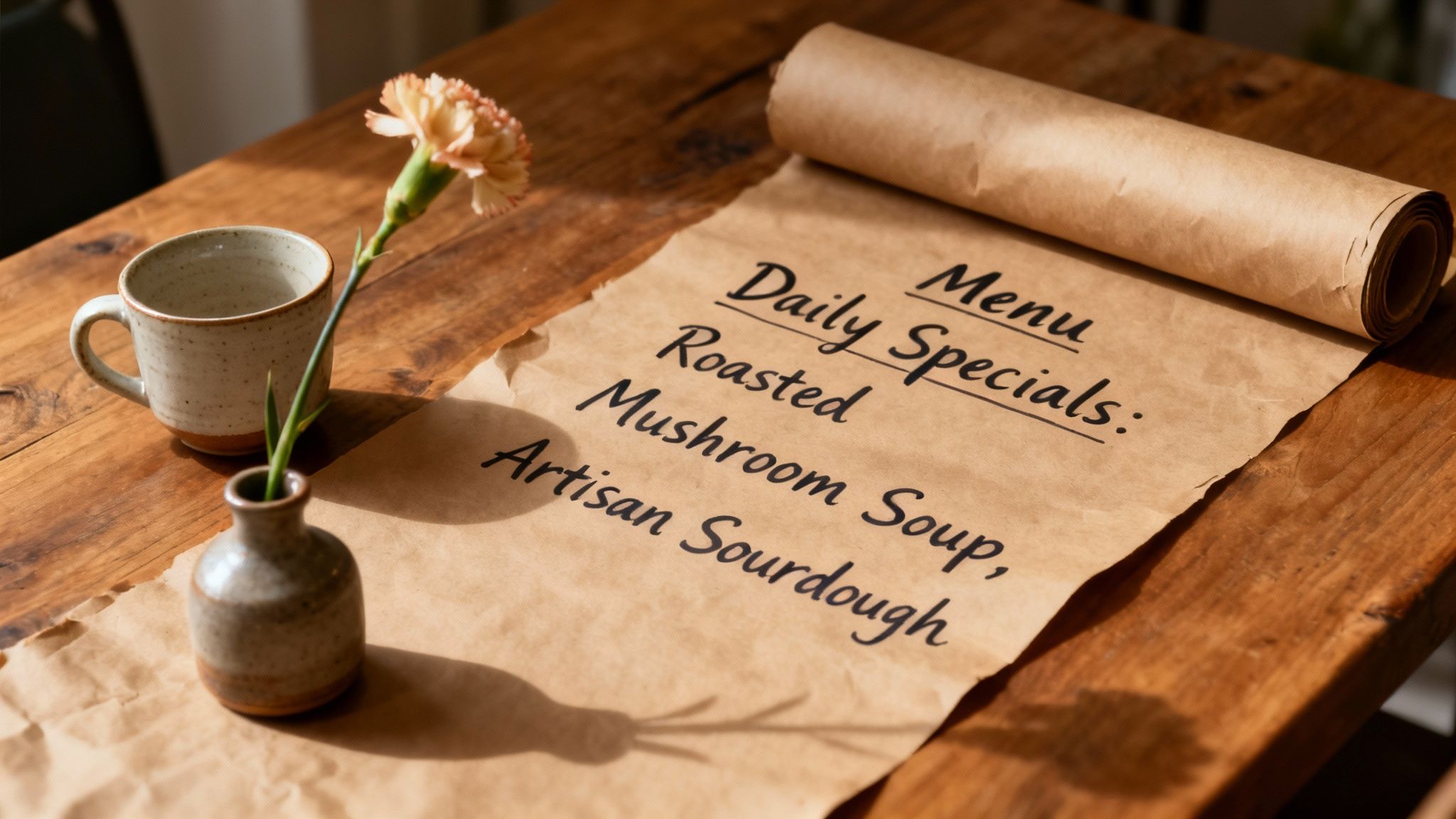
We see our clients discover this all the time. A simple roll of paper becomes the key to shaping their physical space and the entire customer experience. For retailers, it’s an absolute game-changer. Picture rustic, hand-lettered signs shouting about a new sale, or product displays with a simple kraft paper backdrop that makes your merchandise really stand out. It’s an incredibly affordable way to build a warm, earthy brand atmosphere that feels authentic and inviting.
From Local Cafes to Creative Studios
The hospitality scene, in particular, has really taken to kraft paper. Cafes and restaurants use it for stylish, disposable table runners that are both practical for quick turnarounds and perfectly on-brand. We’ve all seen it: a roll mounted on the wall becomes a dynamic canvas for the daily specials, adding a personal, handwritten touch that a static printed menu just can’t replicate.
But its usefulness extends far beyond customer-facing roles. In creative studios, a large roll of kraft paper is the perfect seamless background for product photography. It provides a neutral, textured surface that helps products shine without creating distracting glare. Its toughness also makes it a long-time favourite for designers drafting and cutting out patterns.
And the creative potential doesn't end there. Artists—and even families with kids—find it’s a brilliant surface for large-scale drawing and painting. A good, heavy-weight kraft paper can take a surprising amount of acrylic paint or marker ink without tearing, making it a go-to for collaborative murals or event banners.
- Retail Displays: Use it for custom signage, product backdrops, or even branded gift-wrapping stations.
- Hospitality: Think disposable menus, table covers, or a wall-mounted board for daily specials.
- Photography Backdrops: It’s a seamless, non-reflective surface for professional-looking product shots.
- Art and Design: Works wonderfully as durable pattern paper or a huge canvas for creative projects.
Fuelling Kiwi Creativity
This versatility is backed by New Zealand’s own impressive paper production industry. Local mills, like the Tasman Mill, are at the heart of a circular economy, churning out a staggering 1.5 million tonnes of paper products every year. By integrating recycled materials into their kraft paper, they show a deep commitment to sustainability that makes these creative applications feel even better. You can dive deeper into New Zealand's paper-making heritage to understand its industrial roots.
By thinking a little differently, you can turn a simple roll of kraft paper from a basic supply into a strategic business asset. It’s a blank slate for your brand’s personality, a practical tool for your daily grind, and a sustainable choice that today’s customers appreciate.
In the end, what you can do with a kraft brown paper roll is only really limited by your imagination. Whether you're sprucing up your storefront, streamlining your cafe's service, or kicking off a new creative project, this adaptable material delivers a cost-effective and stylish solution. It’s time to unroll the possibilities.
How to Properly Store and Handle Kraft Paper Rolls
Getting the most out of your kraft brown paper roll comes down to simple, smart care. A little bit of attention to how you store and handle it protects your investment and cuts down on waste. Think of kraft paper like a sponge—it loves to soak up moisture from the air, which can weaken the fibres and lead to frustrating warping.
The biggest threats to your paper are moisture, direct sunlight, and physical damage. Even a hint of dampness can compromise its strength, while UV rays will make the paper brittle and faded over time. Dropping or mishandling a heavy roll can also crush the edges, making it a nightmare to unroll smoothly and creating waste before you’ve even started.
Creating the Ideal Storage Environment
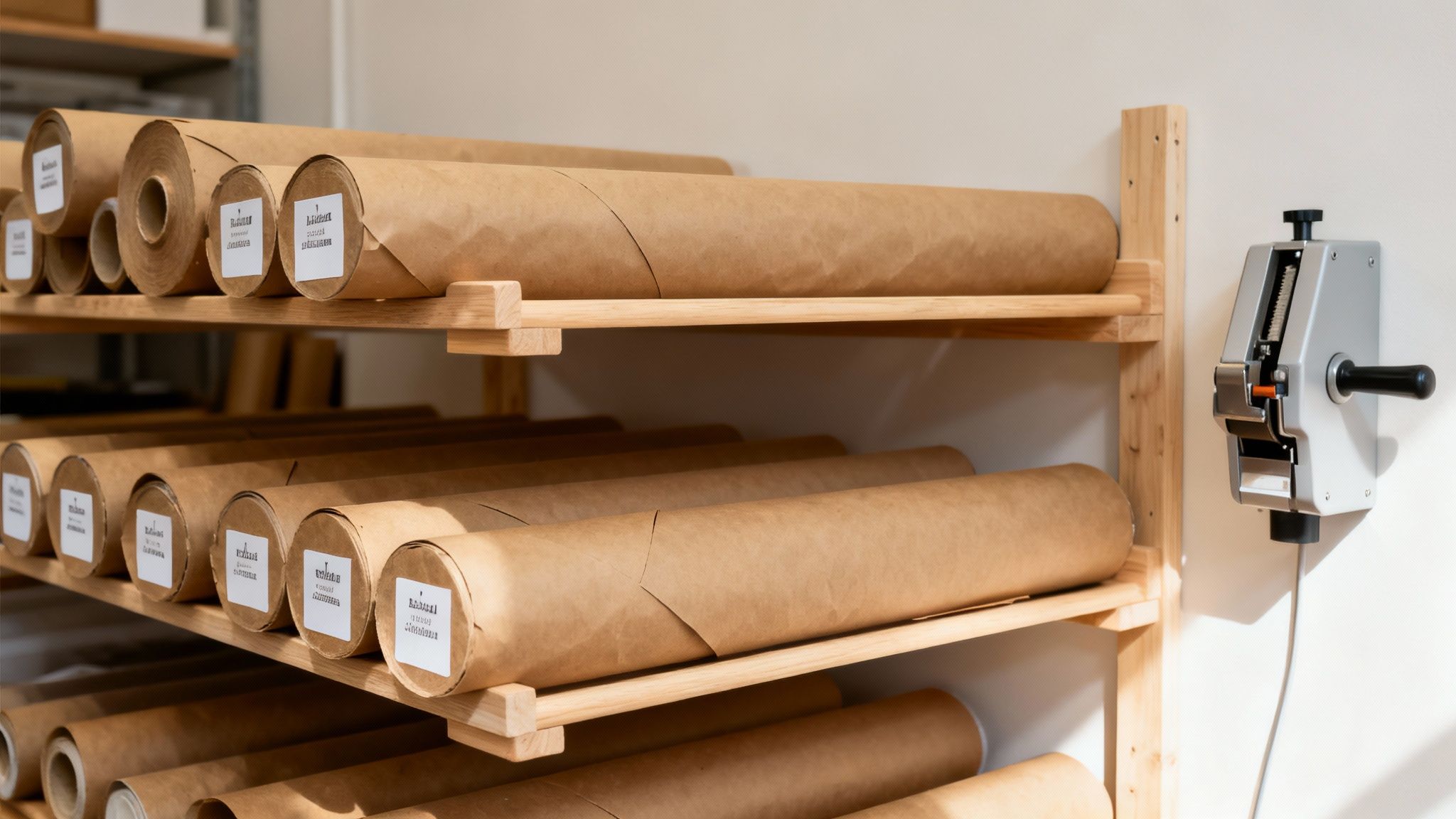
Your mission is to find a clean, dry, and cool spot. A back storeroom or a dedicated shelving unit, well away from draughty doors and windows, is usually your best bet. The real key here is consistency. Wild temperature swings can create condensation, which is just as bad for paper as a direct spill.
Here are the golden rules for safe storage:
- Get Your Rolls Off the Floor: Never store rolls directly on concrete. Concrete floors hold a surprising amount of moisture that will slowly seep into the paper. Use pallets or low shelves to keep them elevated and dry.
- Steer Clear of Sunlight: Keep those rolls away from windows. Long-term exposure to direct sun will bleach the colour and weaken the fibres through a process called photodegradation.
- Keep Humidity in Check: A low-humidity space is essential. If your storage area is naturally a bit damp, a dehumidifier is a worthwhile investment to protect your paper stock.
Horizontal vs Vertical Stacking
How you physically stack your rolls makes a big difference in preventing damage. The right choice often depends on the space you have and how quickly you'll be using the paper.
For long-term storage, stacking horizontally on a sturdy rack is your best option. This method distributes the weight evenly, preventing the roll's own weight from crushing the edges. Just make sure the rack supports the entire length of the roll to stop it from sagging in the middle.
If you’re using the roll on a dispenser, storing it vertically is perfectly fine for shorter periods. Just be sure the surface is clean and completely flat to avoid denting the bottom edge.
Storing your kraft paper correctly is the easiest way to guarantee its quality from the first sheet to the very last. A little care upfront prevents frustrating waste and ensures a professional finish every time you wrap a product.
Tips for Clean Cutting and Handling
A straight, clean cut is non-negotiable for a professional look. If you use kraft paper day in and day out, investing in a wall-mounted or tabletop dispenser with a built-in cutter is a game-changer. It holds the heavy roll securely and gives you a perfect edge every single time.
If you're cutting by hand, stick to these simple steps:
- Use a Sharp Blade: A dull blade will snag and tear the paper. Always use a fresh blade in your craft knife or a properly sharp pair of scissors.
- Guide Your Cut: For a perfectly straight line, measure twice and use a metal ruler or a T-square as a guide for your knife.
- Keep Your Hands Clean: Always handle the paper with clean, dry hands. This avoids leaving behind any grease or moisture marks, ensuring a pristine finish for your packaging.
Your Kraft Brown Paper Questions, Answered
When you're looking into packaging, it’s easy to get swamped with options. For something as versatile as a kraft brown paper roll, getting the details right can save you a lot of hassle and money. Let's dig into some of the most common questions we get from Kiwi businesses.
We want to make sure you have all the information you need to choose and use kraft paper in a way that boosts your brand—from hitting your sustainability goals to delighting your customers.
Is Kraft Brown Paper Actually a Good Sustainable Choice?
Yes, it really is. Kraft paper is one of the most genuinely eco-friendly packaging materials out there. The process used to make it involves fewer harsh chemicals than making bright white paper, and the wood pulp typically comes from sustainably managed forests.
The real win, though, is what happens after it's been used. Kraft paper is 100% biodegradable, compostable, and easily recyclable. Here in New Zealand, many rolls are made with a high percentage of recycled content, which is a fantastic way to keep waste out of our landfills. Unlike plastic, it breaks down naturally without leaving nasty microplastics behind.
Pro Tip: If you want to be sure you're making the most sustainable choice, look for rolls with FSC (Forest Stewardship Council) certification. This is your guarantee that the paper comes from responsibly managed forests that are good for the environment and local communities.
Can I Get My Logo Printed on a Kraft Paper Roll?
You absolutely can! The natural, slightly textured surface of kraft paper is perfect for printing. It gives your branding a lovely, earthy feel that customers really respond to. It’s a simple way to make your packaging instantly recognisable.
When it comes to printing, you've got a couple of main options:
- Flexographic Printing: This is your go-to for big orders with simple, one or two-colour designs. It’s super efficient and a really cost-effective way to get your brand out there on high-volume runs.
- Digital Printing: If you're doing a smaller run or have a more detailed, full-colour logo, digital is the way to go. It gives you a lot more creative freedom without the high setup costs you’d get with flexo.
The best first step is always to have a chat with your packaging supplier. They can look at your design and order size to figure out the smartest and most economical printing method for you.
Is Kraft Paper Safe to Use for Wrapping Food?
This is a really important one. The short answer is: it depends on the type of paper. Standard kraft paper isn't designed for direct contact with anything oily, moist, or greasy. Using the wrong kind could cause compliance headaches and won't give your customers a great experience.
But don't worry, food-grade kraft brown paper is readily available. This type of paper is made under strict conditions to meet New Zealand's food safety standards. It usually has a very thin, food-safe coating that stops grease and moisture from soaking through. So, if you're wrapping things like sandwiches, pastries, pies, or deli meats, you just need to make sure you specifically ask for a food-grade roll.
What’s the Future Looking Like for Kraft Paper in New Zealand?
The outlook here is incredibly positive. As more and more businesses look for smart alternatives to plastic, kraft paper is becoming the obvious choice. The New Zealand market for saturating kraft paper—the heavy-duty stuff used in serious packaging—is part of a wider Australasian market that's really taking off.
This combined market was recently valued at around $27.35 million USD and is expected to grow to over $40.58 million USD in the next ten years. That's a steady growth rate of about 5.16% a year, all driven by the demand for strong, recyclable paper. You can dive deeper into these numbers in a recent market analysis. This trend confirms that investing in kraft paper is a solid, forward-thinking move for any Kiwi business.
At Soni Design, we specialise in helping businesses make a powerful impression. From custom-printed packaging to stunning promotional materials, we bring your brand’s story to life. Discover how our design and print solutions can elevate your business by visiting us at https://www.sonidesign.co.nz.
Leave a Comment
Stay home & get your daily
needs from our shop
Start You'r Daily Shopping with Nest Mart