
Your cart is currently empty.

In a world of instant messages and overflowing inboxes, a physical greeting card is a breath of fresh air. It's something real, something you can hold, and it cuts through all that digital static. For Kiwi businesses, sending a high-quality, personalised greeting card isn't just a nice thing to do; it’s a smart way to build genuine, lasting relationships with clients.
That simple act creates a memorable moment that an email just can't match.

Why Physical Cards Still Matter
When almost every message we get is digital, something tangible in the post feels truly special. A physical card takes up space, sits on a desk as a visual reminder of your brand, and shows a personal touch that digital messages often lack. It's the difference between a notification that's gone in a second and a lasting impression.
This tactile experience is a powerful way to make your clients feel genuinely valued. It tells them you took the time and effort to think of them personally, which helps build loyalty and a stronger professional connection. This is especially true here in New Zealand, where good business is so often built on good relationships.
The Power of a Tangible Connection
Think of a well-chosen greeting card as a little brand ambassador. It sends a message of thoughtfulness and appreciation, quietly reinforcing your company's values and your commitment to your clients.
Here’s why they work so well:
- Cuts Through Digital Noise: Emails are deleted with a click, but a physical card has a much longer lifespan and a bigger visual impact.
- Builds Emotional Resonance: The simple act of opening a card creates a positive feeling, and that feeling gets linked directly back to your brand.
- Demonstrates Genuine Appreciation: It’s a clear signal that you value the relationship beyond the latest transaction, which is fantastic for customer retention.
For anyone interested in a deeper dive, exploring the debate between digital and paper cards offers some great insights into the unique strengths of each.
A Thriving Local and Niche Market
You might think digital has taken over, but the demand for unique, high-quality cards in New Zealand is still going strong. The market is a mix of major imports and a vibrant local scene brimming with artistic and niche designs.
Take Wellington-based NZ Art Cards, for example. They produce over half a million cards a year, showcasing local Kiwi artists for both locals and tourists. This really shows that people still have an appetite for creative, meaningful cards that feel personal and authentic.
By choosing a physical card, you're not just sending a message; you're creating a memorable brand experience. It's an investment in the relationship that pays dividends in loyalty and goodwill.
Choosing the Right Paper and Finishes for Your Brand
Long before your client reads a single word, they’re already forming an impression. The weight of the card in their hand, the texture under their fingertips—these physical cues create an immediate, tactile experience that says a lot about your brand's quality and attention to detail. This is where you can turn a simple greeting card into something genuinely memorable.
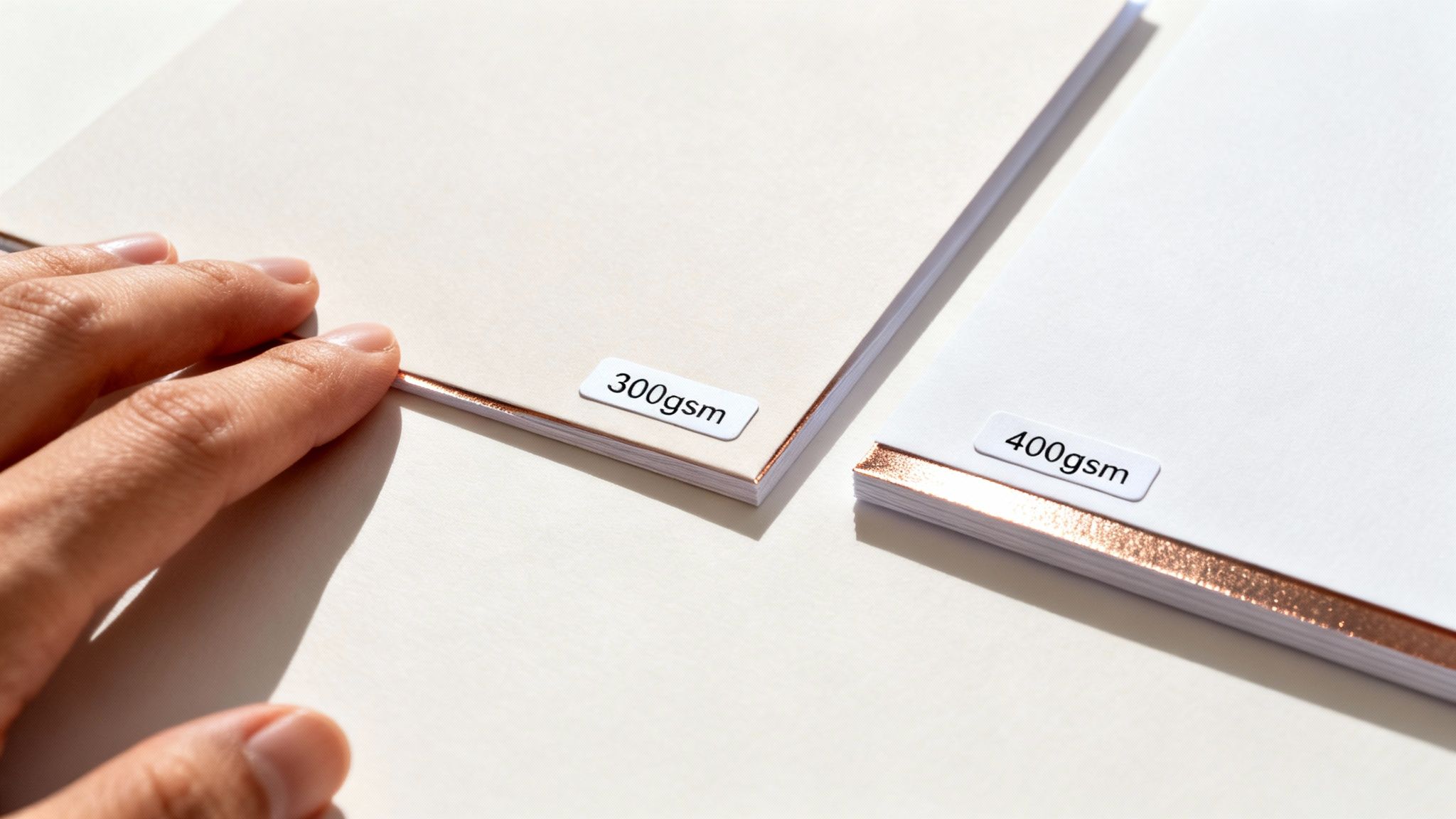
Picking the right materials might sound technical, but it's really about branding. The right paper stock does more than just hold ink; it carries a feeling. It can communicate sophistication, warmth, or creativity, setting the tone before the message is even seen.
Decoding Paper Weight and Stock
You'll often see the term 'GSM', which simply stands for 'Grams per Square Metre'. Think of it as a measure of the paper's density and thickness. It has a massive impact on how your card feels and performs.
It helps to think about it like fabric. A 250gsm stock is your quality t-shirt—flexible and functional, perfect for a casual note. The sweet spot for most professional greeting cards is 300-350gsm. This is like a crisp business shirt: it’s sturdy, holds its shape, and feels substantial without being too stiff. For those truly high-impact moments, a 400gsm stock is like a well-made blazer—impressively thick, durable, and instantly signals luxury.
Here are the most common paper stocks you'll find at printers across New Zealand:
- Coated Stock: This paper has a smooth sealant, which can be either gloss or matte. It makes colours look incredibly vibrant and is a fantastic choice for designs heavy on photography.
- Uncoated Stock: With a natural, non-reflective surface, this stock has a more organic, earthy feel. Crucially, it's super easy to write a personal message on.
- Textured Stock: Options like linen or felt finishes add a tactile dimension that people notice. It creates a sophisticated, memorable experience that encourages touch.
Your paper choice is a silent brand ambassador. A heavier, textured stock can make a simple 'thank you' feel significantly more personal and luxurious, reinforcing the value you place on the relationship.
Selecting the Perfect Finish
The finish is the final flourish that really defines your card’s personality. It works in tandem with your design and paper choice to create a polished, cohesive look.
A matte laminate, for example, gives you a smooth, non-reflective surface that feels modern and elegant. It’s perfect for minimalist designs, feels soft to the touch, and cleverly resists fingerprints—a practical and stylish choice.
On the other hand, a gloss laminate creates a shiny, reflective finish that makes colours pop right off the page. This is your go-to for bold, vibrant designs with photos, as it boosts contrast and gives the card a high-energy, polished appearance.
Elevating Your Cards with Premium Touches
For those moments when you need to make a truly unforgettable impression, special finishes can take your greeting cards from great to exceptional. These details add visual and tactile interest that signals a premium brand experience.
Consider these popular choices that greeting cards NZ businesses use to stand out:
- Foil Stamping: Applying a thin metallic foil (like gold, silver, or rose gold) to certain parts of your design adds an immediate touch of luxury and catches the light beautifully.
- Embossing & Debossing: Embossing raises elements of your design up from the paper, while debossing presses them in. Both techniques add a subtle, three-dimensional texture that people can't help but touch.
- Spot UV: This is a clever trick where a high-gloss varnish is applied to specific spots on an otherwise matte card. It creates a striking contrast in texture and shine that draws the eye straight to your logo or a key design element.
By carefully thinking through how paper weight, stock, and finishes work together, you can create a greeting card that doesn't just look stunning but feels like your brand. It’s this thoughtful approach that ensures your message of appreciation truly connects with your clients here in New Zealand.
2. Print Specs and Card Sizes: Your Pre-Flight Checklist
Getting your design off the screen and into a beautifully printed card involves a few technical details. It might sound a bit like jargon at first, but understanding the basics of print specs is your secret weapon. It ensures what you see on your monitor is exactly what you get in your hands—no nasty surprises.
Think of it as the blueprint for your card. Getting these specs right from the start means your colours pop, your text is crisp, and everything lands exactly where it should. It’s the difference between a professional, polished result and a disappointing one.
From Vibrant Screen to Perfect Print
Ever designed something with a stunning electric blue, only for it to look a bit flatter when printed? That’s the classic clash between screen colours and print colours. Your screen uses RGB (Red, Green, Blue) light to create millions of bright, vivid shades, which is fantastic for digital viewing.
Printers, on the other hand, work with ink. They use a process called CMYK (Cyan, Magenta, Yellow, and Black) to mix colours on paper. When you send a file designed in RGB to a printer, the machine has to do its best to translate those light-based colours into an ink-based equivalent, and sometimes, things get lost in translation.
The best practice? Always set up your design file in CMYK mode right from the beginning. This gives you complete control and a much more accurate preview of how the final colours will look.
It’s a bit like writing a song. You can compose a piece for a synthesizer (RGB) and then try to rearrange it for an acoustic guitar (CMYK). It might sound similar, but it won't be the same. Writing the song specifically for the guitar ensures you get the exact tone and feel you were aiming for.
Why Bleed and Safe Zones Are Your Best Friends
To get that premium, edge-to-edge colour on your cards, printers need a little bit of wiggle room. This extra bit of your design is called the bleed. It’s a small margin, usually around 3mm, that extends past the final cut line of your card.
Printers print multiple cards on massive sheets of paper and then trim them down to size. The bleed acts as a buffer, so if the cutting blade is off by even a fraction of a millimetre, you won't end up with a weird, sliver of white along the edge. Your background will still go right to the very edge, looking flawless.
Just as important is the safe zone. This is an inner margin, also about 3mm from the trim line, where all your crucial bits—like text, logos, or contact details—should live. Keeping everything important inside this zone guarantees it won't get accidentally chopped off during the final trimming process.
Common Greeting Card Sizes in New Zealand
Choosing the right size is a big part of your card’s impact. You can always go for a custom size, but sticking to standard New Zealand dimensions is usually smarter—it's more cost-effective for printing and makes finding matching envelopes a breeze.
Different sizes suit different purposes. A small, neat card is great for a quick thank you, while a larger, more substantial one works well for a big holiday greeting. Knowing the standard formats helps you pick the perfect canvas for your message.
Here’s a quick reference guide to the most popular greeting card sizes you’ll find across NZ.
Common Greeting Card Sizes in New Zealand
| Size Name | Dimensions (mm) | Best For |
|---|---|---|
| A6 | 105 x 148 mm | The classic, go-to size for almost everything. It’s perfect for thank you notes, birthday wishes, and general client check-ins. |
| DL | 99 x 210 mm | This sleek, modern format slips perfectly into a standard business envelope. It's ideal for corporate invitations or stylish marketing mail-outs. |
| Square | 148 x 148 mm | A contemporary and eye-catching option that really stands out from the pile. It's a great choice for creative brands, special event invites, or premium Christmas cards. |
Thinking about these sizes at the start of your design process will help you tailor your message and visuals for the best possible impact.
Your Step-by-Step Guide to Custom Printing in NZ
Taking a design from your screen and turning it into a tangible, beautifully printed card is a really rewarding process. Let's walk through how to work with printers here in New Zealand to make sure your final product looks professional and is exactly what you envisioned. When you know the steps, it's actually a pretty straightforward path.
Think of it like a roadmap. If you understand each stage—from setting up your artwork correctly to signing off on the final proof—you can steer the project with confidence, sidestep common headaches, and build a great relationship with your local print partner.
Preparing Your Artwork for a Flawless Finish
The first, and most important, step is getting a print-ready file to your printer. Sending over a properly formatted file is the best way to avoid delays and ensure the quality is spot-on. Most professional printers in NZ will ask for a press-ready PDF.
But this isn't just any old PDF. A press-ready file has a few key ingredients that make it perfect for a commercial printing press:
- High Resolution: To keep things looking sharp and crisp, not blurry or pixelated, your images and graphics need to be at least 300 DPI (dots per inch).
- CMYK Colour Mode: As we touched on earlier, your file must be set to CMYK. This ensures the colours you see on screen translate accurately to paper.
- Embedded Fonts: You'll want to embed any fonts you've used or convert them to outlines. This guarantees they'll show up correctly, even if the printer doesn’t have them installed on their system.
- Bleed and Crop Marks: Always include a 3mm bleed (extra image area) around your design and add crop marks. This gives the printer a clear guide on where to trim the card for that perfect edge-to-edge finish.
This diagram breaks down that crucial jump from screen design to the finished printed product, putting a spotlight on colour mode and bleed.
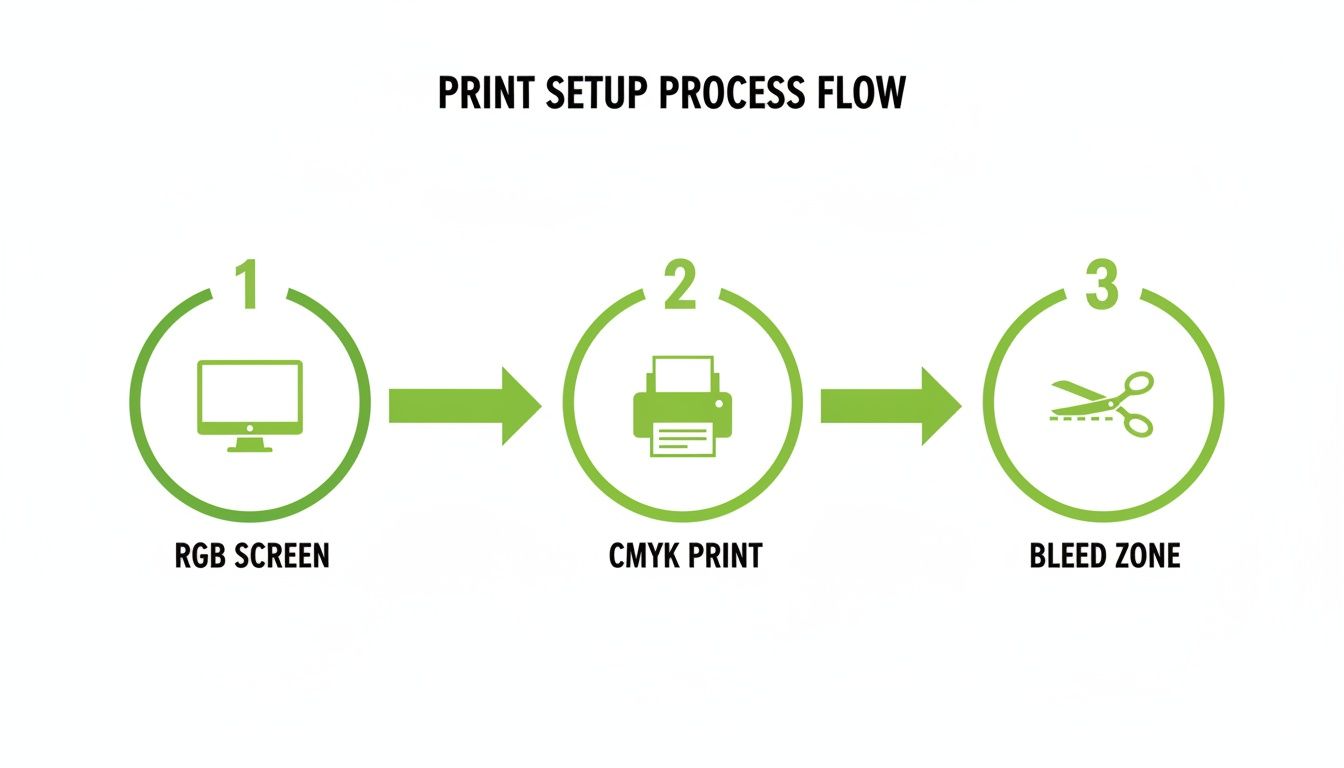
It’s easy to see why designing in CMYK and including a bleed zone are non-negotiable. They are the secret to getting a professional result every time.
The All-Important Proofing Stage
After you've sent your file, the printer will fire back a ‘proof’. This is essentially a digital preview of your card, showing you exactly how it’s going to look. This is your last chance to spot any mistakes before the whole run goes to print, so give it your full attention.
Don't just give it a quick glance. Go over it with a fine-tooth comb. Check for typos, make sure all your text and logos are sitting comfortably within the safe area, and confirm the colours look right. If anything is amiss, now is the time to let your printer know. A tiny tweak at this point can save you from a very costly and disappointing mistake down the line.
Think of the proofing stage as a dress rehearsal. It’s your final opportunity to make sure every detail is perfect before the main performance. A thorough check here guarantees a standing ovation from your clients.
Understanding Pricing and Timelines
When it comes to custom greeting cards NZ, pricing is all about volume. The more cards you order, the less you'll pay per card. That's because the biggest cost is the initial setup of the printing press; once it's up and running, printing more copies is much more economical.
It's always a good idea to ask for a quote based on a few different quantities—say, 250, 500, and 1000—to see how the unit price drops. This will help you make a smart call that balances your budget with what you actually need.
Typical lead times for custom card printing in New Zealand are usually around 5 to 10 working days from the moment you approve the proof. This can shift depending on how complex your order is, especially if you've added special finishes like foiling or embossing. Try to plan ahead, particularly around busy times like Christmas, to make sure your cards land on your doorstep right when you need them.
Choosing to print locally doesn't just get you a quality product; it also supports our vibrant creative economy. In fact, New Zealand even exports printed postcards and greeting cards, showing off Kiwi design on the world stage. You can even explore more about NZ's trade in this category to see its global reach.
Making an Impact with Eco-Friendly Card Choices
In a country like New Zealand, where we're all pretty conscious of our environmental footprint, the materials you choose for your business communications say a lot about you. Picking sustainable greeting cards isn't just a fleeting trend; it’s a genuine statement about your company's values. It tells your clients you care about the beautiful country we all share, turning a simple thank-you note into something much more meaningful.
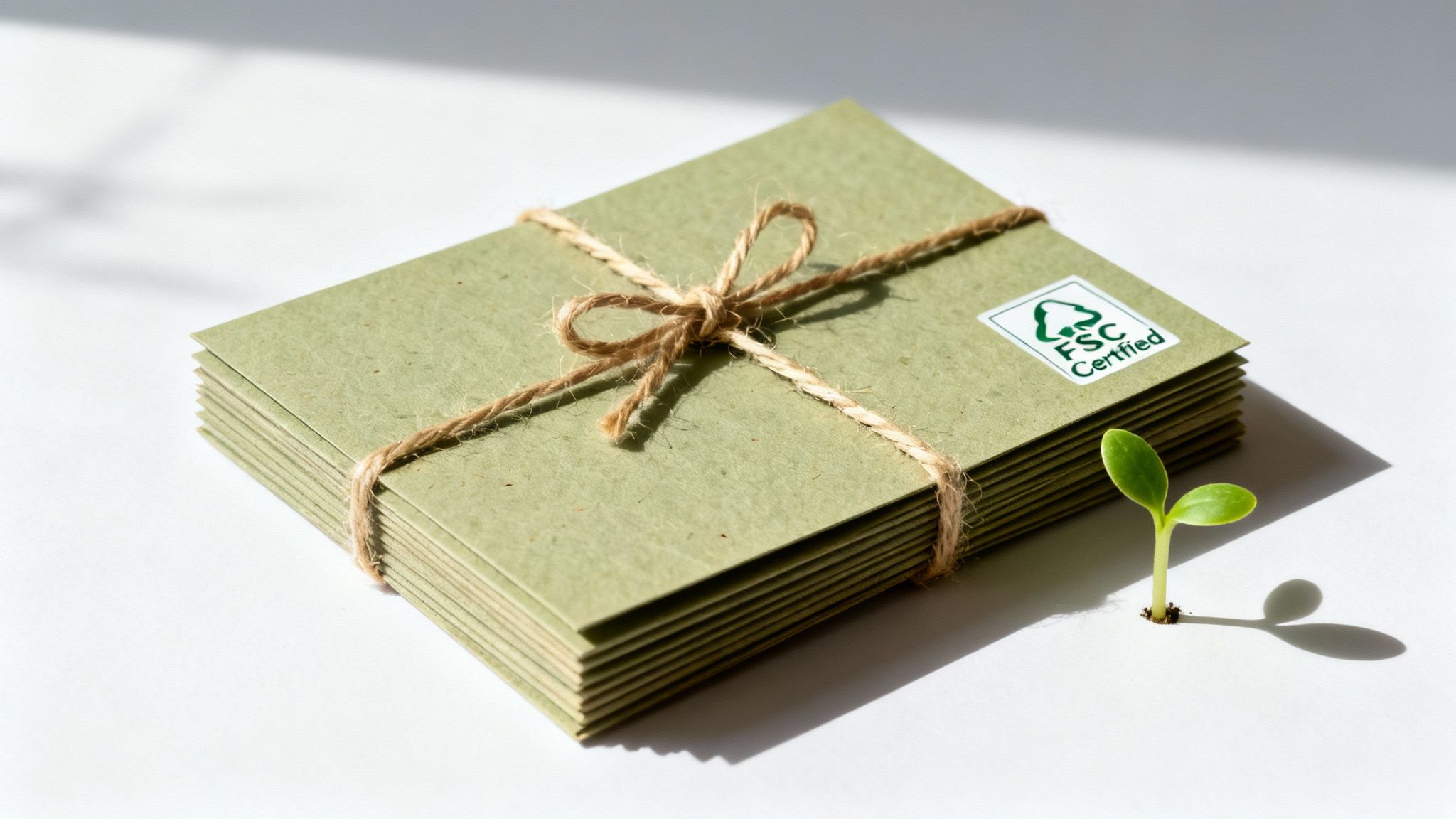
This decision is more than just a feel-good move. It’s a smart way to connect with your Kiwi customers on a deeper level, showing them you’re on the same page when it comes to what matters. Choosing a sustainable option these days doesn't mean you have to compromise on quality—in fact, it adds another layer of integrity to your brand.
Understanding Sustainable Paper Stocks
When you start digging into eco-friendly paper, you'll come across a few key terms. Getting your head around what they mean will help you make a choice that actually makes a difference. These aren't just buzzwords; they're certifications that guarantee responsible practices.
Two of the most common and reliable options you'll see are:
- FSC-Certified Paper: The Forest Stewardship Council (FSC) is a global non-profit that sets the standard for responsible forest management. If a paper stock is FSC-certified, you know the wood pulp came from forests managed in a way that’s good for the environment, beneficial for local communities, and economically sustainable.
- Recycled Paper: This is a fantastic choice, made from post-consumer waste—paper that’s already been used and collected for recycling. By choosing recycled paper, you're directly helping to cut down on landfill waste, save our natural resources, and reduce the energy and water needed to make paper from scratch.
The Hidden Benefits of Greener Inks
The eco-friendliness of your greeting cards NZ doesn't stop with the paper. The ink your printer uses plays a surprisingly big part. Many standard inks are petroleum-based, which can release nasty volatile organic compounds (VOCs) into the air during the printing process.
A much better alternative is to ask for vegetable-based inks, like those made from soy or linseed oil. These come from renewable crops, are far easier to remove during the paper recycling process, and release significantly fewer VOCs. It’s a cleaner choice for the planet and for the people working in the print shop.
By choosing recycled stocks and vegetable-based inks, you’re not just printing a card; you're actively participating in a circular economy. It’s a small detail that contributes to a much larger, positive impact on our local environment.
This worldwide push for sustainability is really shaping the greeting card industry. The global market, currently valued at around USD 21.76 billion, is growing fast, largely because people are actively looking for eco-friendly and personalised products. These trends are definitely reflected here in New Zealand, where our green-mindedness has a huge influence on what we buy. You can read the full research about these global market trends to see how our local preferences stack up.
Ultimately, choosing eco-friendly options ensures your brand's message of care and quality is consistent, right down to the very paper it’s printed on.
Using Greeting Cards to Grow Your Business
Getting a beautifully designed and printed card is one thing, but the real magic happens when you actually send it. Greeting cards are a surprisingly powerful tool for building genuine, long-lasting relationships with your clients. They turn a standard business transaction into something memorable and personal, which is exactly what builds loyalty and gets people talking.
This isn’t about blasting out generic corporate mail. It’s about being thoughtful and using key moments to show you genuinely appreciate your clients. A well-timed card makes a customer feel seen and valued in a way an automated email just can't compete with.
Turning Key Moments into Opportunities
The secret sauce to a great greeting card strategy is all about timing and personalisation. If you can pinpoint the right moments in your relationship with a customer, you can create a connection that leaves a seriously positive impression. It’s a simple shift from thinking about a one-off sale to building an ongoing partnership.
Here are a few proven ideas that work wonders for Kiwi businesses:
- The Post-Project Thank You: Just wrapped up a big project or closed a major sale? Send a handwritten thank you card. The key is to mention a specific detail you enjoyed about working with them. It shows you were paying attention and reinforces that they made the right choice in hiring you.
- Celebrating Client Milestones: Keep an ear to the ground. Did a client’s business win an award, celebrate an anniversary, or get a great write-up in the local paper? A quick "congrats" card shows you’re genuinely invested in their success, not just their invoice. It makes the relationship feel like a true partnership.
- High-Impact Holiday Greetings: Everyone sends cards at Christmas, which means you need to stand out. Try sending your greeting cards NZ a little earlier than everyone else. Choose a premium design that feels special and, most importantly, write a personal message that isn't just a sales pitch in disguise.
Think of a greeting card as a handshake you can mail. It's a tangible symbol of your appreciation and a quiet reminder of your brand that sits on a client's desk long after an email has been archived.
Crafting a Message That Connects
Even the most stunning card will fall flat if the message inside feels cold or copied-and-pasted. You want to write something that sounds like it came from a real person, not the marketing department. Your authenticity is what will make it work.
When you put pen to paper, just keep it simple and sincere:
- Use Their Name: It sounds obvious, but always address the client by name. It’s the simplest and most effective form of personalisation.
- Be Specific and Sincere: Ditch the generic "Thanks for your business." Instead, try something like, "It was a real pleasure working on the new branding with you – your team's creative input was fantastic."
- Keep It Brief and Human: You're not writing an essay. A couple of warm, genuine sentences will have a much bigger impact than a long, rambling message.
- End with a Personal Touch: Sign it yourself. Your actual signature reinforces that a real human being took the time to write and send this card.
Weaving these small, thoughtful habits into your client relationships can turn greeting cards into one of your best tools for keeping customers happy and growing your business.
Common Questions About Custom Greeting Cards
Diving into the world of custom printing for the first time? It's natural to have a few questions. From how many cards you actually need to order, to what happens if you're not a design whiz, getting the basics sorted makes the whole process feel much less daunting.
Let's walk through some of the most common queries we hear from Kiwi businesses. We'll give you the straightforward answers you need to get your project off the ground.
How Many Cards Do I Need to Order?
This is usually the first question on everyone's mind. The good news is that most local NZ printers are pretty flexible. You'll often find minimum order quantities (MOQs) starting as low as 50 or 100 cards, which is perfect for small businesses wanting to dip their toes in the water without a massive upfront cost.
But here's a crucial tip: the price per card almost always drops as your order size goes up. The real cost is in the initial setup for the print run. That means printing 500 cards will be significantly cheaper per card than printing just 50. Always ask for quotes at a few different volumes—you might find that ordering a slightly larger batch offers much better value for your marketing budget.
Can I Get Help with My Design?
Absolutely! This is a big one. You've got a brilliant idea in your head, but maybe you're not confident with design software. Don't worry, you don't have to be. Most professional printers in New Zealand have an in-house design team ready to help.
You can usually come to them with:
- A rough sketch or a clear concept.
- Your brand assets, like your logo and specific brand colours.
- A few examples of cards you've seen and liked.
Their designers can take these elements and craft a polished, professional design that looks fantastic and is perfectly set up for printing. It’s a brilliant way to get a top-tier result without the stress of doing it all yourself.
Don't let a lack of design software hold you back. Collaborating with your printer's design team is often the most direct path to creating a custom card that you'll be proud to send.
Of course, once the design is sorted, you've got to think about the message inside. The right words are what truly connect with your clients. If you're stuck on what to say, checking out some inspiring ideas for what to write in 'thinking of you' cards can be a fantastic source of inspiration.
Ready to create stunning, custom greeting cards that leave a lasting impression on your clients? At SONI DESIGN, we blend passion and craftsmanship to bring your vision to life with vibrant, high-quality printing. Let’s work together to tell your brand’s story.
Leave a Comment
Stay home & get your daily
needs from our shop
Start You'r Daily Shopping with Nest Mart