
Your cart is currently empty.

Finding the right cardboard box solution is a huge deal for any Kiwi business. It’s one of those things that touches everything from keeping your products safe during transit to shaping what customers think of your brand. Honestly, it's far more than just a container; it’s often the very first physical thing a customer experiences from you.
Your Guide to Cardboard Boxes in New Zealand
For a lot of New Zealand businesses, trying to source the perfect packaging can feel like navigating a maze. You’re suddenly hit with a barrage of confusing industry jargon like ‘flutes’ and ‘board grades’, you're wondering who the reliable local suppliers are, and you’re constantly trying to juggle cost versus quality. This is especially true if you're a small or medium-sized business anywhere from Auckland to Dunedin, trying to stand out in a crowded market.
Choosing the right cardboard box isn't just an operational task—it's a strategic decision that has a real impact on your bottom line. It’s not just about finding something to put your products in. It’s about making sure those products arrive in one piece, presenting your brand in the best possible light, and keeping your shipping and material costs under control. A flimsy, ill-fitting box can quickly lead to damaged goods and unhappy customers, while the right one protects your investment and your reputation.
Think of this guide as your practical roadmap, specifically for the NZ market. We’ll cut through the noise and cover the essentials:
- Decoding Box Anatomy: We'll break down what actually goes into making a box strong.
- Sizing and Measuring: Learn how to get that perfect fit to cut down on waste and shipping costs.
- Custom Printing: Discover how to turn a plain box into a brilliant marketing tool.
- Supplier Considerations: Get the lowdown on finding the right local partner for your business.
It's also worth remembering how your boxes fit into the bigger picture. Choosing the right packaging is a key part of your overall ecommerce fulfillment solutions, directly linking your physical product to your logistics and, ultimately, your customer's happiness.
At the end of the day, our goal is to give you the confidence to make smart choices. Whether you’re a boutique retailer sending out delicate, handcrafted goods or a larger company shipping products in bulk, the right cardboard box truly makes all the difference. And with expert partners like SONI DESIGN, even small businesses can get their hands on custom-printed packaging that creates an unboxing experience to remember, turning a simple delivery into a powerful brand moment.
Decoding the Anatomy of a Cardboard Box
Picking the right cardboard box is a bit like choosing the right gear for a hike. You wouldn't take a daypack on a multi-day tramp, and you definitely shouldn't use a flimsy box for something heavy or fragile. Getting to grips with the basic anatomy of a cardboard box is the first step to making a smart choice for your Kiwi business.
At its heart, a standard cardboard box is made from corrugated fibreboard. This isn't just one flat sheet of paper. It’s a clever, engineered sandwich made of three layers: an inside liner, an outside liner, and a wavy, arched layer tucked in between called the flute.
Understanding Flutes: The Hidden Strength
Think of that wavy flute layer as the series of arches supporting a bridge. These paper waves create strong, rigid columns of air that give the box its cushioning ability and its strength. The size of these waves, known as the flute profile, is what really determines the box's protective qualities and what it’s best used for.
Different flute profiles bring different advantages to the table:
- B-Flute: This is a crowd favourite for e-commerce and retail packaging. Its smaller, more frequent flutes create a thin but surprisingly rigid surface. It’s fantastic for printing high-quality graphics on and offers good crush resistance for lighter items.
- C-Flute: Often called the all-rounder, C-flute is the most common profile you’ll find in standard shipping cartons across New Zealand. It strikes a great balance between solid cushioning and reliable stacking strength.
- BC-Flute (Double Wall): When you need serious muscle, this is your go-to. It combines a layer of B-flute with a layer of C-flute, creating a double-wall box that’s exceptionally tough. It's perfect for heavy-duty items, fragile goods, or long-haul international shipping.
The real magic of corrugated cardboard is all in its structure. The flutes are designed to distribute weight and absorb shocks, making sure the force from a bump or a drop spreads out across the box instead of going straight to your product.
What Board Grades Mean for Your Products
Beyond the flute type, you’ll often see codes like '125K' or '200C' mentioned. This is the board grade, which is basically a shorthand for the material's strength. The number usually refers to the weight of the paper liners in grams per square metre (gsm), and the letter often indicates the type of paper. Simply put, a higher number generally means a stronger, more durable box.
This concept map shows how all these elements come together to help a business nail its core needs: protection, branding, and cost management.
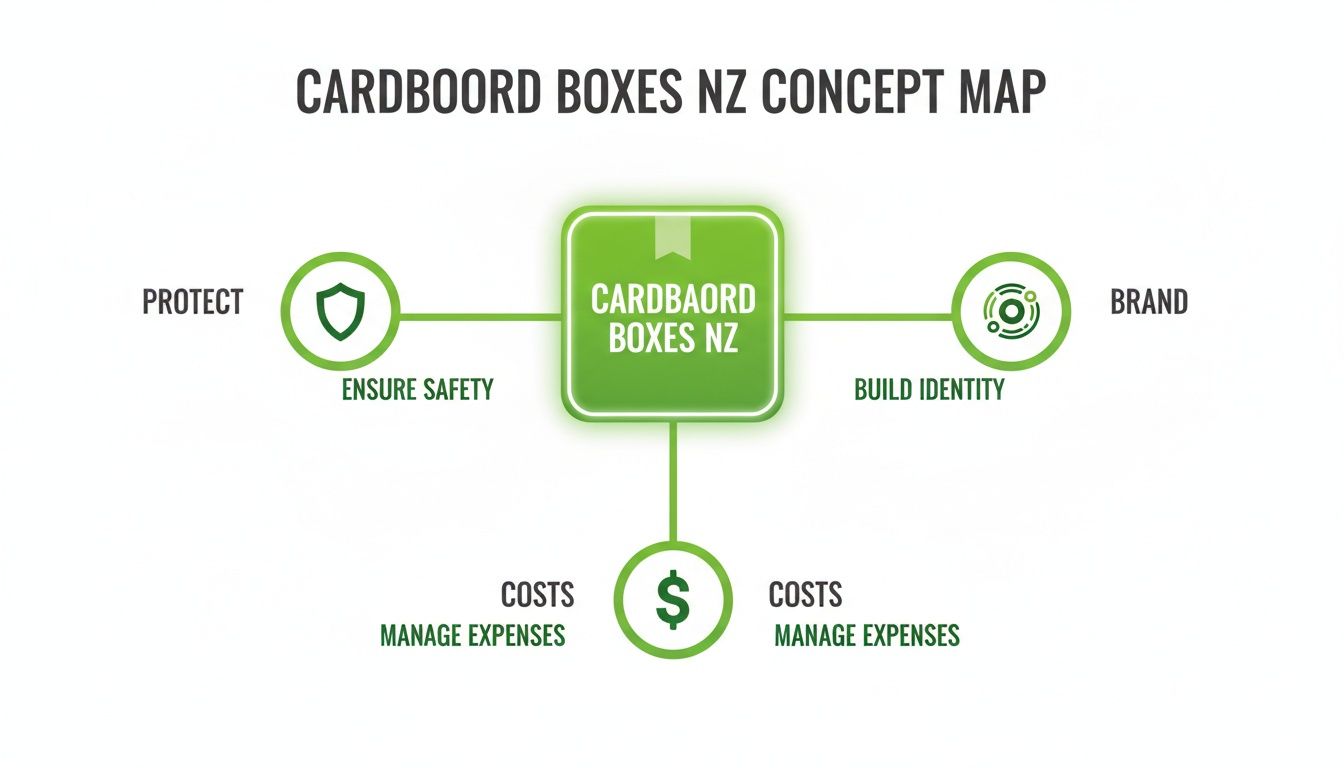
The map highlights how the physical construction of a box directly impacts its ability to protect goods, reflect your brand's quality, and influence your bottom line. Here in New Zealand, the packaging sector is a major economic player, contributing around 2% to the country's GDP and employing over 50,000 Kiwis. It’s the backbone supporting countless businesses. You can dive deeper into the industry's local impact in The Treasury's official reports.
To help you connect these concepts to real-world applications, here’s a quick-reference table.
Choosing the Right Cardboard Box for Your Needs
| Common Business Use | Recommended Flute Type | Typical Board Strength | Ideal For |
|---|---|---|---|
| Local E-commerce Shipments | B-Flute or C-Flute | Light to Medium | Apparel, books, cosmetics, small electronics. |
| General Warehousing & Storage | C-Flute | Medium | Stacking inventory, general purpose shipping cartons. |
| Subscription Boxes | B-Flute or E-Flute | Light | Great print surface for branding, good presentation. |
| Shipping Heavy or Fragile Items | BC-Flute (Double Wall) | Heavy-Duty | Glassware, machine parts, bulk food items. |
| International Exports | BC-Flute (Double Wall) | Extra Heavy-Duty | Withstanding the rigours of long-distance transit. |
| Retail & Point-of-Sale Displays | E-Flute or B-Flute | Light | High-quality printing, structural integrity for displays. |
Getting the combination of flute and board grade right is absolutely crucial. It’s the key to making sure your products arrive in one piece without you having to overspend on packaging you simply don’t need.
How to Measure for the Perfect Fit
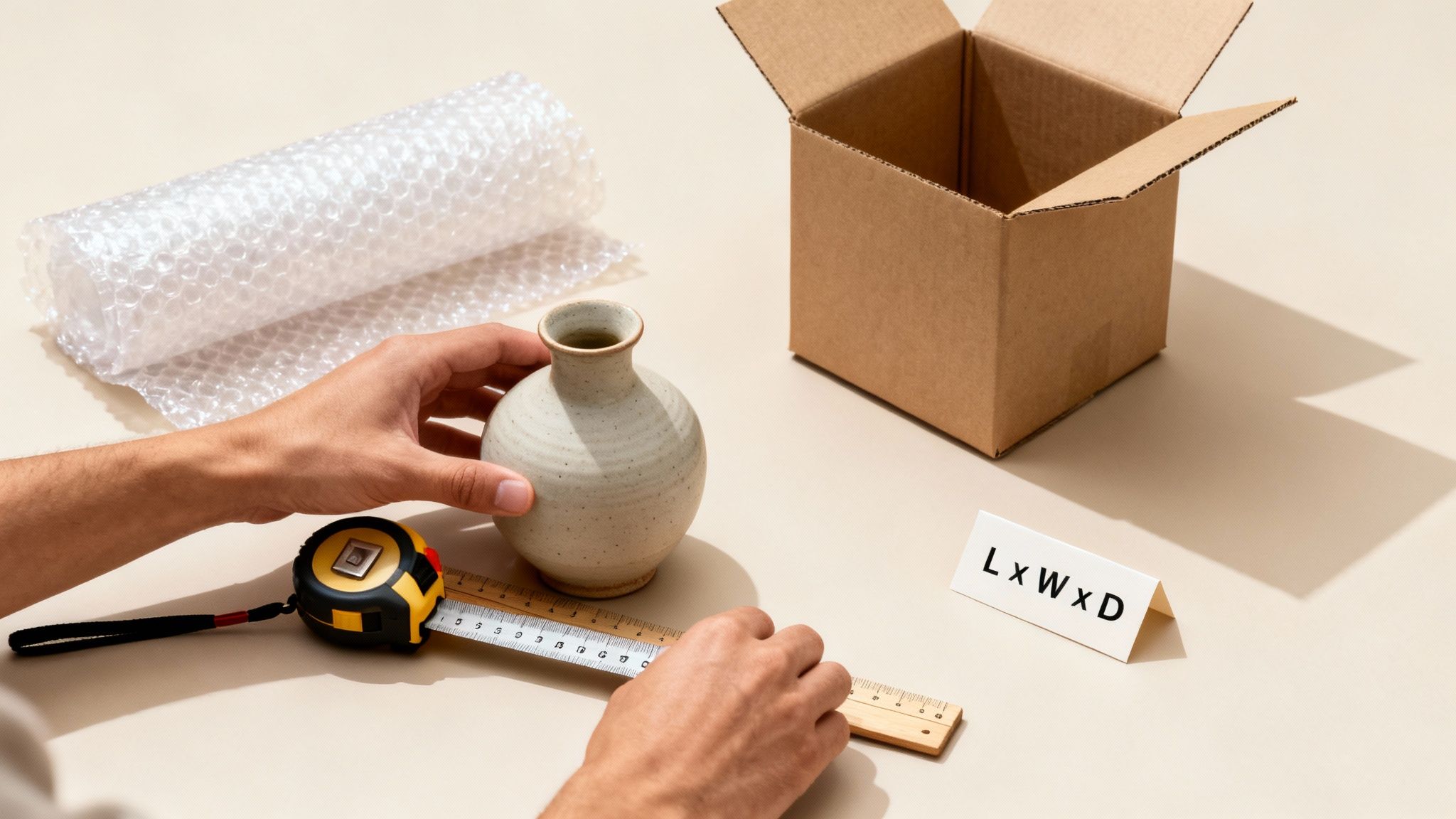
Choosing a box that’s too big is like buying shoes three sizes too large. It’s clumsy, wasteful, and just doesn't work. An oversized box not only jacks up your shipping costs but, more importantly, leaves your products rattling around and at risk of damage.
Getting the size right is one of the simplest ways to protect your items and your bottom line. You're aiming for a snug fit—enough to stop the product from sliding about, but with a little extra room for essential cushioning. It's a small detail that makes a huge difference in how professionally and safely your products arrive.
Mastering the Length x Width x Depth Formula
When you're looking at cardboard boxes here in NZ, the dimensions are always listed in the same order: Length (L) x Width (W) x Depth (D). The key is to measure your product based on how it will actually sit inside the box.
Here’s how to get it right every time:
- Measure the Length: Place your product on a flat surface. The longest side is your length.
- Measure the Width: Next, measure the shorter horizontal side.
- Measure the Depth (or Height): Finally, measure how tall the product is when it’s lying down.
This simple formula provides the internal dimensions you need for the box. Make sure you’re measuring the actual product itself, not just going off a spec sheet, to avoid any nasty surprises.
It’s important to know that suppliers nearly always list the internal dimensions of a box. This is exactly what you need, as it tells you the usable space you have to work with for both your product and any padding.
Don't Forget the Padding
One of the most common slip-ups is measuring just the product and completely forgetting about protective materials. If you’re sending a fragile ceramic mug, for instance, you need to leave space for the bubble wrap or scrunched-up kraft paper that will protect it from knocks and drops.
Think about a local Kiwi business putting together a gift hamper. They have to measure the hamper after all the goodies are arranged, and then add a bit more space for the wood wool or shredded paper that keeps everything from shifting around.
A good rule of thumb is to add an extra 5-10mm to each of your measurements (Length, Width, and Depth). This small buffer creates a crucial gap for that protective layer, preventing your product from pressing right up against the box walls—a major cause of transit damage. For particularly delicate items, you might even want to add a little more.
Taking a moment to plan for this pays off massively. It helps you avoid costly returns and damaged stock, and it shows your customers you care about their order from the moment it leaves your hands.
Your Packaging Is a Blank Canvas—Time to Get Printing
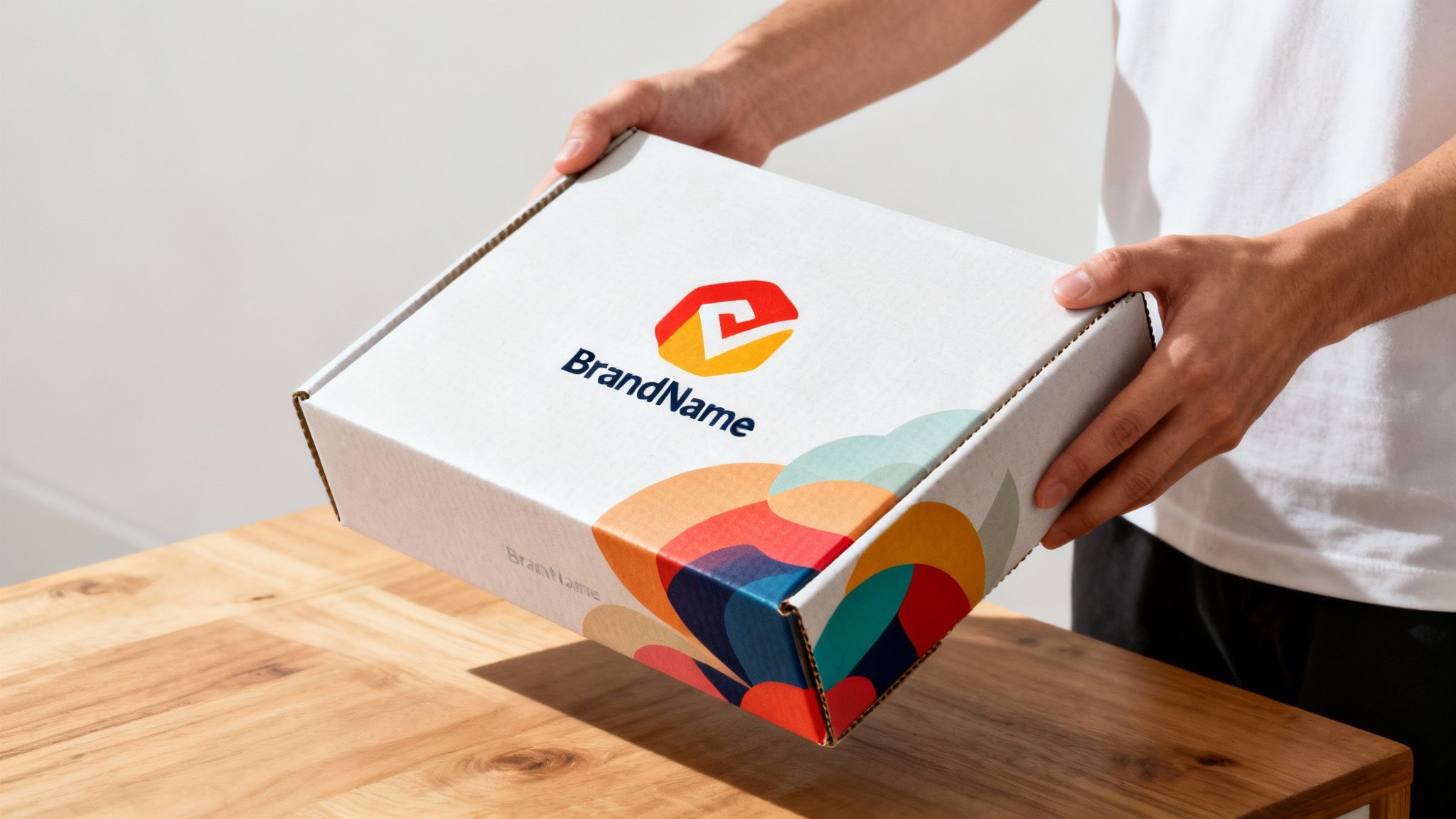
Sure, a plain brown cardboard box gets your product from A to B. But that's all it does. Think of it as a massive missed opportunity. With custom printing, your packaging stops being a simple shipping cost and starts working for you as a powerful marketing tool.
For any Kiwi business, that first physical touchpoint with a customer is gold. A beautifully printed box does more than just protect the goods inside; it screams quality and care from the moment it lands on the doorstep. It’s the difference between a forgettable delivery and a memorable unboxing experience that gets people excited.
From a Simple Logo to a Full-Blown Design
Getting started with customisation doesn't have to be a huge leap. It can be as simple as printing your logo and contact details in a single colour. That one small change instantly adds a professional touch and keeps your brand front-of-mind every time someone sees the box.
From there, the world is your oyster. Picture a local Wellington artist whose box is covered in a full-colour print of their unique designs. Suddenly, every single delivery becomes a mobile billboard, carrying their brand's story and vibe all the way to the customer. It creates an emotional connection before the box is even opened.
By looking into different custom packaging options, you can seriously boost your product's appeal and what customers think it's worth.
How Modern Printing Tech Has Changed the Game
Not too long ago, high-quality custom printing was a luxury reserved for big players with massive budgets and warehouses to store huge print runs. Traditional methods had steep setup costs, making smaller orders a non-starter for most New Zealand businesses.
Thankfully, techniques like digital-offset printing have completely levelled the playing field. This technology brings some serious advantages to the table:
- Vibrant, Full-Colour Graphics: It can produce stunning, high-resolution images with incredible colour accuracy. Your designs will absolutely pop.
- Low Minimum Orders: Because it does away with expensive printing plates, digital printing is a dream for small and medium-sized businesses that need flexibility.
- Cost-Effective for Short Runs: You can order precisely what you need, whether it's for a limited edition product, a seasonal campaign, or just to test out a new look.
This shift means a small startup can now have packaging that looks just as good as a well-established brand. It puts the focus back on creativity and brand identity, not just the size of your bank account.
This move towards more dynamic, branded packaging is right in line with what's happening in the market. New Zealand's Paperboard Packaging Market is set to grow, showing just how important quality packaging has become in e-commerce and retail. You can read more about the bright future for corrugated packaging in NZ.
At the end of the day, investing in custom-printed boxes isn't just about making things look pretty. It's a smart business decision to build brand loyalty, boost customer perception, and create a seamless brand experience from the first click to the final unboxing.
Finding the Right Supplier in New Zealand
Choosing the right box is one thing, but finding the right partner to supply it is just as crucial. The New Zealand supplier scene can feel a little concentrated, so it pays to know what you’re looking for. This will help you find a company that genuinely aligns with your goals, whether you just need a straightforward run of shipping cartons or want to create a completely custom branded experience.
The structure of our local market has a direct impact on everything from pricing to availability. To give you some context, New Zealand's Pulp, Paper, and Paperboard Manufacturing industry—the very foundation of cardboard box production—reached a market size of $2.3 billion in 2024. But get this: there are only 16 businesses operating in that core space. You can read more about NZ's paper manufacturing industry to get the full picture.
This concentration means that when you start looking for cardboard boxes in NZ, you're generally going to come across two different types of suppliers, each with its own pros and cons.
Large Manufacturers vs. Design-Focused Agencies
Large-scale manufacturers are the heavyweights. They pump out enormous volumes of standard-sized boxes, making them the go-to if your main goal is getting a huge quantity of packaging at the lowest possible price per unit. The catch? They often have very high Minimum Order Quantities (MOQs), which can be a real roadblock for smaller businesses or anyone needing a specialised, limited run.
This is where a design-focused agency, like us here at SONI DESIGN, comes in. We work differently, acting as the bridge between your brand's vision and a polished final product. An agency is the perfect choice for custom-printed boxes because we offer design expertise, far more flexibility, and much lower MOQs, all thanks to modern digital printing technology.
Think of it this way: a large manufacturer is like a bulk food wholesaler—fantastic if you need to buy flour by the pallet. A design agency is more like a boutique bakery; we can take that same flour and help you create the perfect, custom-decorated cake, bringing artistry and specialised skill to the table.
Key Questions to Ask Potential Suppliers
Before you sign on the dotted line with any supplier, it’s vital to ask a few smart questions. Getting these details sorted upfront will save you a world of time, money, and stress down the track.
Here’s a checklist of what you need to clarify:
- What are your MOQs? Be sure to ask about the minimums for both plain and custom-printed boxes, as they can be very different. This is usually the first hurdle for a small business.
- What are your typical lead times? You need to know how long it will take from the moment you place an order to when the boxes arrive at your door. This is essential for managing your stock levels.
- Can you provide samples? There's no substitute for a physical sample. It's the only way to truly check the board quality, see how the printing looks, and make absolutely sure your product fits.
- What are your design and setup fees? For custom printing, always ask about one-off costs like artwork setup or the creation of printing plates. You don't want any surprises on the invoice.
Ultimately, finding the right supplier is about building a relationship. You're looking for a partner who gets your brand, works with your budget, and can consistently deliver the quality cardboard boxes NZ businesses need to thrive.
Making Sustainable and Eco-Friendly Choices
For Kiwi businesses, sustainability is more than just a box-ticking exercise; it’s a core value that resonates deeply with customers across the country. Your choice of cardboard packaging is a fantastic, tangible way to show you’re committed to protecting Aotearoa. It turns a simple box into a statement about what your brand stands for.
It all begins with getting the language right. You'll often see terms like recycled content and recyclable. The first means the box is made from paper that’s already had a previous life, while the second simply means it can be recycled again after your customer is done with it. For the biggest green tick, look for boxes that have both—a high percentage of recycled content and are 100% recyclable.
What FSC Certification Means for Your Boxes
Another crucial logo to keep an eye out for is the FSC (Forest Stewardship Council) certification. Seeing that little tree symbol on your cardboard boxes is a powerful assurance. It guarantees that any new paper pulp used in the box comes from forests managed in a way that’s environmentally responsible, socially beneficial, and economically sound.
Essentially, it’s a clear signal to your customers that you’re not taking shortcuts. You’re making ethical choices right down to the last detail of your packaging, which goes a long way in building trust.
Choosing eco-friendly packaging is more than a responsible action; it's a powerful branding tool. It tells a story of care and respect for the environment, which resonates strongly with the values of many New Zealanders and builds a deeper connection with your customers.
How to Recycle Your Cardboard Boxes Correctly
Getting your boxes into the recycling system correctly is the final, crucial piece of the puzzle. While specific rules can vary a little from one local council to the next here in NZ, the basic prep work is always the same.
Here’s a quick guide to getting your boxes ready for their next life:
- Remove All Extras: Pull out any plastic air pillows, bubble wrap, or pesky polystyrene. These can't be recycled with cardboard and will contaminate the batch.
- Peel Off the Tape: Rip off as much plastic packing tape and as many shipping labels as you can. A tiny bit is usually fine, but large pieces can cause problems at the recycling plant.
- Flatten Everything: This is a big one. Break down and flatten every single box. It saves a massive amount of space in your kerbside bin and makes the whole collection and sorting process far more efficient.
By taking a minute to do this, you're helping ensure your packaging gets properly repurposed, keeping waste out of our landfills and supporting New Zealand’s move towards a circular economy.
A Few Common Questions We Hear About Cardboard Boxes
When you're sorting out packaging for your business, a few questions always seem to pop up. Getting straight answers from the get-go means you can make the right call for your products, minus the trial and error.
What's the Best All-Rounder Box for Shipping in NZ?
For most things getting sent around New Zealand, you can't go wrong with a standard single-wall ‘C-flute’ box. Think of it as the trusty workhorse of the packaging world—it gives you a great balance of protection, durability, and value for money.
But if what you're sending is on the heavier side, or a bit delicate, it’s a smart move to step up to a double-wall ‘BC-flute’ box. That extra layer of corrugated cardboard provides some serious peace of mind, absorbing the bumps and knocks that can happen on the journey.
Can I Get Custom Printed Boxes Without Ordering a Massive Amount?
Absolutely. In the past, you’d be looking at huge minimum order quantities, but modern digital printing has completely changed the landscape. Now, getting a small, flexible run of custom boxes is both possible and surprisingly affordable.
This is a game-changer for small businesses, startups, or even for a one-off marketing campaign. You can get that professional, branded look without having to find storage for thousands of boxes you don’t need yet.
How Do I Make Sure My Cardboard Boxes Are Recycled Properly?
The good news is that most cardboard is easily recycled right from your kerbside collection here in NZ. The key is just a little bit of prep work to make sure it can be processed.
Before you pop it in the bin, always flatten your boxes completely and peel off as much of the plastic packing tape as you can. Any boxes with serious food stains, grease, or oil can’t be recycled as they can contaminate the whole batch, so those will have to go in the rubbish. It’s always a good idea to double-check your local council’s recycling rules, too.
If you're ready to create custom printed packaging that truly represents your brand, the team at SONI DESIGN would love to help. Let's work together to design and source the perfect boxes for your business.
Find out how we can help at https://www.sonidesign.co.nz.
Leave a Comment
Stay home & get your daily
needs from our shop
Start You'r Daily Shopping with Nest Mart