
Your cart is currently empty.

So, you're thinking about wrapping your car? It's a fantastic way to completely transform your vehicle's look, whether for a personal style statement or to create a rolling advertisement for your business. But naturally, the first question that pops into your head is, "How much is this going to set me back?"
Let's get straight to it. In New Zealand, a full, professional car wrap on a standard-sized vehicle will typically cost you between NZ$3,000 and NZ$6,000. This makes wrapping a really compelling alternative to a traditional paint respray, especially when you factor in the massive benefits of customisation and paint protection.
Understanding Car Wrap Cost In New Zealand
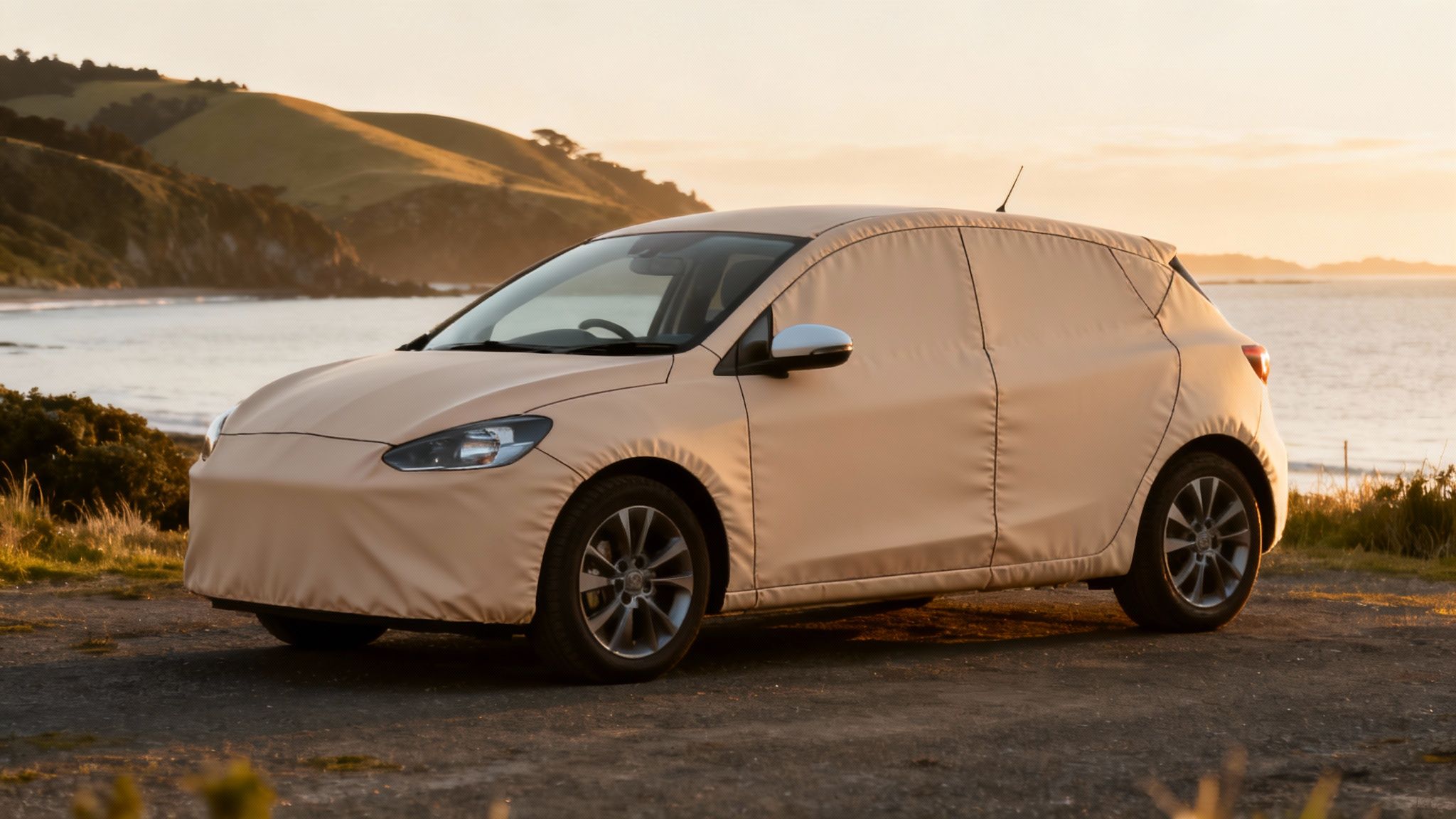
The final price isn't just one single number; it's a range that depends on a few moving parts. It helps to think of it like getting a custom-tailored suit. The cost will change based on the quality of the fabric (the vinyl), the size of the person (your vehicle), and the intricacy of the design.
A simple, single-colour wrap on a small hatchback like a Suzuki Swift is going to be on the lower end of the scale. On the other hand, a complex, multi-layered graphic on a large commercial van with lots of tricky curves and indentations will require more material and skill, pushing the price towards the higher end.
To give you a clearer picture of where wrapping sits compared to painting, here's a quick comparison.
Quick Cost Snapshot Wrap Vs Respray
| Service | Average Cost (NZD) | Typical Turnaround Time | Key Benefit |
|---|---|---|---|
| Professional Vehicle Wrap | $3,000 – $6,000+ | 3–5 days | Customisation and paint protection |
| High-Quality Respray | $6,000 – $10,000+ | 1–3 weeks | Permanent colour change |
As you can see, wrapping not only offers a more budget-friendly path to a new look but also gets you back on the road much faster.
Setting A Realistic Budget
Over the past decade, the car wrapping industry in New Zealand has really matured. Thanks to better materials and more efficient techniques, pricing has become quite predictable.
For most standard cars—think sedans, hatchbacks, or small SUVs—you can expect a high-quality installation to land somewhere in the NZ$4,000–NZ$5,000 bracket. This makes it a very attractive option when you consider a quality paint job often starts at NZ$6,000 and can easily climb past NZ$10,000 for a showroom-level finish.
For a deeper dive into what influences these figures, check out our complete guide to vehicle wrap costs.
Key Takeaways On Initial Costs
When you’re setting your budget, try not to see it as just an expense. It's an investment in your vehicle, and here’s what that initial cost really gets you:
- Protecting Your Asset: The wrap is like a suit of armour for your paintwork. It acts as a durable shield against stone chips, annoying little scratches, and the harsh Kiwi sun, which goes a long way in preserving your car's resale value.
- A Truly Unique Look: Vinyl opens up a world of finishes that are either incredibly expensive or downright impossible to achieve with paint. We’re talking about slick matte, smooth satin, brushed metal, or even wild colour-shifting effects that change as you walk around the car.
- Serious Brand Visibility: For any business, a vehicle wrap is a one-off marketing investment that keeps on giving. It generates non-stop local exposure every time you drive, turning your vehicle into a powerful, 24/7 advertising tool.
Now that we've covered the ballpark figures, the next sections will break down exactly what drives these costs—from the different types of vinyl to the labour involved—so you can make a decision that feels right for you.
The Four Main Drivers of Your Car Wrap Cost
To really get a handle on your final quote, it helps to peek behind the curtain at the four core factors that make up the price of any professional car wrap. It’s a bit like commissioning a custom piece of furniture—the cost isn't just the timber. It's a mix of the materials, the artisan's time, the design, and how complex the piece is to build.
The same logic applies directly to wrapping a vehicle. A simple, flat-sided van is like a blank canvas; it’s straightforward and pretty efficient to work on. But a modern SUV with sharp angles, deep recesses, and complex curves? That’s more like a detailed sculpture. Every single contour demands more skill, more time, and more material to get it perfect.
Let's break down these four pillars so you can see exactly where your investment is going.
Pillar 1: Your Choice of Vinyl Material
The type of vinyl you pick is the foundation of your car wrap cost. While all the professional-grade films we use are excellent, there are different tiers that affect the budget. Standard gloss, satin, or matte colours are usually the most accessible, giving you a stunning finish without the premium price tag.
But then you get into the specialty films, which cost more because they're much harder to manufacture. These include:
- Textured Finishes: Things like carbon fibre or brushed metal add a tactile and visual depth that paint just can't match.
- Metallics and Pearls: These films have tiny metallic flakes or pearlescent pigments mixed in. They catch the light beautifully, giving your vehicle a dynamic shimmer as it moves.
- Colour-Shift and Chrome: At the very top end, you have the real showstoppers. Colour-shift (or "chameleon") films change their hue depending on the angle you're looking from, while chrome gives that incredible mirror-like finish. Both are notoriously difficult to apply correctly, and their specialised production and the skill needed for installation put them in a premium bracket.
Pillar 2: The Labour and Skill Involved
This is, without a doubt, the most critical part of your car wrap cost. The final result lives or dies by the skill of the person installing it. Labour isn't just slapping vinyl on a car; it's a meticulous, multi-stage process. It involves a deep clean of the vehicle, disassembly of parts like door handles, mirrors, and badges, precise application, and then careful reassembly.
A highly skilled technician knows exactly how to stretch and mould the vinyl around complex curves without distorting the colour or weakening the adhesive. They can create seams that are virtually invisible and ensure every edge is tucked perfectly for long-term durability.
The real difference between a budget wrap and a premium one often comes down to the final 10% of the work. We’re talking about the detailed edge work, the corner tucks, and the finishing touches that stop it from peeling and lifting down the line. It's this craftsmanship that ensures your wrap looks incredible for years, not just a few weeks.
Inexperienced installers might cut corners on prep work or rush the application, which leads to bubbles, wrinkles, and the wrap failing way too early. When you invest in expert labour, you're paying for a flawless finish and complete peace of mind.
Pillar 3: The Complexity of Your Design
Are you after a single, solid colour, or do you have a custom-printed graphic in mind for your business? A design's complexity plays a huge role in the final price.
A solid colour change is the most straightforward job. But if you're looking for commercial branding, the cost will climb based on a few things:
- Graphic Design Time: If we're creating a custom design from scratch, that involves creative expertise and time to collaborate and get it just right.
- Printing and Lamination: High-resolution printed graphics use specialised inks and have to be protected with a clear overlaminate film. This extra layer is crucial for guarding against UV fading and light scratches.
- Intricate Alignment: This is a big one. Making sure graphics line up perfectly across multiple panels—so a logo or text flows seamlessly from a door to a fender—is a painstaking process. It demands absolute precision and adds a fair bit to the labour time.
Pillar 4: Your Vehicle's Size and Shape
Finally, the vehicle itself is a major cost driver. This pillar really breaks down into two things: its sheer size and its surface complexity. It’s pretty obvious that a larger vehicle like a Ford Ranger or a commercial van will need more vinyl and more hours to wrap than a small hatchback like a Toyota Yaris.
But it’s not just about square metres. The vehicle's shape is just as important. Flat surfaces are relatively easy. On the other hand, modern cars with deep recesses, sharp body lines, complex bumpers, and aerodynamic spoilers demand significantly more time and expertise. Every curve and crevice requires the installer to carefully heat, stretch, and position the film to avoid imperfections, which has a direct impact on the final labour cost.
Real-World Wrap Quotes for NZ Vehicles
Let's move away from the theory and look at some real-world examples you'd see driving around New Zealand. It's one thing to talk about cost factors, but it's much easier to get a handle on the car wrap cost when you can picture your own vehicle in these scenarios. The final price tag always comes down to the vehicle's size, the complexity of its shape, and how much of it you want to cover.
Think of it this way: wrapping a small, simple hatchback is like painting a single bedroom. Wrapping a huge commercial van with intricate graphics? That's more like painting an entire multi-story house. The fundamental skills are the same, but the time, materials, and sheer scope of the job are worlds apart.
This infographic gives you a quick visual breakdown of how those key ingredients—materials, labour, design, and the vehicle itself—typically stack up in a final quote.
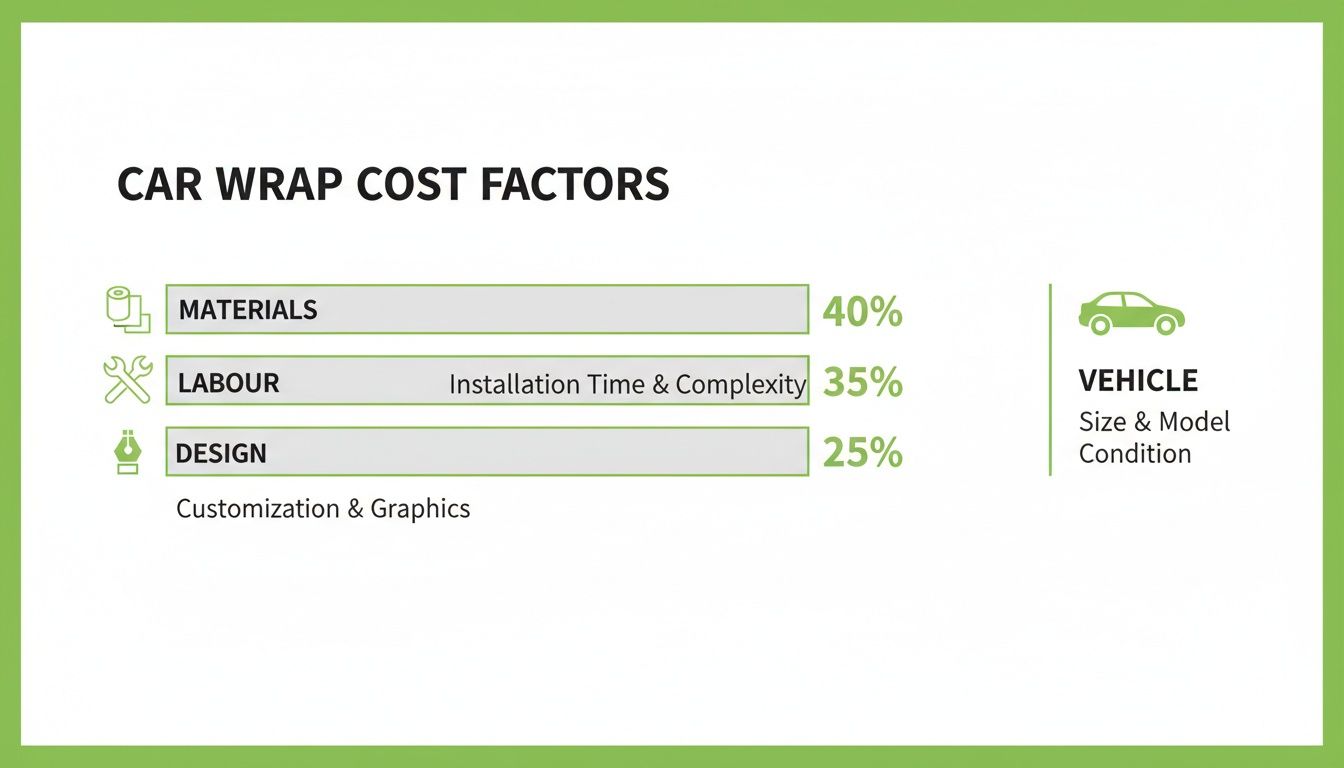
As you can see, labour is almost always the biggest slice of the pie. It's a great reminder that you're not just paying for a sticker; you're investing in the skill and precision of an expert installer who will make it look flawless and last for years.
A Few Examples You Might See On The Road
Let's break this down with a few common situations.
The Local Bakery's Hatchback
Picture a small bakery in Wellington that uses a Suzuki Swift for deliveries. The owner wants some simple, clean branding to get their name out there – nothing over the top, just the logo, phone number, and website on the doors and bonnet. This is the perfect job for a partial wrap.
- Vehicle: Small Hatchback (think Suzuki Swift, Toyota Yaris).
- Coverage: Partial Wrap (just the doors and bonnet).
- Design: Simple, clean printed logo and text.
- Complexity: Low. A Swift has fairly gentle curves, and there isn't much that needs to be taken apart for the job.
Here, the goal is maximum impact for a minimal spend. We're not transforming the whole car, just turning key areas into advertising space. The material cost is low, and the installation is much quicker than a full wrap.
Estimated Cost for this Partial Wrap: NZ$800 – NZ$1,500
This price point makes professional branding incredibly accessible for small businesses. For a relatively small one-off cost, that little delivery car is now a mobile marketing machine.
The Tradie's Workhorse Van
Now, let's head down to Christchurch and think about a plumber with a big Toyota Hiace van. This vehicle isn't just for transport; it's a mobile billboard. It needs to showcase the business from every angle with full-colour branding, a list of services, and clear contact details covering the entire vehicle.
- Vehicle: Large Commercial Van (like a Toyota Hiace or Ford Transit).
- Coverage: Full Wrap.
- Design: Custom-printed graphics covering the whole vehicle.
- Complexity: Moderate. Vans have huge, flat sides that are great for wrapping, but they also have deep channels and awkward recesses that demand a skilled hand to get right.
A job like this needs a lot more vinyl, plus specialised printing and protective lamination. The labour hours shoot up, too, thanks to the sheer surface area and the precision needed to line up the graphics perfectly across all the different panels.
The High-End Sales Team SUV
Finally, imagine a real estate agency in Auckland wanting to give its sales fleet of Kia Sorentos a premium, uniform look. They're not after printed graphics, but a sophisticated colour change using a specialty film—maybe a slick satin blue or a deep metallic grey to project a high-end image.
- Vehicle: Premium SUV.
- Coverage: Full Colour-Change Wrap.
- Material: High-end specialty vinyl (e.g., Satin, Chrome, or Metallic finish).
- Complexity: High. Modern SUVs are full of tricky curves, aggressive bumper designs, spoilers, and textured plastic trim. Achieving a finish that looks like custom paint requires immense attention to detail and a lot of careful disassembly and reassembly.
For a project of this calibre, the premium material is a major cost driver. But so is the painstaking labour required to make a complex, high-value vehicle look like it just rolled out of a custom paint shop. Every sensor, badge, and piece of trim has to be handled with absolute care.
Estimated Cost for this Full Wrap: NZ$4,500 – NZ$7,000+
This is a serious investment, but it directly reflects the cost of the premium materials and the expert craftsmanship needed to execute a flawless, showroom-quality finish that screams success.
Estimated Wrap Costs By Vehicle And Coverage In NZ
To give you a clearer picture at a glance, we've put together a table with some typical price ranges you can expect here in New Zealand. These figures show how costs scale with vehicle size and the level of coverage you choose.
| Vehicle Type | Estimated Full Wrap Cost (NZD) | Estimated Partial Wrap Cost (NZD) | Ideal For |
|---|---|---|---|
| Hatchback / Small Car | $2,800 – $4,500 | $800 – $1,500 | Start-ups, personal customisation, local services |
| Sedan / Coupe | $3,500 – $5,500 | $1,000 – $2,000 | Personal colour change, corporate vehicles |
| Ute / SUV | $4,000 – $6,500 | $1,200 – $2,500 | Tradies, lifestyle brands, sales teams |
| Commercial Van | $4,500 – $8,000+ | $1,500 – $3,000 | Trades, delivery services, mobile businesses |
| Truck / Large Vehicle | $6,000 – $12,000+ | $2,500 – $5,000 | Logistics, large-scale advertising, fleet branding |
These numbers are a solid guide, but remember that the final cost will always depend on the specifics of your project—the exact material, the complexity of your design, and the condition of your vehicle. For a more detailed look at what goes into these figures, you can explore NZ vehicle wrapping prices right here on our blog.
How Premium Finishes Shape Your Final Price
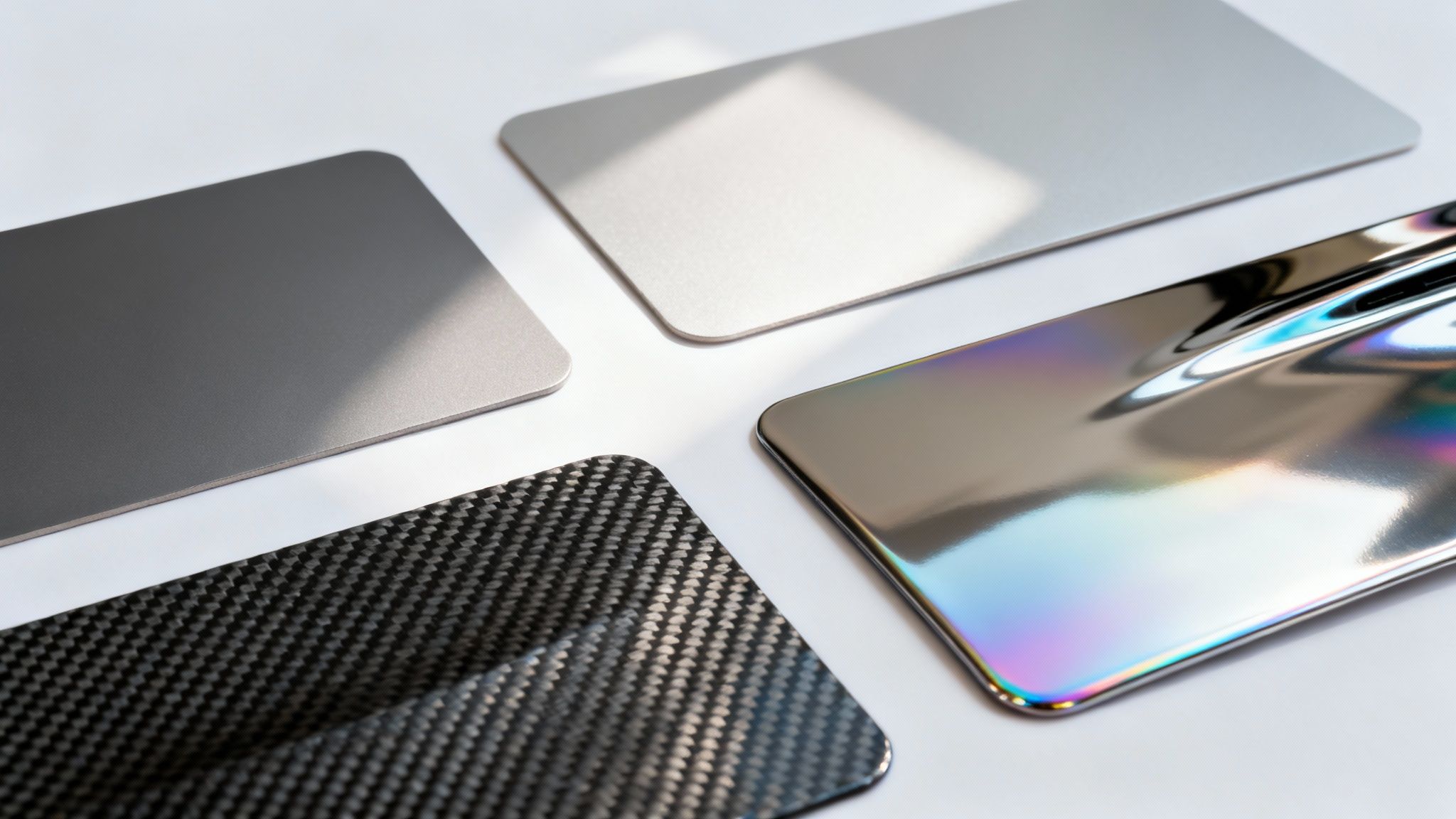
The single biggest factor driving your final car wrap cost is the material you choose. Think of it like cooking: you can make a great meal with standard ingredients, but it’s the premium, exotic stuff that makes it truly memorable. The world of vinyl wraps works exactly the same way.
First things first, any professional installer worth their salt will only use high-quality cast vinyl. Cheaper films, known as calendared vinyl, just don't cut it. Cast vinyl starts as a liquid poured into a mould, which creates a super thin, flexible, and stable material. This is what allows it to hug your car’s every curve and contour perfectly, without shrinking or peeling back over time. It’s the secret to that flawless, paint-like finish that lasts.
That commitment to quality is our starting point. From there, the price starts to climb as you get into the more exciting and specialised finishes, each with its own unique production process and installation quirks.
Standard Versus Speciality Finishes
The most common and budget-friendly options are the standard solid colours. These films can completely transform your vehicle and come in a huge range of shades across three main finishes.
- Gloss: This is the classic, high-shine look of a brand-new factory paint job. It’s a timeless choice that reflects light beautifully and is pretty easy to look after.
- Satin: If you're after a modern, sophisticated look, satin is perfect. It gives off a smooth, low-sheen lustre that diffuses light instead of reflecting it, giving your car’s lines a soft, elegant look.
- Matte: For a truly bold, non-reflective finish, you can’t go past matte. It completely absorbs light, creating a stealthy and aggressive aesthetic that really makes a statement.
These standard finishes are fantastic, but the real price jump happens when you step into the world of premium and speciality films. These materials cost more to produce because of their complex, multi-layered construction and the unique pigments needed to create their wild effects.
The World of Premium Vinyl
Speciality films are where you can let your car’s personality run wild, but their unique properties demand a much higher level of skill to install, which naturally gets factored into the cost.
Textured Films (Carbon Fibre and Brushed Metal)
These films don't just change the colour; they add actual physical texture. Carbon fibre wrap perfectly mimics the woven pattern of the real deal, while brushed metal finishes have fine lines that look just like anodised aluminium. They are often thicker and a bit less forgiving, so they need a very careful, meticulous hand to get right.
Colour-Shift and Chrome Finishes
Sitting at the very top of vinyl technology are the real showstoppers.
- Colour-Shift (Chameleon): These incredible films are made with multiple layers that bend light differently, causing the colour to magically shift and change depending on what angle you're looking from.
- Chrome: Nailing a perfect, mirror-like finish is one of the toughest jobs in the wrapping game. Chrome films are extremely sensitive to heat and stretching, and even the tiniest mistake during application will stick out like a sore thumb.
The complexity of these premium materials means they don’t just cost more per metre—they also take a lot more time and expertise to install. An installer has to work slowly and deliberately to avoid stretching, creasing, or damaging the delicate surface, which directly impacts the final project cost.
This is especially true here in New Zealand, where putting high-end finishes on luxury cars pushes the cost into a higher bracket. For instance, installation charges can vary wildly based on how difficult the film is to work with. For exotic cars with chrome or colour-shift wraps, total project costs can easily reach NZ$10,000 to NZ$18,000. You can dive deeper into how different factors influence New Zealand vehicle wrap pricing in our detailed guide.
Ultimately, choosing a premium finish is an investment in making your vehicle truly one-of-a-kind.
Turning Your Vehicle Wrap Into a Marketing Powerhouse
So far, we've spent a lot of time breaking down the initial car wrap cost. But now it’s time for a shift in perspective. A professionally branded vehicle isn’t just an expense; it’s a hard-working marketing asset that pays for itself over and over again. When you start thinking of it that way, the return on your investment becomes crystal clear.
Compare it to traditional advertising. A radio spot or a newspaper ad is like renting space—the moment you stop paying, your visibility disappears. A vehicle wrap is completely different. You make one upfront investment, and that asset works for you around the clock, day in and day out, for years.
Your car or van is suddenly a mobile billboard, generating thousands of eyeballs every single day just by driving through the neighbourhoods you service. It's advertising you actually own.
Calculating Your Return on Investment
The best way to measure the impact is to look at the Cost Per Impression (CPI). This simple metric tells you how much you're paying for every set of eyes that sees your brand. While traditional ads often come with a surprisingly high CPI, vehicle wraps deliver one of the lowest and most efficient rates in the marketing world.
A single wrapped vehicle can generate between 30,000 to 70,000 impressions every day, depending on where and how much you drive. When you spread that initial car wrap cost over a typical 5-to-7-year lifespan, the daily cost is tiny. It’s an incredibly powerful marketing tool.
This isn't just about fleeting glances, either. That constant visibility builds something far more valuable in the long run: genuine brand recognition and trust within your local community.
More Than Just Advertising
A quality wrap does more than just show off your logo. It fundamentally changes how potential customers see your business. Think about it: when you pull up to a client's home in a professionally branded vehicle, you immediately project an image of success, reliability, and credibility.
That instant visual authority can be the single thing that makes a customer choose you over a competitor who arrives in an unmarked van. It’s a silent signal that you’re established, you take your work seriously, and you invest in your business's quality. To really get the most from this, it helps to know how the wrap fits into your bigger picture, especially when it comes to understanding brand vs. performance marketing.
Maximising Your Mobile Billboard
Once your vehicle is wrapped, don't just let it sit there. You need to actively use this new marketing tool to squeeze every drop of value out of it. Here are a few simple ideas to get you started:
- Create Social Media Buzz: Your newly wrapped vehicle is prime content. Snap high-quality photos and videos of it "in the wild" or parked at a job site to share online. You could even run a "spot our van" competition to get locals engaged.
- Park with Purpose: When you're on a job or just grabbing lunch, start thinking like a marketer. Always try to park in a high-visibility spot where your vehicle gets maximum exposure to passing cars and pedestrians.
- Be Seen at Events: Got a local trade show, community fair, or market coming up? Take your wrapped vehicle! It serves as an instant, eye-catching backdrop for your booth and naturally draws people in.
By treating your wrap as a core part of your marketing strategy, you transform a one-off cost into a lead-generating machine that consistently builds your brand and grows your business.
Finding The Right Installer For Your Project
The material and design you choose are just part of the puzzle. The real magic—or disaster—happens in the installation bay. Honestly, the final quality of your wrap rests entirely on the skill of the person applying it. Their experience is the single biggest factor influencing not just the car wrap cost, but how long the wrap lasts and how good it looks up close.
It’s always tempting to jump on the cheapest quote you can find, but trust me, that's a path you don't want to go down. A surprisingly low price is often a dead giveaway that corners are being cut. They might be using cheap, off-brand vinyl, rushing the all-important prep work, or simply not have the experience to tackle tricky curves and bumpers. Before you know it, you're dealing with bubbles, peeling edges, and a finish that screams "amateur," forcing you to pay for a whole new wrap way too soon.
Key Questions To Ask Your Installer
To make sure you’re getting what you pay for, you need to do a bit of homework on your potential installer. A true pro will be upfront, transparent, and happy to talk you through their process. Getting a sense of what goes into starting a detailing business can also give you a better idea of the standards a quality shop should be meeting.
Before you hand over your keys, here are a few critical questions you should always ask:
- What vinyl brands do you use? A quality shop will be proud to tell you they work with industry leaders like 3M, Avery Dennison, KPMF, or Oracal. If they’re hesitant to name names or mention a brand you’ve never heard of, that’s a massive red flag.
- Can I see your portfolio of recent work? Don't just glance at it—really look. Ask for examples of vehicles similar to yours and zoom in on the details. Are the edges clean? Are the seams invisible? How did they handle complex areas like mirrors and door handles?
- What does your warranty cover? Any installer worth their salt will stand by their craftsmanship. Their warranty should cover installation-related issues like bubbling, lifting, or peeling. Get the terms in writing so you know exactly what’s covered and for how long.
An experienced installer isn’t just selling you a product; they are providing a service grounded in craftsmanship. Their expertise ensures every edge is perfectly tucked and every panel is meticulously applied for a durable, paint-like finish that lasts for years.
Your Car Wrap Questions, Answered
It’s smart to have questions before you commit to wrapping your vehicle. After all, it's a significant investment. We get asked a lot of the same things by customers all over New Zealand, so we've put together some straightforward answers to help you make the right call.
How Long Does A Professional Car Wrap Last?
You can expect a professionally installed wrap to last anywhere from 5 to 7 years, especially when using top-tier materials from brands like 3M or Avery Dennison. How it holds up to our unique New Zealand conditions really comes down to how well you look after it.
Getting the most life out of your wrap is all about proper care. To keep it looking fantastic for years, we always tell our clients to:
- Stick to regular hand washing with a gentle, pH-neutral soap.
- Steer clear of automatic car washes—those abrasive brushes can do a lot of damage.
- Park in the shade or a garage whenever you can to protect it from the harsh Kiwi sun.
Can A Vinyl Wrap Damage My Car's Original Paint?
It’s actually the other way around! A quality vinyl wrap acts like a shield for your car's factory paint. It takes the hit from minor scratches, stone chips, bird droppings, and UV rays, which is great for preserving your vehicle's resale value.
And when you're ready for a new look, a professional can remove the wrap cleanly, without leaving behind any sticky mess or damaging the paint underneath. The only time you might run into trouble is if your car has a dodgy respray or the original paint is already chipped or peeling. Wrapping over a poor surface can cause the paint to lift off when the vinyl is removed.
Think of a car wrap as one of the only cosmetic upgrades that's completely reversible. It gives you the freedom to completely change your car's colour or branding without the permanent commitment of paint, keeping that factory finish pristine for when you decide to sell.
Is It Cheaper To Wrap Or Paint A Car?
For most people, yes. A full vinyl wrap is almost always more budget-friendly than a respray of similar quality. A top-notch paint job in New Zealand can easily set you back NZ$6,000 to NZ$10,000, sometimes even more if you want a flawless finish.
In comparison, a premium full wrap on a standard car usually lands in the NZ$3,000 to NZ$6,000 bracket. Besides the lower car wrap cost, you also get access to amazing finishes like carbon fibre, matte, or colour-shift effects that are incredibly expensive—or even impossible—to replicate with paint.
Do I Need To Inform NZTA If I Wrap My Car?
Yes, this one is non-negotiable. If you change the main colour of your car with a wrap, you're legally required to let the Waka Kotahi NZ Transport Agency (NZTA) know. It's a simple step, but a very important one.
You just need to complete a 'Change of details' form (MR16) to get your vehicle's records updated. This makes sure everything is correct for legal and identification purposes. Don't worry, any reputable wrap installer can walk you through this easy process.
Ready to transform your vehicle with a stunning, durable wrap? The team at Soni Design is here to bring your vision to life with expert craftsmanship and premium materials. Contact us today for a personalised quote
Leave a Comment
Stay home & get your daily
needs from our shop
Start You'r Daily Shopping with Nest Mart