
Your cart is currently empty.

A simple brown paper roll is one of the most versatile and cost-effective tools you can have in your business toolkit. It’s a workhorse, doing everything from protecting products in transit to acting as a blank canvas for your branding. But to see it as just wrapping paper is to miss the point entirely; it's a sustainable, durable, and surprisingly customisable solution for retail, e‑commerce, events, and so much more.
Why Brown Paper Is More Than Just Packaging
Let's stop thinking of the brown paper roll as just another stockroom supply. Instead, picture it as your brand's first physical handshake with a customer—the very beginning of their hands-on experience with your product. This humble material has moved well beyond basic protection to become a powerful branding asset.
Its real strength is its versatility. For an e‑commerce store, it’s the heart of the unboxing experience, whether it's crumpled into void fill or used as beautifully rustic gift wrapping. In a busy café or florist shop, it might be a charming, disposable tablecloth or an elegant wrap for a bouquet that perfectly complements an earthy, natural brand aesthetic.
Shifting Perceptions in a Conscious Market
These days, businesses are turning to kraft paper for more than just its practicality. They’re choosing it for the story it tells. At a time when customers are actively looking for brands that reflect their own values, using a recyclable and often recycled material sends a powerful, instant message. It communicates an eco-conscious, authentic identity before you’ve even said a word.
Your choice of packaging material is a direct reflection of your brand's commitment to sustainability. A brown paper roll inherently signals environmental responsibility, which can be a huge point of difference in a crowded market.
This isn’t just about being green; it's a strategic choice that helps build a narrative around your brand that today's consumers really connect with. It suggests a focus on quality, simplicity, and a genuine care for the environment.
A Foundation for Your Brand Experience
This guide is designed to reframe how you see this business essential. We’ll dig into the strategic value packed into every roll, showing you how smart choices in paper specs, creative applications, and custom branding can genuinely elevate your customer experience. You’ll learn exactly how to pick the right roll for your needs and turn it into a memorable part of your brand identity.
At the end of the day, this is about more than just wrapping things. It's about:
- Creating a memorable first impression that delights customers from the moment their package arrives.
- Reinforcing your brand’s values, especially a commitment to sustainability and authentic presentation.
- Improving your operational efficiency with one material that can do many jobs, from shipping to in-store displays.
When you understand its full potential, you unlock a powerful asset that supports your brand's story, protects your products, and helps you connect with customers on a much deeper level. Let's unroll the possibilities.
Making Sense of Brown Paper Rolls
Choosing the right brown paper roll can feel a bit overwhelming with all the technical specs, but it’s actually quite simple once you get the hang of a few key terms. Getting these details right from the start means your packaging will be effective, look great, and won’t break the budget.
Let's dive into what really matters.
Paper Weight (GSM) and Why It's Important
The first thing to get your head around is the paper's weight, measured in GSM (grams per square metre). The best way to think about it is like the fabric of your clothes. A light summer t-shirt feels thin and flexible, while a pair of rugged work jeans is thick and built to last. Brown paper is exactly the same.
A lower GSM, typically around 60-80 GSM, is your t-shirt. It’s light, flexible, and perfect for scrunching up to fill empty space in a shipping box (what we call void fill) or for wrapping items that aren’t too heavy or fragile.
On the other hand, a higher GSM like 100-120 GSM is your pair of sturdy jeans. This paper offers much better strength and tear resistance, making it the ideal choice when you're wrapping heavier products or need a really durable layer of protection.
Virgin Kraft vs. Recycled Paper
Next up is the material itself. You'll generally find two main types of brown paper: virgin Kraft and recycled. Each has its own strengths.
- Virgin Kraft Paper: This is made straight from wood pulp. Because the fibres are long and haven't been processed before, it's incredibly strong and tear-resistant. It also has a clean, smooth finish, which makes it a great option for heavy-duty jobs or when you want your packaging to have a more premium, polished look.
- Recycled Paper: Made from post-consumer waste like old cardboard boxes, this is the go-to for environmentally-conscious businesses. While the fibres are shorter, meaning it can be slightly less tear-proof than virgin Kraft, modern recycling techniques have made it surprisingly tough. It’s more than strong enough for most everyday packaging needs and sends a clear message about your commitment to sustainability.
Deciding between them is usually a balancing act between your strength requirements and your environmental values.
This simple flowchart can help you decide which path to take based on what you need the paper to do.
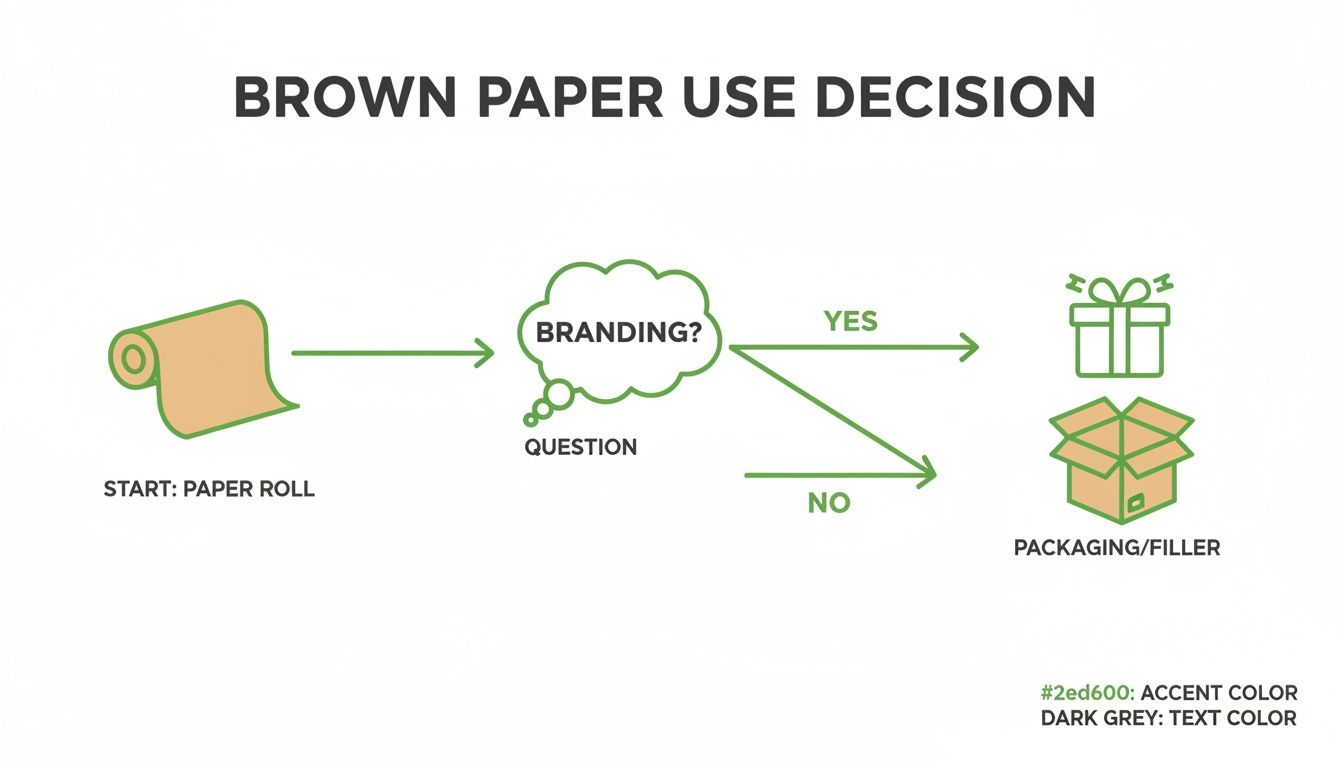
As you can see, the first question is always about its purpose—is it primarily for branding, or is it purely for protection? That one answer can guide all your other choices.
To make things even clearer, here’s a quick reference table to help you match the paper specs to your business needs.
Choosing Your Brown Paper Roll: A Quick Guide
| Paper Specification | What It Means for Your Business | Common Use Cases |
|---|---|---|
| Low GSM (60-80 GSM) | Lightweight, flexible, and cost-effective for general use. | Void fill, wrapping non-fragile items, interleaving between products. |
| High GSM (100-120 GSM) | Strong, durable, and tear-resistant for better protection. | Wrapping heavy or sharp-edged products, outer packaging layers. |
| Virgin Kraft Paper | Maximum strength and a clean, premium appearance. | Heavy-duty shipping, branded packaging, wrapping for high-value goods. |
| Recycled Paper | Eco-friendly option with good all-round performance. | E-commerce shipping, retail wrapping, general protective packaging. |
| Narrow Roll (e.g., 300mm) | Easy to handle for smaller items, reduces waste. | Wrapping jewellery, cosmetics, books, small retail goods. |
| Wide Roll (e.g., 900mm+) | Covers large surfaces quickly and efficiently. | Protecting furniture, wrapping large art pieces, covering floors/tables. |
This table should give you a solid starting point, making it easier to pinpoint exactly what you need without getting lost in the details.
Getting the Roll Size Right for Your Business
Finally, let's talk about the physical size of the roll—its width and length. This might seem like a no-brainer, but thinking strategically here can save you a surprising amount of time, money, and material.
If you run a small jewellery shop, wrestling with a massive, wide roll is just impractical. A much narrower roll, say around 300mm, is far easier to manage for wrapping little boxes. But if you’re a furniture mover, you'll need a wide roll—900mm or more—to quickly and effectively cover a dining table or protect a couch from scuffs.
Pro Tip: Don't just guess or buy a "standard" size. Take a moment to measure your most popular products. Choosing a roll width that’s just right will cut down on trimming and waste, and those little savings on material and labour really add up.
The roll's length is all about operational efficiency. Longer rolls mean you’re not stopping to change them out as often, which is a huge plus in a busy environment like an e-commerce warehouse.
Here in New Zealand, the paper industry has a strong focus on sustainability. The Mataura Station, for example, is a key facility that churns out around 1,523,000 tonnes of paper products a year. It produces a grade called Sandow made from 100% recycled cartons railed in from all over the country. The plant's machine can produce 2.7 tonnes of paper an hour, with each giant roll taking just 40 minutes to make. It's a great example of efficient, modern paper manufacturing right here at home. If you're interested, you can learn more about New Zealand's paper production to see how the local industry works.
Creative Applications Across Different Industries
It's easy to dismiss a roll of brown paper as just a packaging supply, but that's selling it short. Think of it more as a blank canvas—a versatile tool that savvy businesses in almost any industry can adapt to their needs. Its real strength is its beautiful simplicity.
From a busy e-commerce warehouse to a quiet local café, this humble material solves practical problems and elevates a brand's look and feel in surprising ways. The magic happens when you look past the obvious. It’s not just a protective layer; it's an opportunity for connection, efficiency, and a bit of charm. Let's look at how a simple brown paper roll is put to work across different sectors.
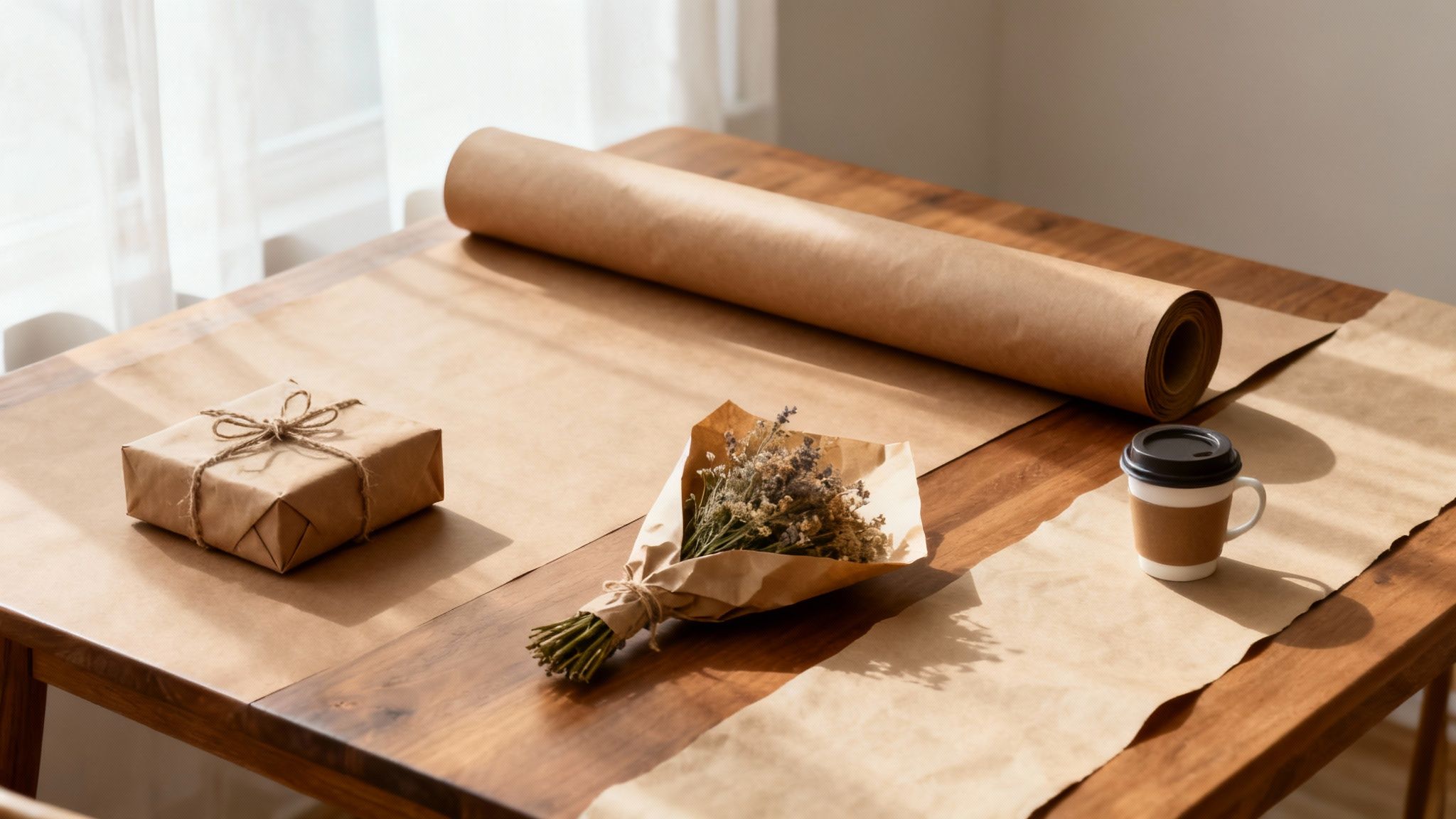
E-commerce and Retail: An Unforgettable Unboxing
For online businesses, the customer's first physical interaction with your brand is the unboxing experience. This is your moment to make an impression, and a brown paper roll is a key player. Using it as a rustic, eco-conscious gift wrap immediately sets a tone of authenticity and care.
Beyond just wrapping, it’s also fantastic void fill. Instead of plastic air pillows, crumpled kraft paper provides sturdy cushioning that protects your products while aligning with sustainable values. It's a small change, but a meaningful one. Considering that 67% of consumers say they prefer products in paper or cardboard packaging, it's a switch that resonates with your customers.
In a brick-and-mortar retail setting, the uses are just as creative:
- Point-of-Sale Wrapping: A simple custom stamp or branded sticker on brown paper turns a functional wrap into a clever marketing tool.
- In-Store Displays: Use it as a textured backdrop for window displays or to create simple, stylish risers for featured products.
- Boutique Shopping Bags: A heavier GSM paper can be transformed into chic, minimalist carry bags that feel premium.
Hospitality and Events: Crafting an Atmosphere
In the hospitality world, atmosphere is everything. Whether you run a café or an event venue, a brown paper roll is a surprisingly cost-effective way to build a warm, inviting, and customisable environment.
Picture a café that rolls out a fresh sheet of paper as a disposable tablecloth for each new table. It's clean, hygienic, and gives kids (and adults!) a place to doodle, instantly making the dining experience more relaxed and personal. It’s a simple touch that’s both practical and charming.
For event planners, the possibilities are even bigger. Custom, hand-painted banners made from wide kraft paper rolls are a hugely popular and affordable way to create personalised signage for weddings, birthdays, and corporate events. They have a rustic, handmade feel that’s hard to replicate. You can even cut a roll into long table runners to tie the whole venue's look together.
A roll of brown paper is the ultimate chameleon. For a florist, it’s a rustic bouquet wrap. For a real estate agent, it’s a temporary sign cover. For a moving company, it’s essential furniture protection. Its value is defined by the problem you need to solve.
Florists and Artisans: A Touch of Natural Elegance
When your business is built on natural beauty, like a florist or an artisan craft maker, your packaging is an extension of the product itself. Brown paper offers the perfect understated, earthy backdrop that lets your work take centre stage.
A crisp sheet of kraft paper wrapped around a floral bouquet and tied with twine is a timeless look. It communicates a focus on what's inside—fresh, beautiful flowers—without the distraction of glossy plastic. Likewise, artisans use it to wrap handmade soaps, pottery, or textiles, reinforcing a brand story built on authenticity and craftsmanship.
Practical Solutions for Service Industries
The usefulness of a brown paper roll doesn't stop at customer-facing aesthetics; it’s a workhorse in purely functional roles, too. Service-based businesses have long relied on it for protection and efficiency.
- Moving and Storage: Professional movers use wide rolls of heavy-duty kraft paper to wrap wooden furniture, protecting surfaces from scratches and knocks during transit.
- Painters and Decorators: Contractor-grade paper is the industry standard for covering floors and furniture to shield them from paint splatters and dust.
- Real Estate: Agents often use brown paper to cover the "SOLD" part of a sign before a sale goes unconditional. It builds anticipation while keeping the sign clean and professional.
Each of these examples shows how one simple, affordable product can be adapted to solve a huge range of business challenges. The key is to see the brown paper roll not just for what it is, but for what it can become—a tablecloth, a banner, a protective shield, or a beautiful piece of your brand story.
Turning Your Packaging Into a Marketing Asset
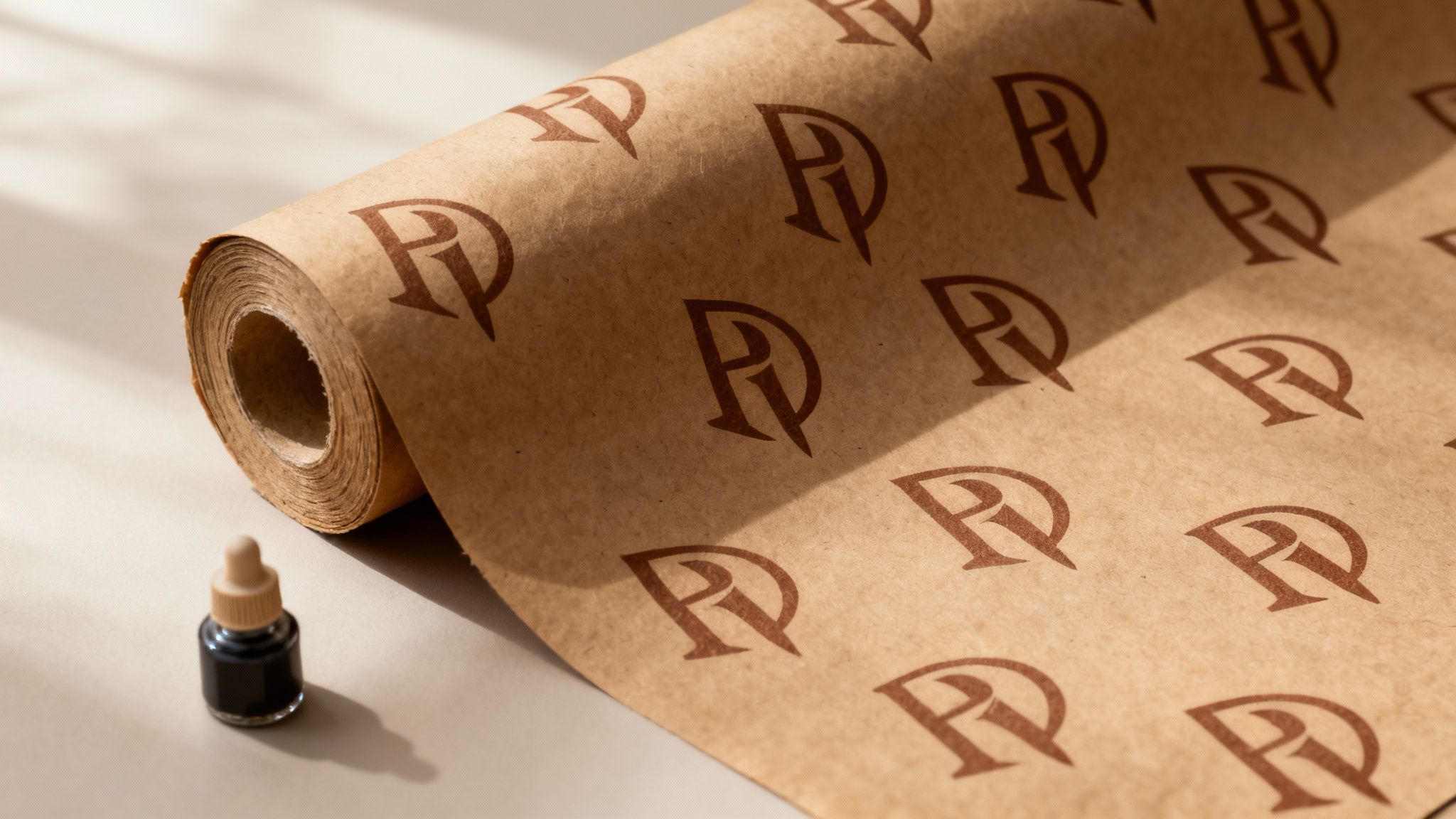
A plain brown paper roll is a workhorse, no doubt about it. It does its job, protecting your products without any fuss. But a custom-printed roll? That's a whole different animal. Suddenly, your packaging is a walking billboard, a brand ambassador, and your first real chance to turn a simple delivery into a memorable experience. This is the moment your packaging stops being a line item on a spreadsheet and starts working for you as a powerful marketing asset.
Think about it: every single parcel you send is a touchpoint with your customer. By printing your logo, a quick thank you, or a unique brand pattern onto that paper, you transform that touchpoint into a conversation. It’s a subtle but incredibly effective way to cement your brand identity and create a professional, cohesive look that builds trust and excitement from the second the package arrives.
Choosing the Right Printing Method
When it comes to customising your brown paper rolls, not all printing is created equal. The best choice really hangs on your design’s complexity, how much you need, and your budget. Here at SONI DESIGN, we can walk you through the options to find the perfect match for what you have in mind.
You'll mainly come across two methods: digital and offset printing. A good way to think about it is like painting a single, detailed artwork versus printing thousands of identical flyers for an event.
- Digital Printing: This is your go-to for smaller runs or designs with lots of fine detail and multiple colours. Because it prints straight from a digital file, there are almost no setup costs. This makes it a smart, cost-effective choice for startups or for trying out a new packaging design without a huge commitment.
- Offset Printing: For large, consistent orders, offset is the industry standard. It uses custom plates to transfer ink onto the paper, a process that gets incredibly efficient and affordable as the volume goes up. The initial setup is a bit more involved, but the cost per unit plummets on big jobs, making it ideal for high-volume businesses.
The Importance of Ink and Design
The ink you pick is just as crucial as the printing method itself. It’s another chance to make sure your packaging reflects your brand's values. These days, many businesses are choosing eco-friendly, water-based inks. Not only are they better for the planet, but they also ensure your custom-printed paper remains fully recyclable and compostable—a huge plus for environmentally-conscious customers.
Now, designing for a natural kraft background is a bit different from working with a stark white canvas. That warm, earthy tone of the paper will influence how colours look.
The secret to great design on kraft paper is contrast. Bold, simple designs using dark colours like black or deep navy, or even a sharp, clean white, really pop against the natural brown. This makes sure your branding is clear, easy to read, and has real impact.
Here are a few design ideas to make your branding stand out:
- Simple Logo Repeats: A repeating pattern of your logo creates a sophisticated, high-end feel without being too loud.
- Brand Slogans or Hashtags: Why not print your tagline or a social media hashtag? It’s a great way to encourage engagement and get people sharing photos of their orders.
- Illustrative Patterns: Unique illustrations that align with your brand can add a tonne of personality and charm, making your packaging truly one-of-a-kind.
Making Every Parcel a Brand Ambassador
At the end of the day, custom printing takes your brown paper roll from being a simple protective layer and makes it an active part of your marketing plan. It elevates the entire customer experience, kicking things off long before they’ve even seen the product inside.
Just follow the journey of a package. It's handled by couriers, spotted by neighbours, and finally, opened with anticipation by your customer. A branded package is working hard for you every step of the way, boosting brand recognition and making your business look more polished and professional. It shows an attention to detail that people really notice and appreciate.
By investing in customisation, you’re not just wrapping a product; you’re wrapping it in your brand’s story. It's a strategic move that pays off in customer loyalty, brand recall, and the kind of fantastic unboxing experience that gets shared. Let us at SONI DESIGN help you turn every parcel you send into a powerful statement.
Navigating Sustainability and Recycling in New Zealand
In a world where customers increasingly vote with their wallets, your packaging is so much more than a box or a wrapper. It’s a statement about what your brand stands for. Choosing something as simple as a brown paper roll sends a powerful, visible message about your commitment to sustainability—a message that really connects with environmentally-aware Kiwis.
This single choice shows you’re thinking about the entire journey, from your storeroom right through to your customer's recycling bin. It lines your business up with a global shift towards smarter, more responsible consumption and helps you stand out. As we all get more serious about sustainable choices, it’s vital to keep up with global trends and local regulations concerning single-use plastics, as these are shaping the future of packaging.
Supporting Local and Choosing Recycled
When you opt for a brown paper roll, particularly one made with a high recycled content, the benefits ripple outwards. If you can source that paper from a New Zealand producer, you're also putting your money directly back into our own manufacturing sector.
While New Zealand's paper industry has seen its share of challenges, it’s still a significant part of our economy, pulling in an estimated $1.9 billion in revenue as of 2025. By choosing Kiwi-made, you help keep locals in jobs and make our national supply chain that much stronger. You can find more details about the NZ paper industry's economic impact on ibisworld.com.
This is a great story to share with your customers. Letting them know your packaging is made from recycled materials or sourced right here in NZ gives real weight to your green credentials.
Clear Guidelines for Disposal
To close the sustainability loop, it’s essential to show your customers exactly how to dispose of the packaging correctly. The good news is that with brown kraft paper, the process here in New Zealand couldn’t be easier.
Recycling Instructions for Your Customers:
- Remove All Extras: Ask customers to peel off any plastic tape, large shipping labels, or non-paper stickers first.
- Keep It Clean: Only clean paper can be recycled. If it’s heavily soaked with food, grease, or oil, it’s better off in the compost or general waste.
- Kerbside Convenience: Clean, dry brown paper can go straight into the standard household recycling bins found all over the country.
Communicating these simple steps on your website, on a small packing slip, or even printed on the paper itself empowers your customers. It reinforces your brand as one that truly cares about its impact.
Composting Kraft Paper:
For a brilliant circular solution, plain, uncoated brown kraft paper is fantastic for home compost bins. It breaks down naturally, adding much-needed carbon to the soil.
- Shred It: Tearing the paper into smaller strips helps it decompose much faster.
- Balance is Key: Mix the paper (a "brown" carbon material) with "green" nitrogen materials like veggie scraps and lawn clippings.
- Keep it Moist: A happy compost pile is a damp one. This helps all the microorganisms get to work.
By providing this clear, practical advice, you take the guesswork out of disposal. This not only ensures your packaging is handled the right way but also builds trust, showing customers you’re a genuine partner in protecting our beautiful Aotearoa.
Smart Tips for Ordering, Storage, and Daily Use
Picking out the perfect brown paper roll is one thing, but getting the most out of it day-to-day is where the real value comes in. A little bit of planning around how you order, store, and handle your paper can smooth out your workflow, cut down on waste, and make sure you’re never caught short.
First up, let’s figure out how much you actually need. Running out of paper mid-service is a headache, but having stacks of rolls gathering dust ties up cash and eats up precious storeroom space. The best way to get it right is to simply track how much you use each week for about a month. This gives you a solid baseline to work from, letting you set up a regular ordering schedule instead of just guessing.
Best Practices for Storing Your Rolls
Once your paper arrives, where and how you store it really matters. Paper can be surprisingly fussy about its environment. Chuck it in a damp corner, and you’ll end up with warped, weakened stock that’s basically useless.
To protect your paper and your investment, stick to a few simple rules:
- Get It Off the Floor: Never leave your rolls sitting directly on a concrete floor. Pop them on a pallet or a low shelf to keep them safe from ground moisture and dirt.
- Keep It Cool and Dry: Find a spot that’s cool, dry, and away from direct sunlight. Over time, UV rays can make the paper brittle and prone to tearing.
- Leave It Wrapped: Don’t be tempted to rip off the protective wrapping until you’re ready to load the roll onto a dispenser. It’s an extra layer of defence against dust and humidity.
Efficient Handling and Dispensing
When it comes to daily use, having the right setup is crucial for efficiency and safety. A good quality, securely mounted dispenser isn't just a nice-to-have; it's a must. It gives you a clean, straight tear every single time, which means less waste and no more frustrating jagged edges.
A well-organised dispensing station is the heart of an efficient packaging workflow. It helps your team work faster and safer, turning a simple roll of paper into a seamless part of your operation.
The best dispenser really depends on your space. If you’re in a high-volume spot like an e-commerce warehouse, a horizontal cutter mounted right onto the packing bench is a game-changer. For a retail shop or a café where every centimetre counts, a wall-mounted dispenser keeps the paper handy but neatly out of the way. Investing in the right setup quickly pays for itself in time saved and frustration avoided.
Common Questions About Brown Paper Rolls
Even a product as straightforward as a brown paper roll can spark a few questions. We find that getting clear, simple answers helps our customers make smarter buying decisions, ensuring they get the perfect paper for the job without any guesswork.
Here are some of the most common queries we hear from businesses, answered with practical insights to help you get the most out of your rolls.
Is Brown Kraft Paper Recyclable in New Zealand?
Yes, absolutely. In New Zealand, plain brown kraft paper is both recyclable and compostable, which is fantastic news for any business focused on sustainability. As long as it isn’t heavily contaminated with things like food waste, grease, or plastic tape, it can go straight into standard kerbside recycling bins across the country.
At SONI DESIGN, we use eco-friendly, water-based inks for all our custom printing. This means even our branded paper stays fully recyclable, so you and your customers can dispose of it responsibly. It’s a simple way we help maintain the paper’s great environmental credentials from our workshop to its final destination.
What GSM Should I Choose for Shipping Products?
The right GSM (grams per square metre) really comes down to what you're sending. Think of it like choosing the right tool for the job—you wouldn't use a sledgehammer to hang a picture frame.
- Lighter Items: For general void fill or wrapping non-fragile goods like clothing and books, a lighter 60-80 GSM roll is a great, cost-effective choice. It gets the job done perfectly.
- Heavier or Fragile Goods: If you’re shipping heavier products, items with sharp corners, or fragile pieces that need a bit more cushioning, we strongly recommend a thicker paper. Something in the 100-120 GSM range offers much better tear resistance and protection.
If you’re still on the fence, just give us a bell. Our team can offer advice based on your specific products to help you find that perfect match.
What Is the Minimum Order for Custom Printing?
We’ve set up our minimum order quantities for custom-printed brown paper rolls to be accessible for everyone, from small startups to large-scale operations. The exact minimum can vary a bit depending on the printing method and how complex your design is.
The easiest way to find out is to get in touch with our team. We can have a chat about your branding goals, walk you through the options, and figure out a cost-effective solution that fits your needs and budget.
How Should I Store Large Paper Rolls?
Good storage is key to protecting your investment. Storing your rolls correctly prevents waste from moisture damage, dust, and warping, ensuring every metre of paper is ready to use when you need it.
We always recommend storing your rolls horizontally on a sturdy rack or pallet—anything to keep them off the floor. This simple step prevents moisture from seeping in and stops flat spots from developing over time. Keep them in a cool, dry spot away from direct sunlight, as too much UV exposure can make the paper brittle. And for best results, just leave the roll in its original protective wrapping until you're ready to use it.
For more general questions about packaging products and services, you might find some useful information in Afida's frequently asked questions.
Ready to turn your packaging from a simple necessity into a powerful branding tool? The team at SONI DESIGN is here to help you create custom-printed brown paper rolls that tell your unique story. Explore our design and printing services today. https://www.sonidesign.co.nz
Leave a Comment
Stay home & get your daily
needs from our shop
Start You'r Daily Shopping with Nest Mart