
Your cart is currently empty.

In a world overflowing with screens and digital noise, a beautifully printed piece has a rare power. It can cut through the clutter, connect with someone on a physical level, and leave a lasting impression.
For anyone involved in creating these tangible pieces—designers, marketers, business owners—the right books on printing are an indispensable bridge between a brilliant idea and a real-world object. These aren't just textbooks; they're guides that translate technical jargon into practical, usable knowledge.
Your Guide to Mastering Print Through Books
This guide is all about pointing you to the best books that will help you build your print expertise, step by step. Getting a real handle on the language of print is a game-changer. It’s what separates a designer who gets exactly what they want from one who's constantly disappointed, or a business owner who makes smart investments from one who overspends on the wrong process.
We’ll dive into the core printing methods—offset, digital, and screen printing—and unpack the must-read books that make sense of it all. The goal here isn't just to learn the how but to truly grasp the why. This is the kind of knowledge that empowers you to:
- Talk to printers on their level and collaborate effectively.
- Make confident choices about paper stock, inks, and finishes.
- Steer your projects to a flawless final product.
Even as our lives become more digital, understanding the enduring relevance of physical print is more important than ever.
The real aim is to shift your mindset from just making a design file to thinking like a print professional. That insight gives you far more creative freedom and leads to much better results, turning potential headaches into smooth, successful projects.
Understanding the Core Printing Methods
Before we dive into the best books on printing, let's get our bearings. It's crucial to understand the foundational methods these books cover. Think of the different printing processes like tools in a workshop; you wouldn’t use a sledgehammer to hang a picture frame, would you? Each method is built for a specific job, perfectly balancing cost, quality, and volume to get the best result.
The three pillars of the industry are offset, digital, and screen printing. Getting a solid handle on what makes them different is the first step toward making smart decisions on any project, whether it’s a batch of business cards or a massive billboard.
The Powerhouse: Offset Lithography
Offset printing is the traditional workhorse, the tried-and-true assembly line of the print world. It’s a bit of an indirect process: ink is transferred from a custom metal plate to a rubber blanket, and only then does it meet the paper. This two-step dance results in exceptionally sharp, consistent images and is incredibly efficient once you're printing in large quantities.
Imagine you're making a master stamp for a design. The initial setup to create that perfect stamp takes time and money. But once it's done, you can churn out thousands of identical, high-quality impressions very quickly and for pennies apiece. That's the magic of offset.
It’s the gold standard for:
- High-volume projects like magazines, catalogues, and books.
- Jobs that need precise colour matching using specialised Pantone inks.
- Any situation where the cost per unit absolutely has to be as low as possible for big runs.
The Agile Specialist: Digital Printing
Digital printing is the modern, on-demand expert. It works pretty much like your home office printer but on a much more sophisticated and powerful scale, taking a file directly from a computer and printing it. There are no plates to make, which makes the setup incredibly fast and affordable for smaller jobs.
This is your go-to for speed and flexibility. If offset is a mass-production factory, think of digital as a boutique workshop that can create personalised items almost instantly. It’s perfect when you need something in a hurry or want every single print to be unique—a powerful technique known as variable data printing.
The Artisan: Screen Printing
Screen printing is the hands-on artisan of the group. It's a tactile process that involves pushing ink through a stencilled mesh screen directly onto a surface. This method lays down thick, vibrant layers of ink, creating designs that are incredibly bold and durable.
It’s the ideal choice when you’re not printing on paper. Think fabric, wood, or even metal. The result is a high-impact finish you can often feel with your fingertips, which is why it's so popular for t-shirts, gig posters, and unique promotional products.
To help you choose the right method for your needs, here's a quick side-by-side look.
Printing Methods at a Glance
This table breaks down the key differences to help you decide which process is the best fit for your next project.
| Method | Best For | Cost Profile | Typical Projects |
|---|---|---|---|
| Offset | High-volume runs (1,000+ pieces) and precise colour accuracy. | High initial setup cost, but very low cost per piece on large runs. | Magazines, books, brochures, high-volume marketing materials. |
| Digital | Short runs, quick turnarounds, and personalised prints. | No setup cost, but a higher, flat cost per piece. | Business cards, flyers, invitations, direct mail with variable data. |
| Screen Printing | Vibrant, durable designs on a wide variety of materials. | Moderate setup cost; cost-effective for medium runs. | T-shirts, posters, tote bags, promotional items, signage. |
Each method has its place, and knowing their strengths is the key to producing professional, cost-effective work.
This simple flowchart can help you visualise how your own goals point toward the right kind of printing knowledge and, ultimately, the right book.
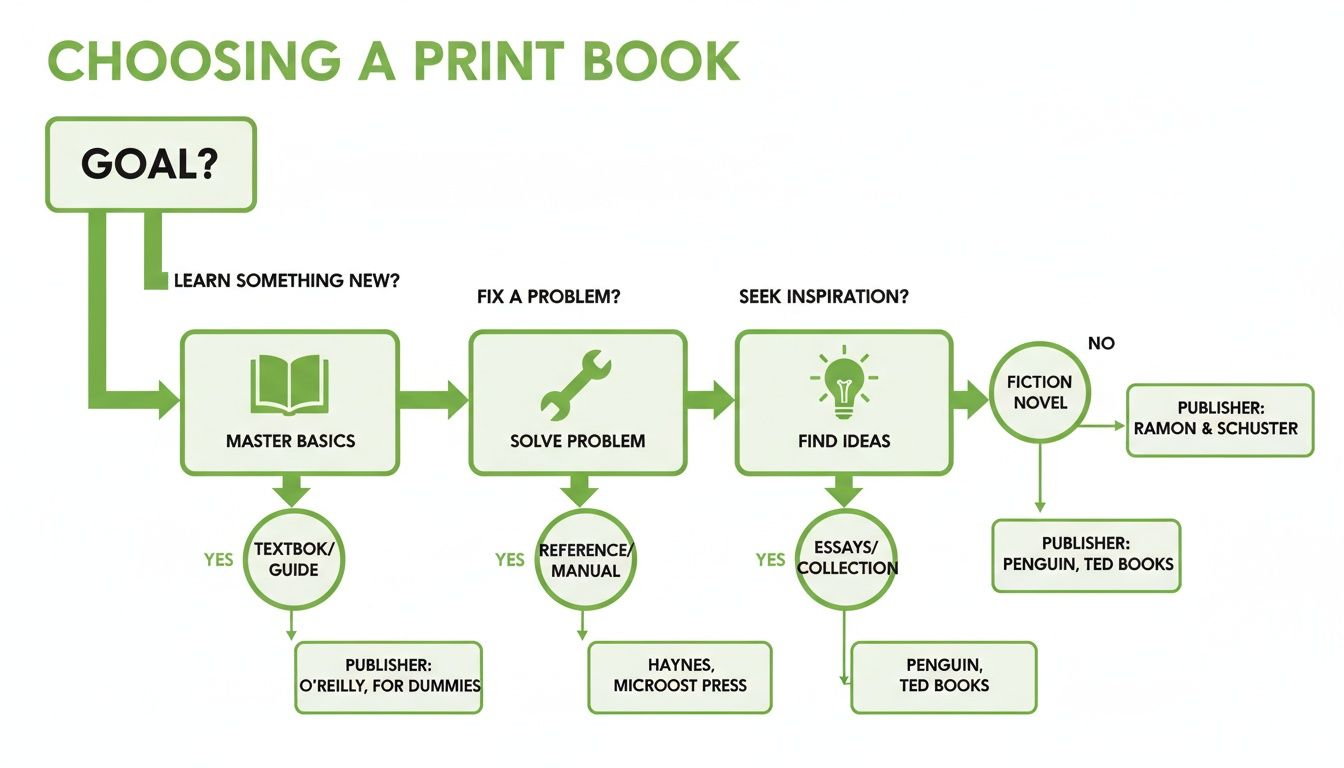
By getting clear on whether you want to master the basics, solve a specific problem, or just hunt for new ideas, you can zero in on the resources that will actually help you.
Essential Books on Offset Lithography
If you’ve ever picked up a magazine, a glossy catalogue, or even a nicely printed box, you’ve likely held the product of offset lithography. It’s the undisputed workhorse of the commercial print world, the engine behind the vast majority of high-volume materials we interact with every single day. For anyone serious about print, getting to grips with offset isn't just an option—it’s essential. And the right books on printing are your best starting point for mastering this powerful process.
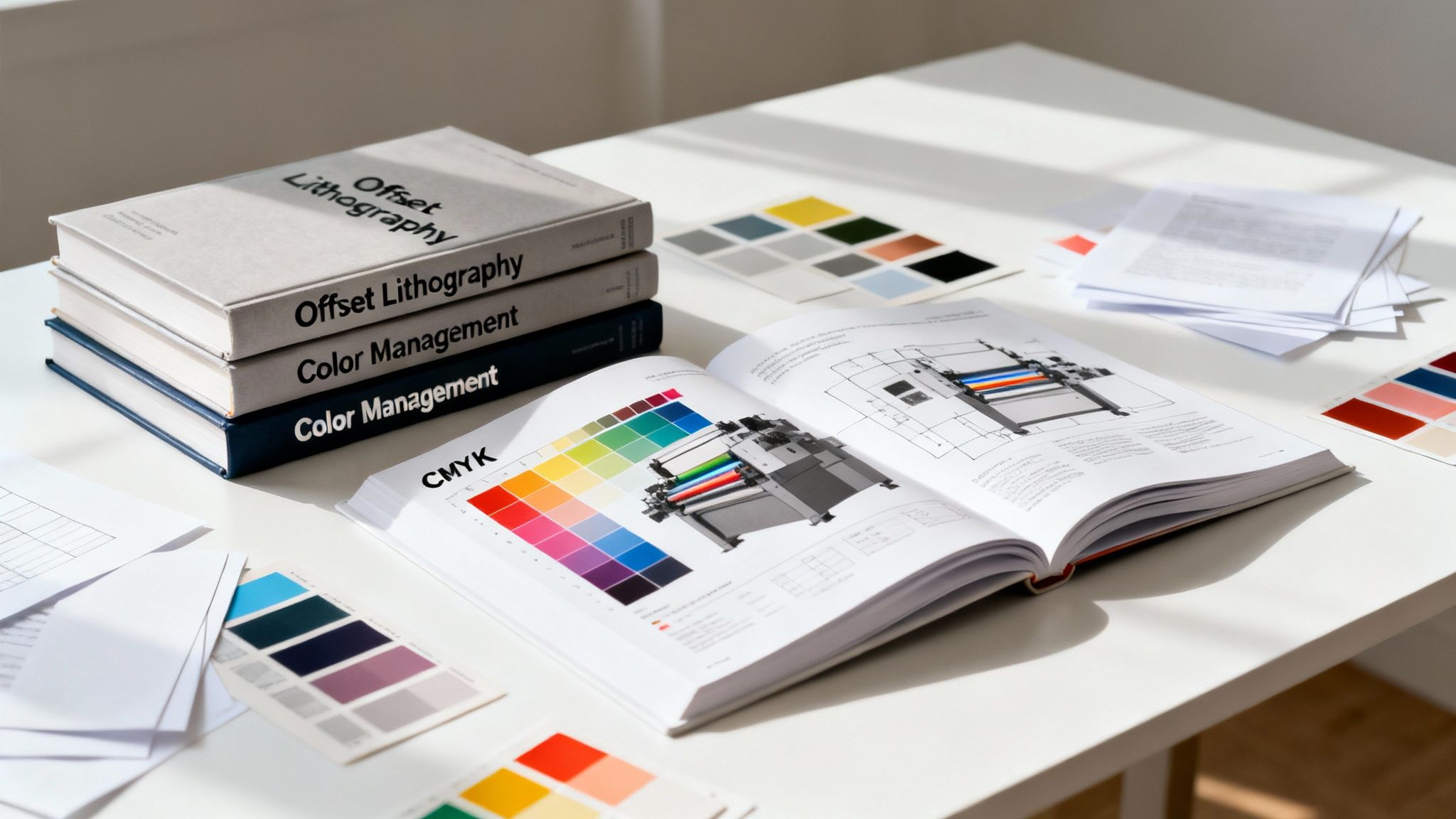
A good book on the subject won't just give you dry definitions. Instead, it will pull back the curtain on the tiny details that can make or break a project. You'll learn to think like a printer, understanding the crucial steps that connect your digital design file to the final, tangible product. This kind of knowledge is incredibly valuable, especially in markets where physical media still holds strong.
Take New Zealand, for instance. The local publishing market, with its deep roots in domestic printing, contributed a hefty $282.3 million to the creative economy. Print books didn't just participate; they dominated, claiming an 88.6% market share with 4.5 million units sold. This highlights a clear Kiwi preference for the real thing. To effectively tap into this robust market, a solid understanding of offset printing is key. You can read the full research about the NZ publishing market to learn more.
Foundational Texts for Designers
For designers, learning the principles of offset is a game-changer. It’s the difference between a design that looks great on screen and one that prints exactly as you imagined, helping you sidestep expensive and soul-crushing mistakes. The best foundational books focus on the core mechanics you simply have to know.
These books typically get you up to speed on:
- Pre-press File Preparation: This is all about setting up your files correctly for offset machinery—things like bleeds, proper margins, and getting your image resolution right from the start.
- Colour Theory in Practice: You’ll finally move beyond the world of RGB and truly understand the difference between CMYK process colours and specialised Pantone (spot) colours, and, more importantly, when to use each.
- Paper Science: This is a fascinating area. You’ll discover how different paper stocks—their weight, coating, and texture—dramatically affect how ink behaves and the final look and feel of your project.
Learning these fundamentals is like a chef learning about ingredients. You can't create a masterpiece without first understanding how heat, texture, and flavour interact. The same is true for ink, paper, and pressure in offset printing.
Advanced Guides for Production Professionals
Once you've got the basics down, you might be aiming for perfection. For production managers or experienced designers, advanced guides are the next logical step. These are the books that dive into the complex challenges of high-end offset production, giving you the confidence to manage even the most ambitious projects with absolute precision.
These more advanced resources will explore:
- On-Press Quality Control: This is about being on the press floor and knowing what to look for. You’ll learn techniques for checking proofs, ensuring colour stays consistent across thousands of copies, and spotting potential problems before they become big ones.
- Advanced Colour Management: Here, you'll go deep into calibrating screens, creating custom colour profiles, and maintaining consistency from your monitor to the proof and, finally, to the finished press sheet.
- Troubleshooting Common Problems: Every printer has faced them. You’ll learn how to diagnose and solve pesky issues like misregistration (when colours don't line up), ghosting, and improper ink density.
By arming yourself with this specialised knowledge, you become a much better partner to your printer. You’ll be able to speak their language, explain your needs clearly, and help troubleshoot effectively, ensuring every project is brought to life flawlessly.
Top Reads for Digital Printing Mastery
Digital printing has completely changed the game. It’s the reason we can have cost-effective, short print runs with incredible speed and flexibility. This is the technology powering everything from personalised marketing brochures and on-demand books to the vibrant signs you see at events. The best books on printing in this area get right into the nuts and bolts, explaining how to get professional results every time.
Unlike offset, which involves making plates and has a fair bit of setup time, digital printing sends your file straight from the computer to the press. This direct-to-print workflow is what makes it so nimble. If you're a marketer or run a small business, this opens up a whole new world of creating targeted, timely campaigns that just wouldn't be feasible the old-fashioned way.
Guides for Marketers and Business Owners
If you're not a print professional but rely on print to get your message out, digital is your most accessible entry point. The right books will give you the confidence to go beyond basic flyers and create material that really resonates with your customers.
These practical guides will walk you through the essentials:
- File Setup for Digital Output: Learn how to prep your files to sidestep common issues like unexpected colour shifts or fuzzy images. The goal is to make sure what you see on your screen is exactly what you get in your hands.
- Variable Data Printing (VDP): This is where digital truly shines. You’ll discover how to personalise every single printed piece with different names, images, or special offers, which can boost your engagement rates significantly.
- Choosing the Right Materials: Digital presses are versatile and can handle a huge range of papers and other materials. A good guide will help you pick the perfect stock to match your project's vibe and budget.
Think of digital printing as a powerful conversation tool. While offset lithography broadcasts one message to many, digital lets you have thousands of individual conversations at once, tailoring each piece to its recipient. This level of personalisation is what makes it so effective for modern marketing.
Technical Manuals for Designers and Operators
For designers and aspiring press operators, getting into the technical weeds is essential. Digital printing isn't a single thing; it's a collection of different technologies, mainly revolving around inkjet and toner-based systems. Understanding the difference means you can start optimising your designs for the specific machine they’ll be printed on.
The more advanced books on printing really drill down into the technical details that can take your work from good to truly excellent. These resources are gold for anyone serious about mastering digital production and delivering consistently high-quality work.
You’ll find in-depth information on things like:
- Inkjet vs. Toner: You'll get to grips with the fundamental differences between how these technologies lay down ink or toner, and how that choice affects the final look, feel, and even the durability of the print.
- Wide-Format Applications: A lot of digital presses are wide-format machines built for banners, posters, and signage. Technical books cover the specific file requirements and material choices needed for these big projects.
- Finishing and Binding: The job isn't done when the ink is dry. You’ll learn about all the finishing options available for digital prints, from a simple cut and fold to more complex binding for short-run books and booklets.
Books on the Craft of Screen Printing
There's something uniquely satisfying about screen printing. It’s a hands-on craft where bold art and smart business really come together. Known for its punchy, opaque colours and incredible durability, it’s the method of choice for everything from band t-shirts and art posters to promo gear that needs to feel substantial. The best books on the topic will walk you through the entire messy, rewarding process, from stretching a screen just right to mixing the perfect shade of ink.
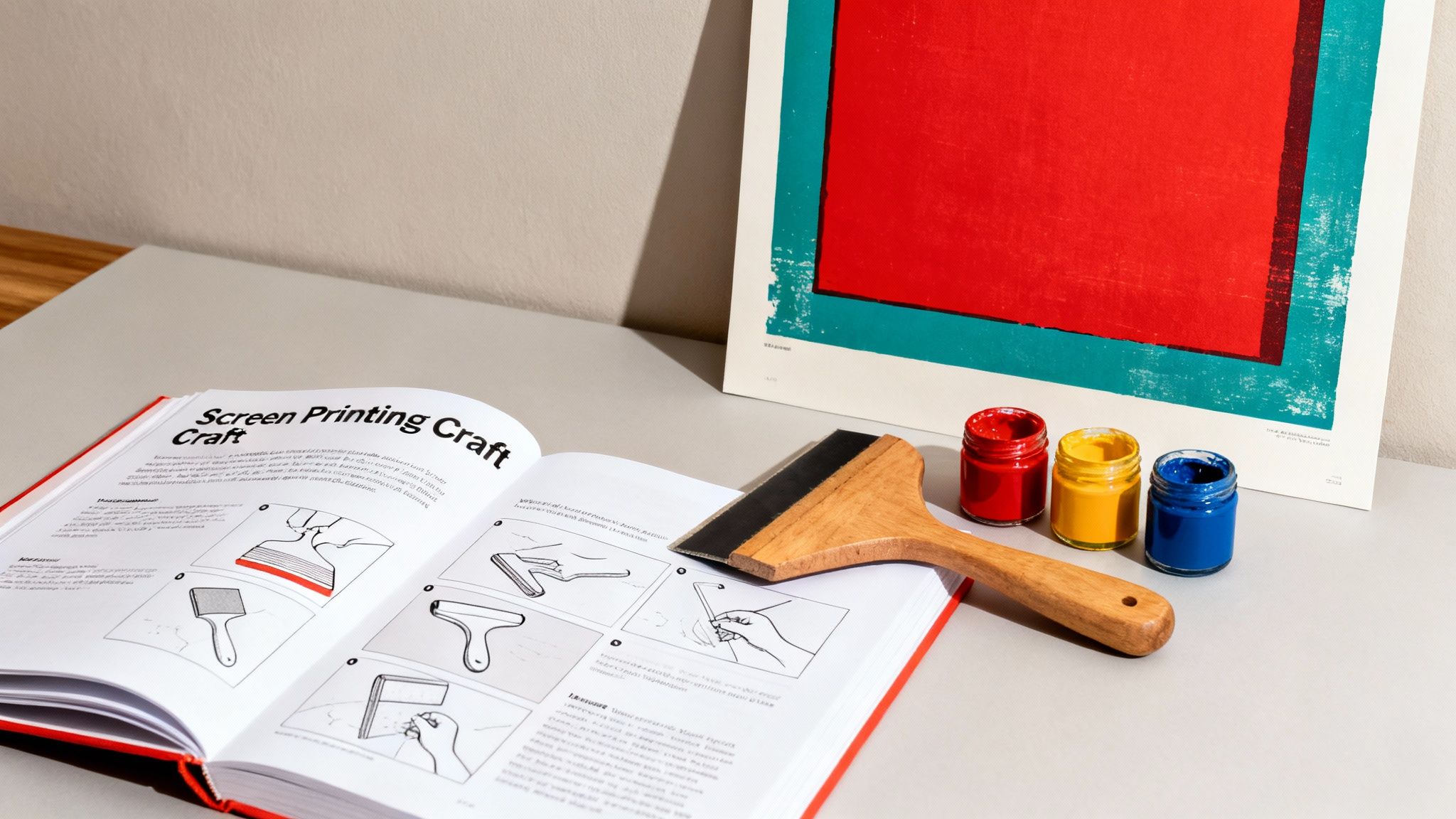
Maybe you’re a designer wanting to bring your ideas to life on merchandise, or an artist looking to produce a run of limited-edition prints. Either way, these books are your key. They close the gap between a file on your computer and a real, physical object you can hold in your hands.
This tangible appeal is a huge part of why print is still so powerful. In New Zealand alone, the book market hit a value of $292 million in 2022, with nearly 20 million books sold. The fact that physical media continues to thrive shows just how much we still value craftsmanship. You can discover more insights about the NZ book market to see the full picture.
Step-by-Step Guides for Beginners
Let’s be honest, getting started with screen printing can look a bit daunting. Good foundational books cut through that intimidation by breaking everything down into simple, manageable tasks. Think of them as a patient teacher guiding you toward that first clean, successful print.
These starter guides usually cover the essentials:
- Preparing Your Screens: You'll learn the core skills—how to coat a screen with emulsion, burn your design onto it correctly, and wash out the stencil.
- Ink Mixing and Application: This is where you get to grips with different ink types, like water-based versus plastisol, and master the proper squeegee technique for a sharp, even print.
- Simple Registration: Getting your design to land exactly where you want it is crucial. These books show you how to align your screen and your material to get it right.
A good beginner's book doesn't just tell you what to do; it shows you. Look for titles packed with photos and clear diagrams that guide you through each physical step. It makes the whole learning curve feel a lot less steep.
Inspirational Collections for Creatives
Once you’ve nailed the basics, you can start having some real fun. Advanced screen printing books often shift from pure technique to exploring the incredible creative potential of the medium. They’re less about "how-to" and more about "what if," showcasing the amazing work of pioneering artists and print studios.
You’ll find inspiration for pushing your own work further, exploring advanced methods like multi-colour registration, printing on unusual surfaces like wood or metal, and creating one-of-a-kind textural effects. This is how you move from simply printing to developing a signature style.
Applying Your Knowledge From Page to Press
Reading the best books on printing is one thing, but the real learning starts when you take that knowledge and apply it. True confidence comes from bridging the gap between the page and the press, turning abstract ideas into practical skills that save you time, money, and a whole lot of stress on your projects.
The aim is to build your confidence and vocabulary so you can walk into any print shop with a clear vision and a solid technical foundation. An informed client is a printer's best partner, and that almost always leads to a smoother process and a much better final product.
Build Your Critical Eye
Start by really looking at the print you see every day. Don't just glance at it—analyse it.
- Restaurant Menus: Feel the paper stock. Is it a heavy, coated card chosen for durability, or a cheaper, uncoated paper? That choice affects not just the feel, but also how the colours pop (or don't).
- Luxury Catalogues: Look closely at the photography. Are the images sharp and vibrant? That's likely the result of high-quality offset printing on a premium, glossy paper designed to make products look irresistible.
- Event Flyers: These are often printed quickly in small batches, which makes them perfect for digital printing. Notice how the ink sits on the paper; it often has a slightly different finish compared to offset.
By deconstructing these everyday items, you'll start to build an intuitive feel for the "why" behind different production choices. You'll begin connecting the concepts from your books to tangible results you can see and feel.
Your First Print-Ready Checklist
Before you send your next project off to be printed, run through this simple checklist. Nailing these four things is 90% of the battle and will immediately show your printer that you know what you’re doing.
An organised, print-ready file is more than just a technical requirement; it's a sign of professionalism. It tells your printer that you respect their time and expertise, setting the stage for a collaborative and successful partnership from the very beginning.
Here are the non-negotiables:
- Resolution: Make sure every image is set to 300 DPI (dots per inch). Anything lower will probably look blurry or pixelated when printed.
- Bleed: Add at least a 3mm bleed around all edges of your artwork. This is a little extra image area that gets trimmed off, guaranteeing your design goes right to the edge without any weird white borders.
- Colour Profile: Your document absolutely must be in CMYK colour mode, not RGB. This is the four-colour process (Cyan, Magenta, Yellow, Key/Black) that commercial presses use.
- File Format: Always export your final design as a high-quality PDF. It's the industry standard because it embeds all your fonts and images, making sure nothing shifts or breaks when your printer opens the file.
Common Questions About Bringing Your Designs to Print
Dipping your toes into the world of print can feel a bit like learning a new language. You’ve got the creative vision locked down, but figuring out how to turn that digital file into a physical, tangible product throws a whole new set of questions into the mix.
This section is all about demystifying that process. We'll walk through some of the most common queries that crop up for designers, marketers, and business owners when they first start out. Getting these fundamentals right from the beginning is the secret to a smooth, stress-free production run.
How Do I Choose the Right Paper?
Picking the right paper is so much more than a visual choice; it dictates the entire feel, quality, and durability of your final product. The two biggest factors to get your head around are weight and coating.
Paper weight, measured in GSM (grams per square metre), is all about thickness and sturdiness. A light, flimsy 90 GSM paper might be fine for a draft document, but it won't cut it for a business card. For something that needs to feel substantial and professional in someone's hand, you'll be looking at something much heavier, like 300-400 GSM.
The finish, or coating, is just as important:
- Glossy: This is your classic shiny, reflective finish. It makes colours look incredibly vibrant and is a fantastic choice for photo-heavy projects like travel brochures or product catalogues.
- Matte: A smooth, non-reflective surface that offers a more subtle, modern, and sophisticated feel. It’s perfect for designs with a lot of text because it cuts down on glare, making it easier to read.
- Uncoated: This is paper in its natural, more textured state. It soaks up ink more than coated papers, which gives colours a softer, more organic and muted appearance.
What Is a Print Proof and Why Is It So Important?
A print proof is a test run—a single sample of your project that the printer produces before committing to the full batch. It is, without a doubt, your single most important opportunity to catch any and every error.
What you see on your bright, backlit computer screen can look dramatically different when it’s ink on paper viewed under normal lighting.
Think of the proof as the final dress rehearsal before opening night. It’s your last chance to check that the colours are right, the text is aligned, the spelling is perfect, and the paper feels exactly how you imagined.
When you sign off on that proof, you’re giving the final green light. Any mistakes you find after that point are, unfortunately, on you. For any large or colour-critical job, always insist on seeing a physical proof.
How Can I Keep My Print Budget Under Control?
Smart print budgeting comes down to understanding the main cost drivers: quantity, paper stock, and the number of colours used. For a really practical breakdown of how these choices affect your costs, you can find guides that explore the real price to print a book and compare the economics of different methods.
As a general rule, for larger runs (think over 500-1,000 units), offset printing almost always gives you a better price per item, despite its higher initial setup cost. But for smaller jobs, one-offs, or projects that require personalisation, digital printing is nearly always the more budget-friendly route.
At SONI DESIGN, our job is to help you navigate these choices so your vision comes to life beautifully—and affordably. Whether it’s eye-catching signage, professional business cards, or creative promotional items, we're here to guide you. Let's create something extraordinary together at https://www.sonidesign.co.nz.
Leave a Comment
Stay home & get your daily
needs from our shop
Start You'r Daily Shopping with Nest Mart